Loading...
Done
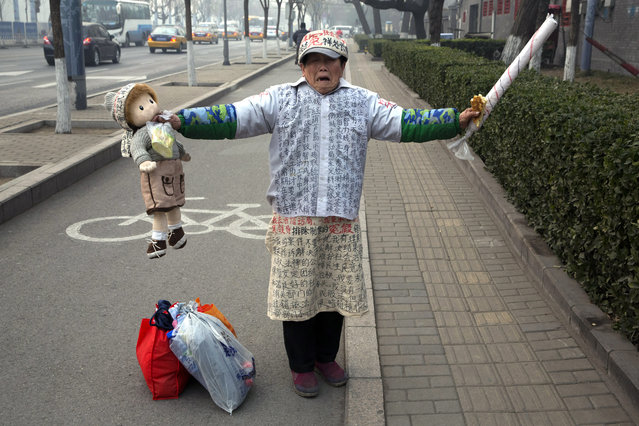
A petitioner with her grievances written on her clothes walks along a street in Beijing Tuesday, December 22, 2015. After months behind bars, Pu Zhiqiang, one of China's most prominent human rights lawyers, left a detention center Tuesday after receiving a suspended prison sentence in a case involving online comments critical of the ruling Communist Party. (Photo by Ng Han Guan/AP Photo)

A petitioner with her grievances written on her clothes walks along a street in Beijing Tuesday, December 22, 2015. After months behind bars, Pu Zhiqiang, one of China's most prominent human rights lawyers, left a detention center Tuesday after receiving a suspended prison sentence in a case involving online comments critical of the ruling Communist Party. (Photo by Ng Han Guan/AP Photo)
Details
26 Dec 2015 08:05:00


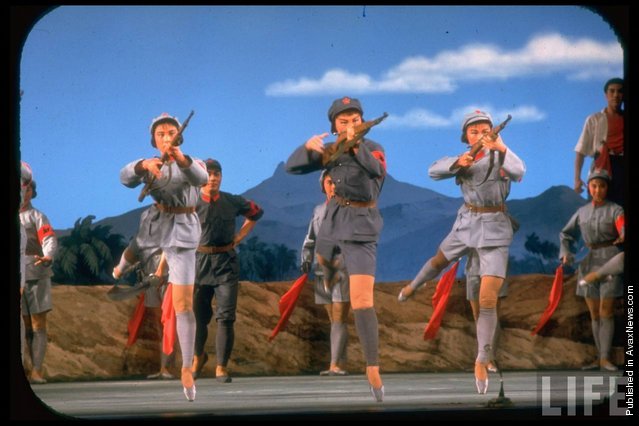
“«The Red Detachment of Women» (simplified Chinese: 红色娘子军) is a Chinese ballet which premiered in 1964. It is perhaps best known in the West as the ballet performed for U.S. President Richard Nixon on his visit to China in February 1972. Adapted from the earlier film of the same title under the personal direction of Zhou Enlai, which in turn adapted from the novel by Liang Xin, it depicts the liberation of a peasant girl in Hainan Island and her rise in the Chinese Communist Party”.
Details
11 Mar 2011 11:36:00
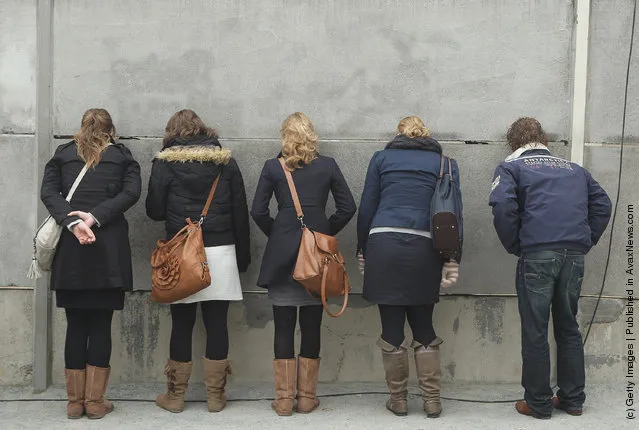
Berlin Marks 22nd Anniversary Of Berlin Wall Fall

Tourists from Holland peak through a crack in a still-existing portion of the Berlin Wall at the main memorial to the Wall in Bernauer Strasse on the 22nd anniversary of the fall of the Wall on November 9, 2011 in Berlin, Germany. The Berlin Wall, erected by the communist authorities of then East Germany in 1961, divided the city and prevented East Germans from travelling west until the collapse of the Eastern Bloc in 1989. (Photo by Sean Gallup/Getty Images)
Details
10 Nov 2011 09:25:00
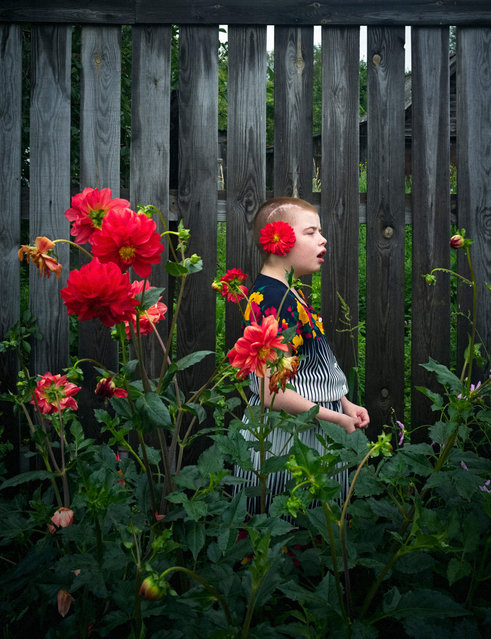
Portrait of a girl from the neuropsychiatric boarding facility for girls. (Photo by Anastasia Rudenko)

“Elat’ma, the Ryazan Oblast region of Russia. This small town is only 300 kilometers (186 miles) from modern Moscow but remains 60 years in the past, dominated by the spirit of socialism. The air of the communist ‘50s can be seen in the town’s architecture, celebrations and other occurrences. But neither its beauty nor its ties to a socialist past brought photographer Anastasia Rudenko to this village. Elat’ma is unique in that it functions as a town for mentally disabled people”. – Michelle Cohan via CNN. (Photo by Anastasia Rudenko)
Details
09 Sep 2014 08:20:00
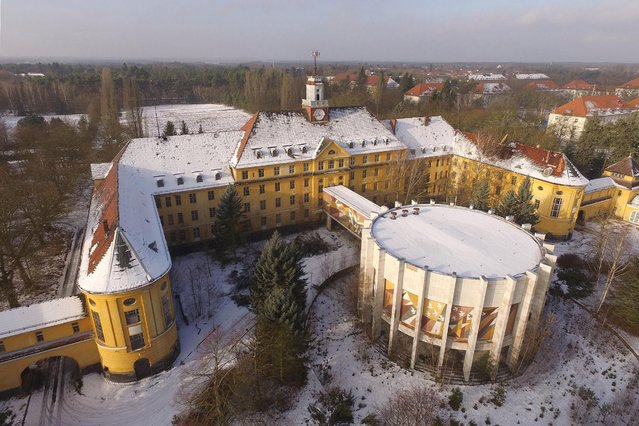
In this aerial view the officers' building and an auditorium stand at the former Soviet military base on January 26, 2017 in Wuensdorf, Germany. (Photo by Sean Gallup/Getty Images)

In this aerial view the officers' building and an auditorium stand at the former Soviet military base on January 26, 2017 in Wuensdorf, Germany. Wuensdorf, once called “The Forbidden City”, was the biggest base for the Soviet armed forces in communist East Germany from 1945 until the last Soviet troops left in the early 1990s following the end of the Cold War and the reunification of Germany. (Photo by Sean Gallup/Getty Images)
Details
01 Feb 2017 06:02:00
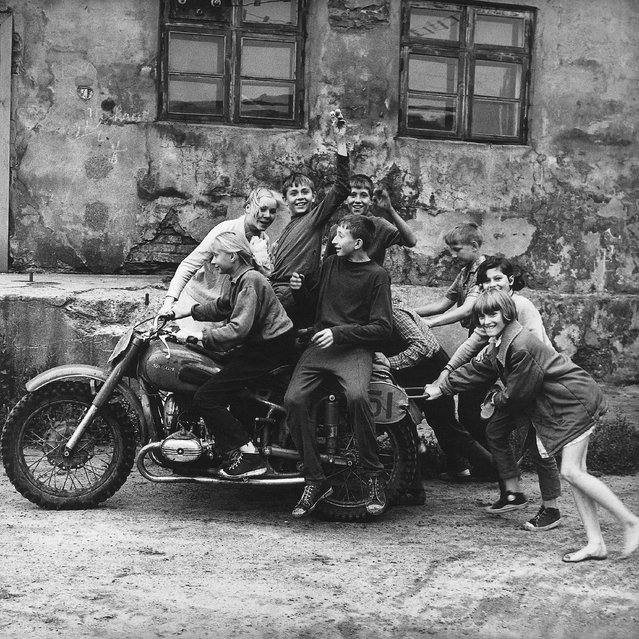
When he started using a camera there were very few documentary photographers working outside the government. Sutkus instead looked to writers and film-makers, and says he drew inspiration from the works of Franz Kafka, Jean-Paul Sartre, Ernest Hemingway and Vladimir Nabokov. Here: The first Lithuanian bikers, 1974. (Photo by Antanas Sutkus)

Rebelling against political propaganda, acclaimed photographer Antanas Sutkus embarked on a life-long journey to capture the everyday scenes around him. Antanas Sutkus, born in 1939, studied journalism at Vilnius University in the late 1950s before becoming disillusioned by the confines of the Soviet-controlled press. He began taking photographs instead, and soon co-founded the Lithuanian Association of Art Photographers. Here: The first Lithuanian bikers, 1974. (Photo by Antanas Sutkus)
Details
11 Apr 2016 10:54:00
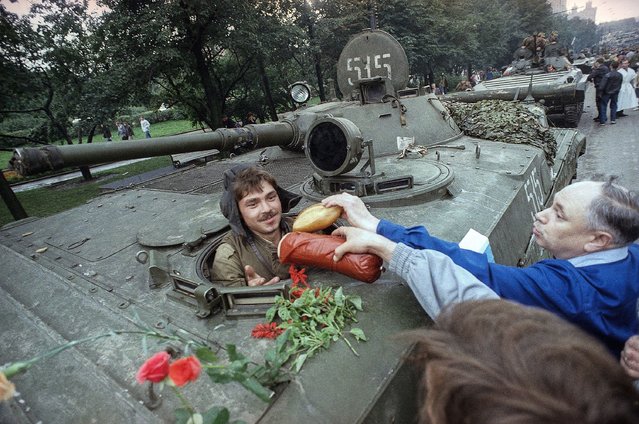
In this Wednesday, August 21, 1991 file photo, appreciative muscovites hand bread, sausages and flowers to a Soviet tank's driver who helped stop the failed hardline coup in Moscow, Russia. When a group of top Communist officials ousted Soviet leader Mikhail Gorbachev 30 years ago and flooded Moscow with tanks, the world held its breath, fearing a rollback on liberal reforms and a return to the Cold War confrontation. But the August 1991 coup collapsed in just three days, precipitating the breakup of the Soviet Union that plotters said they were trying to prevent. (Photo by Czarek Sokolowski/AP Photo/File)

In this Wednesday, August 21, 1991 file photo, appreciative muscovites hand bread, sausages and flowers to a Soviet tank's driver who helped stop the failed hardline coup in Moscow, Russia. When a group of top Communist officials ousted Soviet leader Mikhail Gorbachev 30 years ago and flooded Moscow with tanks, the world held its breath, fearing a rollback on liberal reforms and a return to the Cold War confrontation. But the August 1991 coup collapsed in just three days, precipitating the breakup of the Soviet Union that plotters said they were trying to prevent. (Photo by Czarek Sokolowski/AP Photo/File)
Details
23 Aug 2021 03:45:00
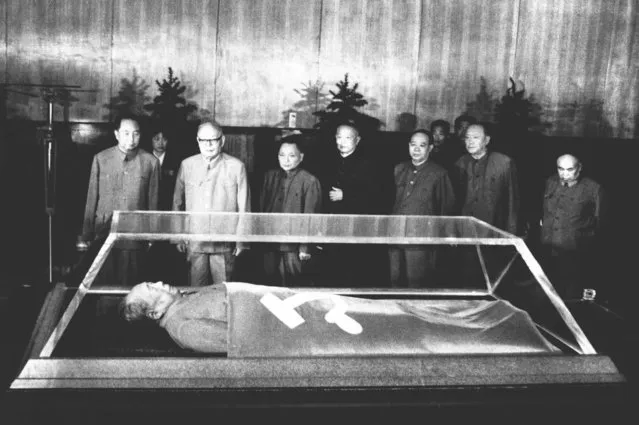
In this September 10, 1977, file photo, from left, Hua Guofeng, Chinese Communist Party (CCP) chairman and Mao Zedong's immediate successor; Ye Jianying, CCP vice chairman and future ceremonial head of state; Deng Xiaoping, no formal titles at the time but soon to emerge as paramount leader during the reform era; Li Xiannian, CCP vice chairman and future president; Wang Dongxing, head of the leadership bodyguard unit who helped topple the Gang of Four, view the body of later Chinese leader Mao Zedong in Beijing. (Photo via AP Photo)

In this September 10, 1977, file photo, from left, Hua Guofeng, Chinese Communist Party (CCP) chairman and Mao Zedong's immediate successor; Ye Jianying, CCP vice chairman and future ceremonial head of state; Deng Xiaoping, no formal titles at the time but soon to emerge as paramount leader during the reform era; Li Xiannian, CCP vice chairman and future president; Wang Dongxing, head of the leadership bodyguard unit who helped topple the Gang of Four, view the body of later Chinese leader Mao Zedong in Beijing. (Photo via AP Photo)
Details
13 Jun 2016 10:34:00