Loading...
Done
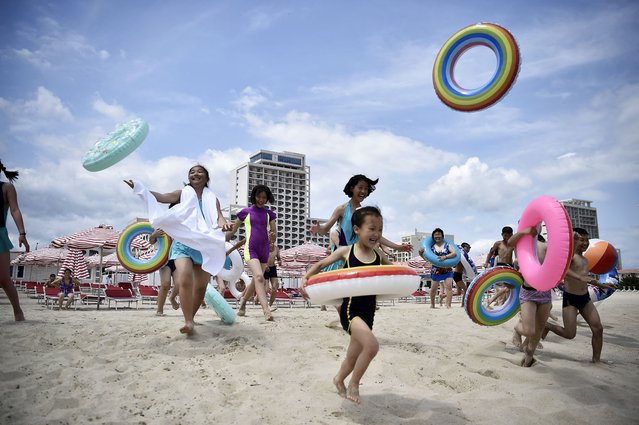
Domestic tourists visit the beach at Wonsan Kalma Coastal Tourist Area in Wonsan, North Korea's Kangwon Province on July 1, 2025. North Korea opened a massive resort area on its east coast, state media said on July 2, with the tourism pet project of leader Kim Jong Un reportedly set to welcome Russian guests later this month. (Photo by Kim Won Jin/AFP Photo)

Domestic tourists visit the beach at Wonsan Kalma Coastal Tourist Area in Wonsan, North Korea's Kangwon Province on July 1, 2025. North Korea opened a massive resort area on its east coast, state media said on July 2, with the tourism pet project of leader Kim Jong Un reportedly set to welcome Russian guests later this month. (Photo by Kim Won Jin/AFP Photo)
Details
14 Oct 2025 04:21:00
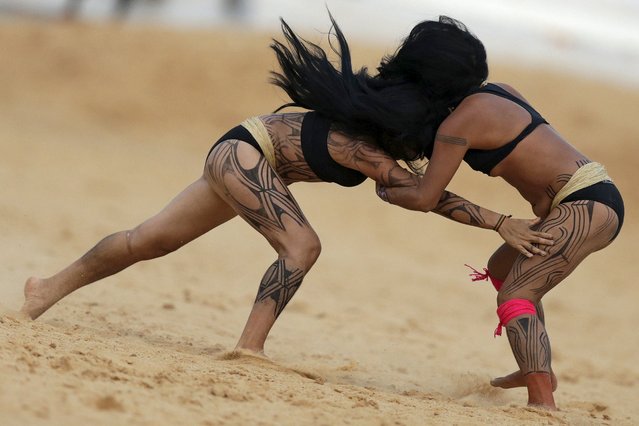
Indigenous women from the Kamayura tribe take part in a demonstration of Huka Huka fight at the first World Games for Indigenous Peoples in Palmas, Brazil, October 29, 2015. (Photo by Ueslei Marcelino/Reuters)

Indigenous women from the Kamayura tribe take part in a demonstration of Huka Huka fight at the first World Games for Indigenous Peoples in Palmas, Brazil, October 29, 2015. (Photo by Ueslei Marcelino/Reuters)
Details
02 Nov 2015 08:06:00
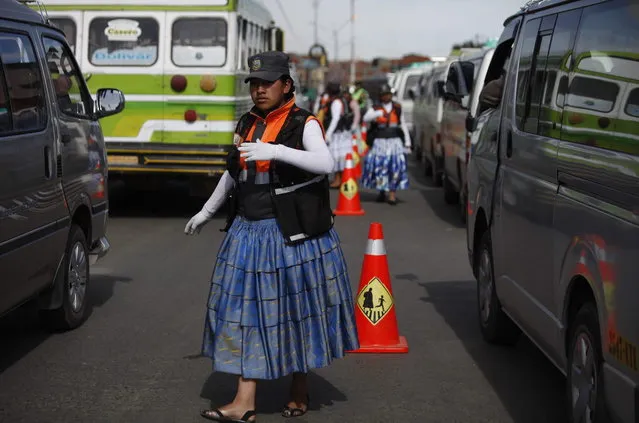
In this December 3, 2013 photo, an Aymara woman cops directs traffic on the streets of El Alto, Bolivia. The women wear the bright petticoats and shawls of indigenous women in the Andes, called cholitas in Bolivian slang, the main difference being that instead of bowler hats they wear khaki green police-style caps. Some don fluorescent traffic vests. (Photo by Juan Karita/AP Photo)

“This city in Bolivia's highlands has hired Aymara women dressed in traditional multilayered Andean skirts and brightly embroidered vests to work as traffic cops and bring order to its road chaos. About 20 of the “traffic cholitas” have been trained to direct cars and buses in El Alto, a teeming, impoverished sister city of La Paz in Bolivia's Andes mountains”. – El Alto via Associated Press. Photo: In this December 3, 2013 photo, an Aymara woman cops directs traffic on the streets of El Alto, Bolivia. The women wear the bright petticoats and shawls of indigenous women in the Andes, called cholitas in Bolivian slang, the main difference being that instead of bowler hats they wear khaki green police-style caps. Some don fluorescent traffic vests. (Photo by Juan Karita/AP Photo)
Details
25 Dec 2013 10:48:00
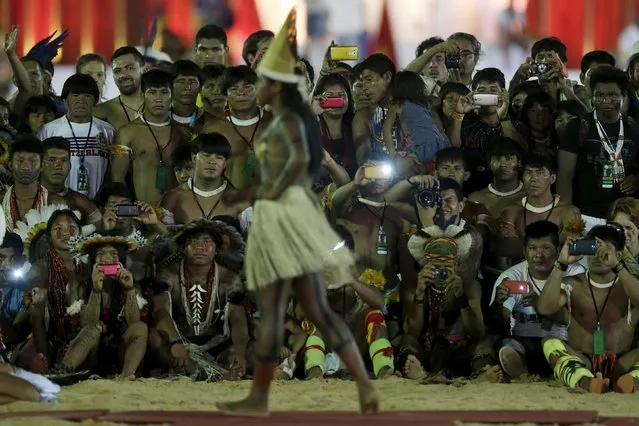
An indigenous woman participates in a parade called "International Indigenous Beauty" during the first World Games for Indigenous Peoples in Palmas, Brazil, October 24, 2015. (Photo by Ueslei Marcelino/Reuters)

An indigenous woman participates in a parade called "International Indigenous Beauty" during the first World Games for Indigenous Peoples in Palmas, Brazil, October 24, 2015. Billed as the indigenous Olympics, the games are expected to attract nearly 2,000 athletes from dozens of Brazilian ethnicities, as well as from such far-flung nations as Ethiopia and New Zealand. (Photo by Ueslei Marcelino/Reuters)
Details
28 Oct 2015 08:04:00
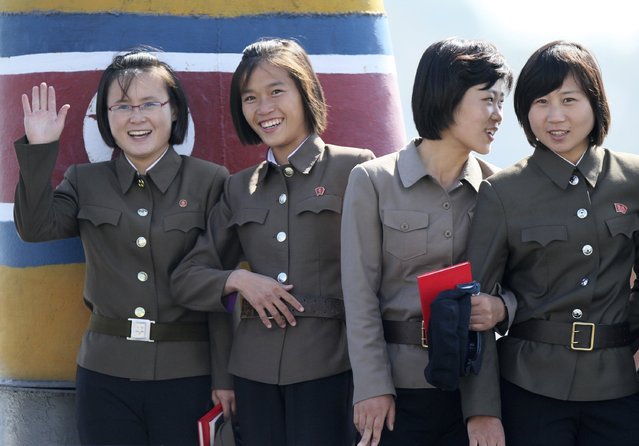
North Korean soldiers wave along the Yalu River, near the North Korean town of Sinuiju, opposite to the Chinese border city of Dandong October 7, 2014. (Photo by Jacky Chen/Reuters)

North Korean soldiers wave along the Yalu River, near the North Korean town of Sinuiju, opposite to the Chinese border city of Dandong October 7, 2014. (Photo by Jacky Chen/Reuters)
Details
10 Oct 2014 12:34:00
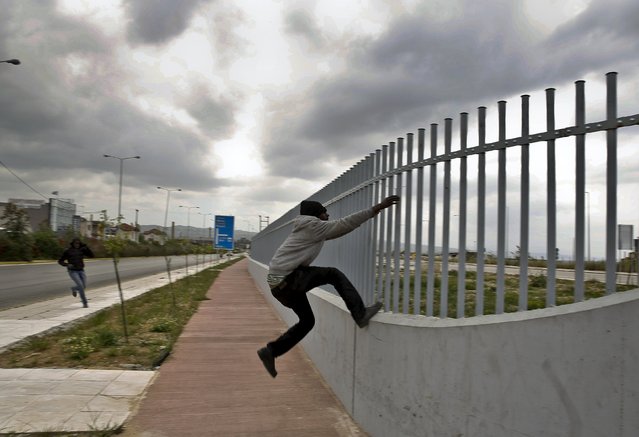
An African immigrant tries to jump a fence into a ferry terminal in the western Greek town of Patras April 28, 2015. (Photo by Yannis Behrakis/Reuters)

An African immigrant tries to jump a fence into a ferry terminal in the western Greek town of Patras April 28, 2015. Afghan, Iranian and Sudanese immigrants, living precariously in abandoned factories in Patras, southwest Greece, try to stow away on nearby ferries to Italy as they seek a better life in Europe beyond crisis-hit Greece. (Photo by Yannis Behrakis/Reuters)
Details
07 May 2015 12:12:00
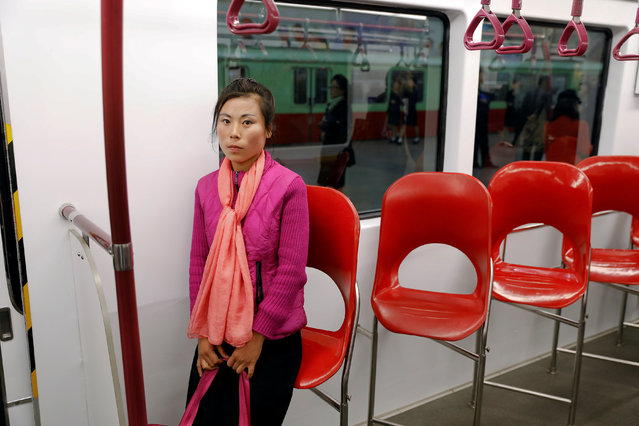
A woman travels on a train stopping at a subway station visited by foreign reporters in central Pyongyang, North Korea on April 14, 2017. (Photo by Damir Sagolj/Reuters)

A woman travels on a train stopping at a subway station visited by foreign reporters in central Pyongyang, North Korea on April 14, 2017. (Photo by Damir Sagolj/Reuters)
Details
20 Apr 2017 08:59:00
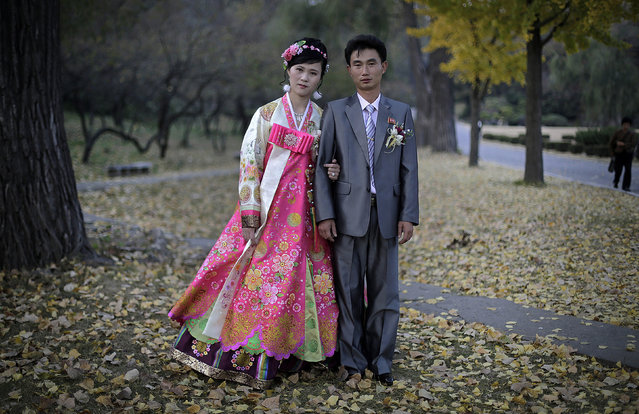
In this October 25, 2014, file photo, North Korean bride Ri Ok Ran, 28, and groom Kang Sung Jin, 32, pose for a portrait at the Moran Hill where they went to take wedding pictures, in Pyongyang, North Korea. The couple were married after dating for about two years. Their motto: “To have many children so that they can serve in the army and defend and uphold our leader and country, for many years into the future”. (Photo by Wong Maye-E/AP Photo)

Associated Press photographer Wong Maye-E tries to get her North Korean subjects to open up as much as is possible in an authoritarian country with no tolerance for dissent and great distrust of foreigners. She has taken dozens of portraits of North Koreans over the past three years, often after breaking the ice by taking photos with an instant camera and sharing them. Her question for everyone she photographs: What is your motto? Their answers reflect both their varied lives and the government that looms incessantly over all of them. (Photo by Wong Maye-E/AP Photo)
Details
16 Jun 2017 06:28:00