Loading...
Done
Miniature Black Hole Aurelien Police

Freelance illustrator and graphic designer Aurélien Police was born in France in 1978. He has already worked and is currently working on projects for the music and publishing industries (book covers, CD design, children book illustrations). He uses computer as melting pot to mix up all sorts of raw materials, erasing the frontiers between all possible media so as to provide his pictures with a graphic finishing of his own. Flirting with various themes -often associated with fantasy, detective or supernatural- allows him to translate in pictures his own personal vision of those genres.
Details
15 May 2014 11:56:00
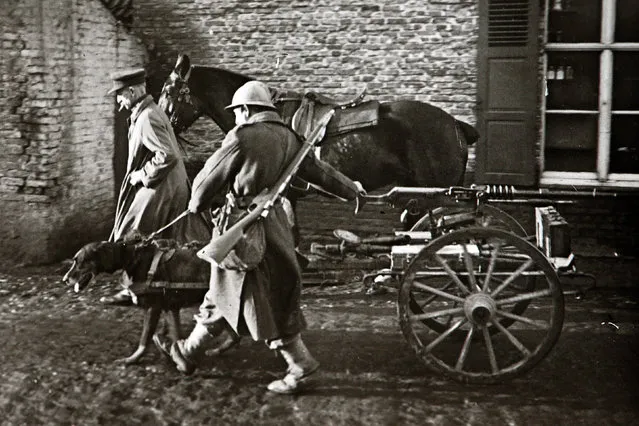
An undated archive picture shows a dog pulling a Belgian machine gun at an unknown location in northern France. (Photo by Collection Odette Carrez/Reuters)

An undated archive picture shows a dog pulling a Belgian machine gun at an unknown location in northern France. A Viscount in the Armoured Cavalry Branch of the French Army left behind a collection of hundreds of glass plates taken during World War One (WWI) that have never before been published. The images, by an unknown photographer, show the daily life of soldiers in the trenches, destruction of towns and military leaders. The year 2014 marks the 100th anniversary of the start of WWI. (Photo by Collection Odette Carrez/Reuters)
Details
23 May 2014 09:11:00
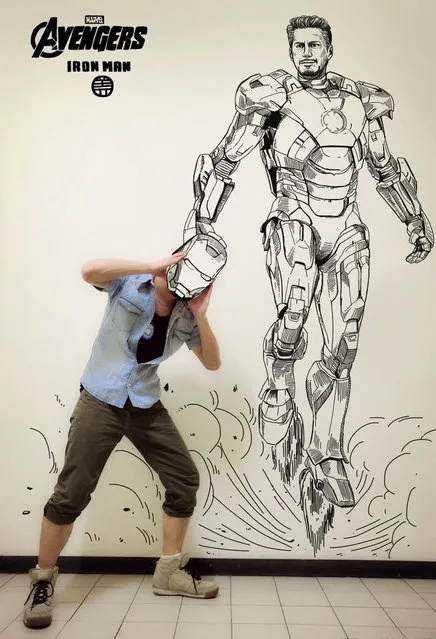
Comic Book Illustrations By Gaikuo-Captain Part 2

Gaikuo-Captain is a young Chinese student of chemical engineering, and a talented illustrator. His passion for the comic was demonstrated by a series of works that combine drawings with photographs, so that he himself is "immersed" in a fantasy to interact with characters from comic books and manga. His pieces are successful in social networks, particularly in Weibo, Chinese social network where Gaikuo publishes. You can see all his work on his zcool profile.


See also: Part 1
Details
06 Aug 2014 09:46:00
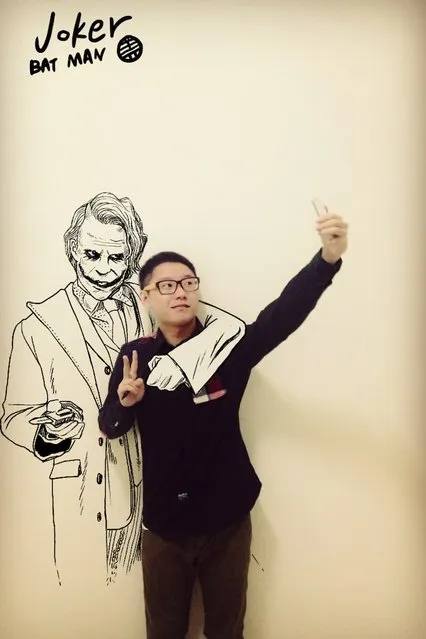
Comic Book Illustrations By Gaikuo-Captain Part 1

Gaikuo-Captain is a young Chinese student of chemical engineering, and a talented illustrator. His passion for the comic was demonstrated by a series of works that combine drawings with photographs, so that he himself is "immersed" in a fantasy to interact with characters from comic books and manga. His pieces are successful in social networks, particularly in Weibo, Chinese social network where Gaikuo publishes. You can see all his work on his zcool profile.


See also: Part 2
Details
04 Aug 2014 10:17:00
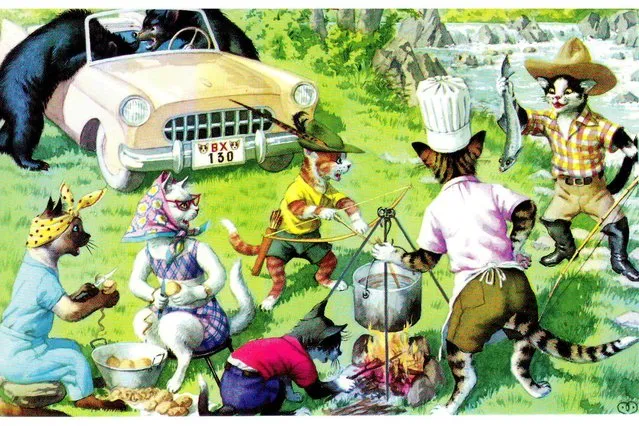
Dressed Cats By  Alfred Mainzer

From the 1940s through the 1960s, the Alfred Mainzer Company of Long Island City, NY published a series of linen and photochrome humorous cat postcards illustrated by Eugen Hartung (or Hurtong) (1897–1973), sometimes referred to as “Mainzer Cats”. These postcards normally illustrate settings that are filled with action, often with a minor disaster just about to occur. While the dressed cats were by far the most popular and most plentiful cards, Hartung also painted other dressed animals – primarily mice, dogs, and hedgehogs.
Details
31 Jan 2014 13:57:00
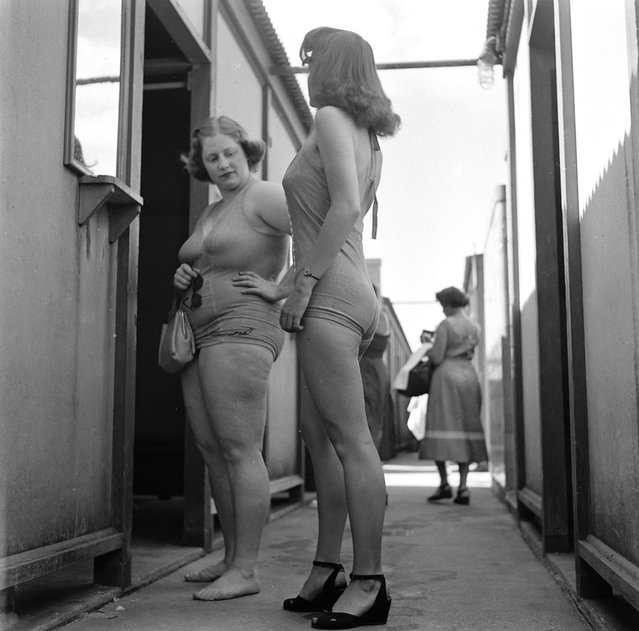
Dorothy Bradley (left), photographed for LIFE magazine article on obesity, 1949. (Photo by Martha Holmes/Time & Life Pictures)

“The most serious health problem in the U.S. today is obesity.” Sounds familiar, doesn’t it? But that pronouncement about obesity’s primacy in the hierarchy of national health problems is not new. Rather, it’s the opening line to a remarkable article published 60 years ago in LIFE magazine. This photographs made by Martha Holmes to illustrate that March 1954 article, titled “The Plague of Overweight.” Photo: Dorothy Bradley (left), photographed for LIFE magazine article on obesity, 1949. (Photo by Martha Holmes/Time & Life Pictures)
Details
11 Apr 2013 11:42:00
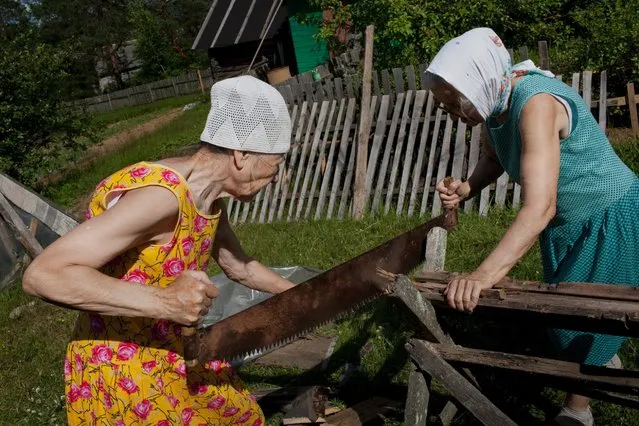
“Two-Handed Saw, 2014”. “Most of the neighbors have switched to power tools to run their households, the buzz of chain saws and weed-whackers overpowering the quieter sounds of country life, but my aunts hold on to the two-handed saw that's decades old, the sickle and scythe that need to be sharpened and polished after each use, the old axe that's becoming heavier each year. Each of these objects is familiar, holding memories of their brother, who succumbed to cancer a few years ago, of days before my grandfather lost his vision in the 50's, of busier days and longer futures”, Sablin told. (Photo by Nadia Sablin)

In northwest Russia, in a small village called Alekhovshchina, Nadia Sablin's aunts spend the warmer months together in the family home and live as the family has always lived, chopping wood to heat the house and making their own clothes. Sablin's book of photographs, “Aunties: The Seven Summers of Alevtina and Ludmila”, is published by Duke University Press. Here: “Two-Handed Saw, 2014”. (Photo by Nadia Sablin)
Details
25 Feb 2016 12:12:00
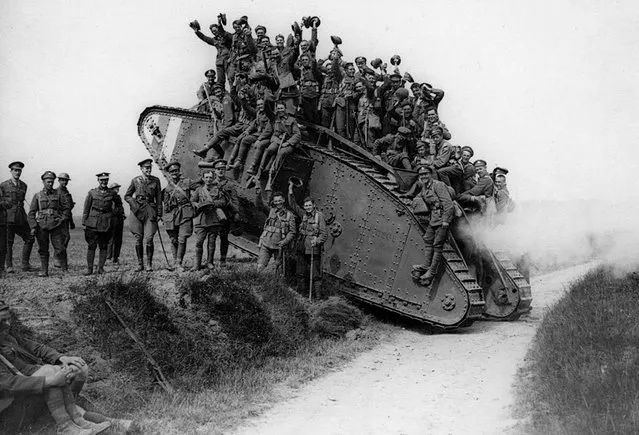
These black-and-white photos are taken from the new book “Armoured Warfare in the First World War 1916 – 1918” by Anthony Tucker-Jones and published by Pen & Sword Military. “Interestingly the British, French and Germans took completely different approaches with varying results”. The British military produced “Little Willie” in Autumn 1915 weighing 18 tonnes, which had a crew of two plus four gunners. “Inspired by a tracked artillery tractor “Little Willie” was referred to as a water tank – hence the name tank – to ensure secrecy”, said Anthony. “This led to the strange looking Mark I with its peculiar rhomboid shape, designed to cross trenches with guns in sponsons on either side. The Germans saw the tank as unchivalrous and were slow to grasp its utility. They favoured the Stormtrooper (specialist soldiers used to infiltrate enemy trenches) and artillery, not the tank”, said Anthony. “However, they didn’t hesitate to make use of captured British tanks. Although the tank helped secure victory and German soldiers dubbed it “Germany’s Downfall” the country was ultimately brought to its knees by the Allies blockade”. Here: British troops hitch a ride on a Mark IV after the massed tank fleet spearheading attack at Cambrai on November 20, 1917. (Photo by Anthony Tucker-Jones/Mediadrumworld.com)

These black-and-white photos are taken from the new book “Armoured Warfare in the First World War 1916 – 1918” by Anthony Tucker-Jones and published by Pen & Sword Military. Here: British troops hitch a ride on a Mark IV after the massed tank fleet spearheading attack at Cambrai on November 20, 1917. (Photo by Anthony Tucker-Jones/Mediadrumworld.com)
Details
23 Feb 2017 00:02:00