Loading...
Done
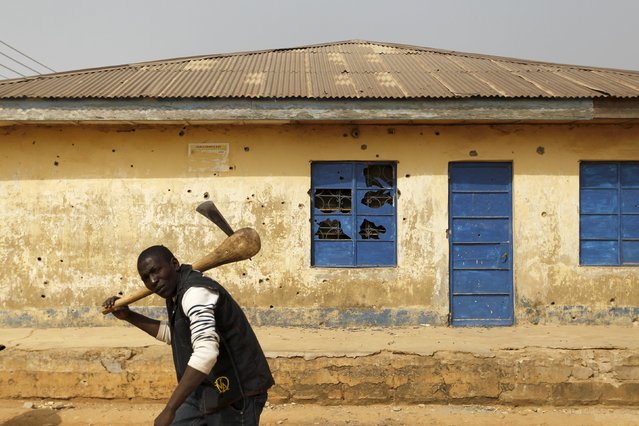
A man carrying an axe walks past a house marked with bullet holes in Gyallesu district after recent clashes between Shi'ites and the army in Zaria, Kaduna state, Nigeria, February 3, 2016. (Photo by Afolabi Sotunde/Reuters)

A man carrying an axe walks past a house marked with bullet holes in Gyallesu district after recent clashes between Shi'ites and the army in Zaria, Kaduna state, Nigeria, February 3, 2016. Sectarian tensions are rising in Nigeria's Muslim north, where hundreds of Shi'ites were killed in clashes with the army in the town of Zaria in December, according to Shi'ites and rights groups. Following the clashes, bulldozers sent by the state levelled Shi'ite shrines, a cemetery and offices in the deeply divided town. The region is already grappling with an insurgency waged by the jihadist Boko Haram group. (Photo by Afolabi Sotunde/Reuters)
Details
12 Feb 2016 12:52:00
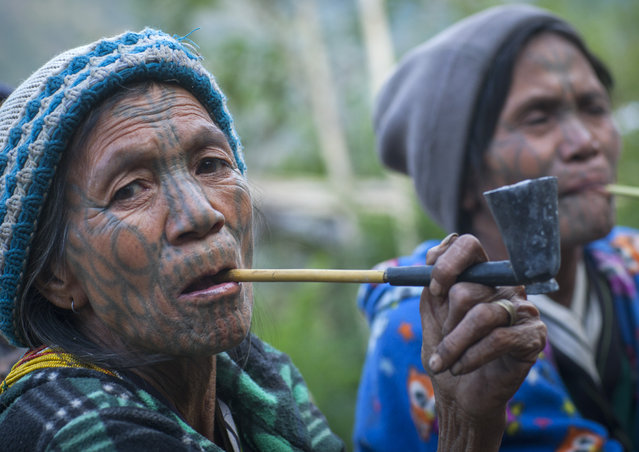
A group of tattooed women from the Muun tribe who inhabit the hills of the Arakan state. The design, known as the letter B-pattern, is common in the Mindat area. It is composed of dots, lines and occasionally circles, in February, 2015, in Myanmar, Burma. (Photo by Eric Lafforgue/Barcroft Media)

A group of tattooed women from the Muun tribe who inhabit the hills of the Arakan state. The design, known as the letter B-pattern, is common in the Mindat area. It is composed of dots, lines and occasionally circles, in February, 2015, in Myanmar, Burma. With spider webs, B-patterns and crossed lines painstakingly inked on their faces these stunning photographs show the tattooed women of Burma. French photographer Eric Lafforgue travelled to the Chin, Rakhine and Arakan states of northwestern Myanmar to capture the rare facial designs. (Photo by Eric Lafforgue/Barcroft Media)
Details
16 Mar 2015 10:54:00
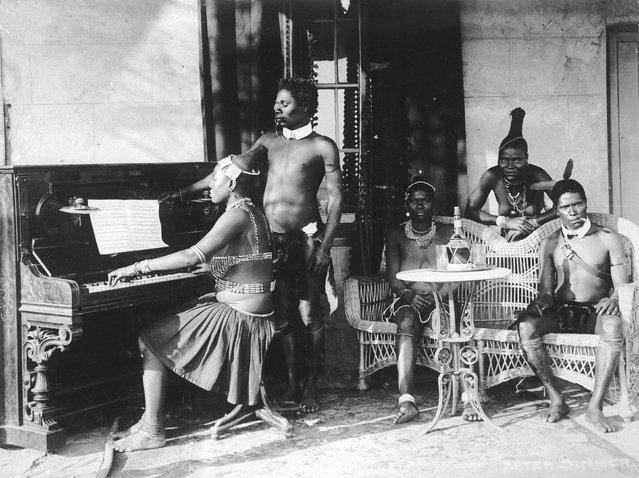
circa 1925:  A Zulu woman playing the piano while a group of others sit and listen.  (Photo by General Photographic Agency/Getty Images)

“The Zulu are the largest South African ethnic group, with an estimated 10–11 million people living mainly in the province of KwaZulu-Natal. Small numbers also live in Zimbabwe, Zambia, and Mozambique. Their language, Zulu, is a Bantu language; more specifically, part of the Nguni subgroup. The Zulu Kingdom played a major role in South African history during the 19th and 20th centuries. Under apartheid, Zulu people were classed as third-class citizens and suffered from state-sanctioned discrimination. They remain today the most numerous ethnic group in South Africa, and now have equal rights along with all other citizens”. – Wikipedia.

Photo: A Zulu woman playing the piano while a group of others sit and listen (to put it briefly, Englishmen scoff over Zulu). South Africa, circa 1925. (Photo by General Photographic Agency)

Details
03 Feb 2014 09:40:00
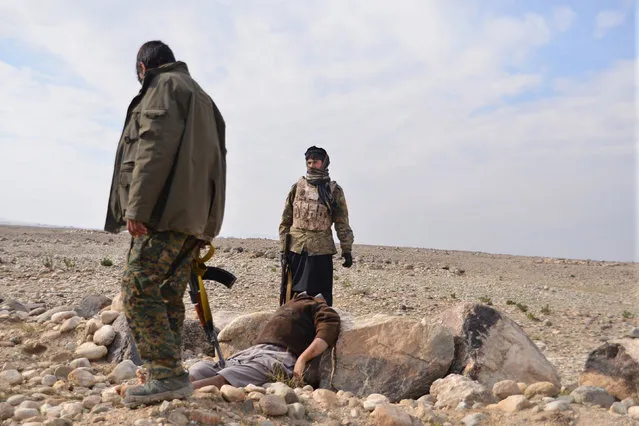
Afghanistan's Islamic State affiliate and a rival militia controlled by a prominent lawmaker have killed eight captured fighters from both sides in a brutal killing spree in the eastern border province of Nangarhar, an Afghan official said on Sunday.  (Photo by Mohammad Anwar Danishyar/AP Photo)

Afghan militia men stand near to the dead body of a beheaded Islamic State group loyalist in the Achin district of Nangarhar province east of Kabul, Afghanistan, Sunday, December 27, 2015. An Afghan official says fighters for the Islamic State group and a militia controlled by a prominent lawmaker have beheaded a total of eight men in tit-for-tat revenge killings in the eastern border province of Nangarhar. (Photo by Mohammad Anwar Danishyar/AP Photo)
Details
29 Dec 2015 08:00:00
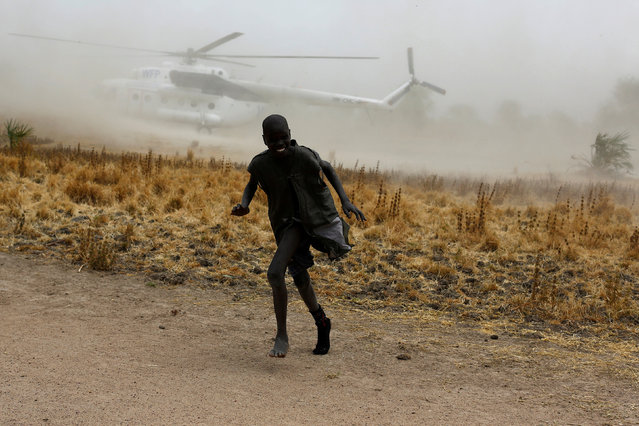
A boy moves away as a United Nations World Food Programme (WFP) helicopter lands in Rubkuai village, Unity State, northern South Sudan, February 18, 2017. (Photo by Siegfried Modola/Reuters)

A boy moves away as a United Nations World Food Programme (WFP) helicopter lands in Rubkuai village, Unity State, northern South Sudan, February 18, 2017. South Sudan on Monday declared famine in some parts of the country, with more than three years of war leaving nearly five million hungry in what aid groups called a “man-made” tragedy. (Photo by Siegfried Modola/Reuters)
Details
22 Feb 2017 00:03:00
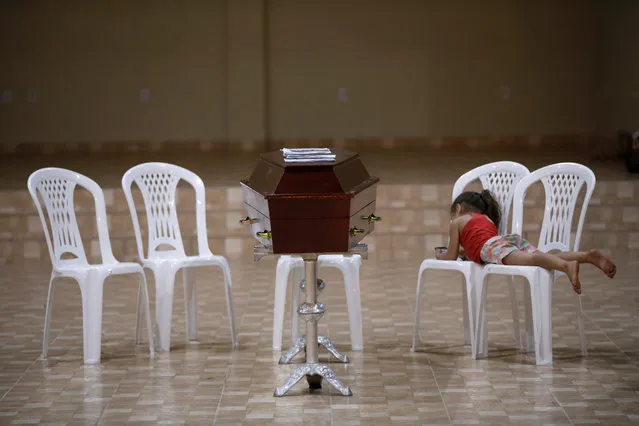
A relative of murdered prisoner, lies on a chair next to his coffin  during a wake after a prison riot in the city of Altamira, Para state, Brazil on July 30, 2019. (Photo by Bruno Kelly/Reuters)

A relative of murdered prisoner, lies on a chair next to his coffin during a wake after a prison riot in the city of Altamira, Para state, Brazil on July 30, 2019. At least 57 prisoners were killed by other inmates during clashes between organized crime groups in the Altamira prison in northern Brazil Monday with 16 of the victims being decapitated, according to prison officials. (Photo by Bruno Kelly/Reuters)
Details
02 Aug 2019 00:05:00
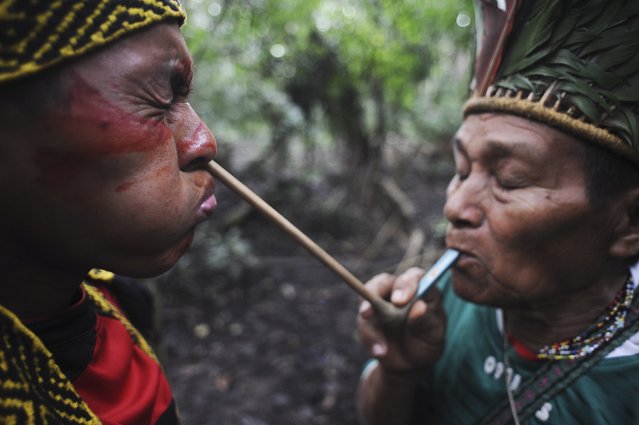
A spiritual leader (R) of the Huni Kui Indian tribe blows an herbal powder into the nose of a tribal member during a ceremony outside the village of Novo Segredo along the Envira river of Brazil's northwestern Acre state, March 9, 2014. (Photo by Lunae Parracho/Reuters)

A spiritual leader (R) of the Huni Kui Indian tribe blows an herbal powder into the nose of a tribal member during a ceremony outside the village of Novo Segredo along the Envira river of Brazil's northwestern Acre state, March 9, 2014. Many indigenous groups, including the Huni Kui, Ashaninka, and Madija, live in villages in the Brazilian rainforest near the border with Peru. (Photo by Lunae Parracho/Reuters)
Details
04 Apr 2014 08:18:00
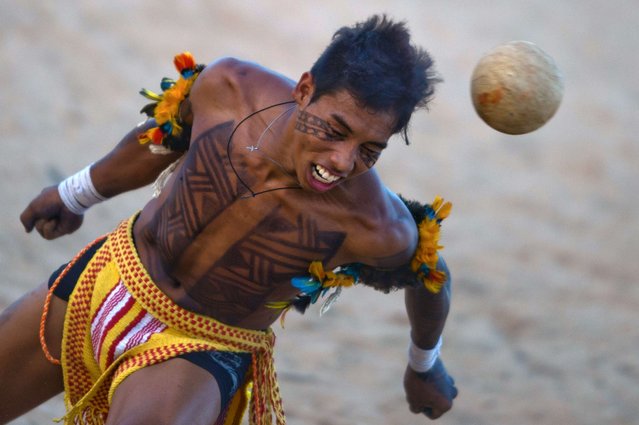
Brazilian natives of the Pareci tribe play head football with a hand-made ball for a demonstration, during the first day of the International Games of Indigenous Peoples, in Cuiaba, state of Mato Grosso, on November 10, 2013. 1500 natives from 49 Brazilian ethnic groups and from another 17 countries are gathering in Cuiaba until November 16 to compete in some 30 athletic disciplines, many of their own. (Photo by Christophe Simon/AFP Photo)

Brazilian natives of the Pareci tribe play head football with a hand-made ball for a demonstration, during the first day of the International Games of Indigenous Peoples, in Cuiaba, state of Mato Grosso, on November 10, 2013. 1500 natives from 49 Brazilian ethnic groups and from another 17 countries are gathering in Cuiaba until November 16 to compete in some 30 athletic disciplines, many of their own. (Photo by Christophe Simon/AFP Photo)
Details
13 Nov 2013 11:50:00