Loading...
Done
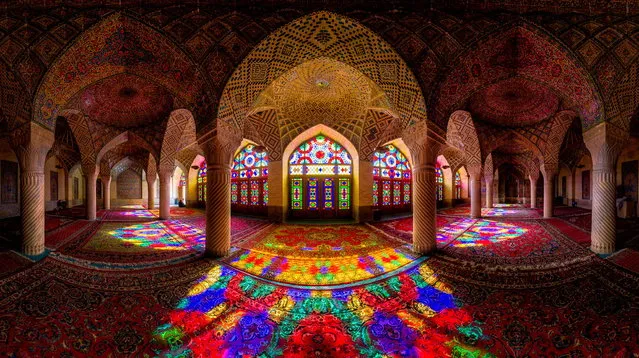
The Nasir Al-Mulk Mosque

The Nasīr al-Mulk Mosque or Pink Mosque is a traditional mosque in Shiraz, Iran, located in Goade-e-Araban place (near the famous Shah Cheragh mosque). The mosque was built during the Qājār era, and is still in use under protection by Nasir al Mulk's Endowment Foundation. It was built by the order of Mirza Hasan Ali Nasir al Molk, one of the lords of the Qajar Dynasty, in 1876 and was finished in 1888. The designers were Muhammad Hasan-e-Memar and Muhammad Reza Kashi Paz-e-Shirazi. The mosque extensively uses colored glass in its facade, and displays other traditional elements such as panj kāseh-i (five concaves) in its design, it is also named in popular culture as Pink Mosque due to the usage of beautiful pink color tiles for its interior design.
Details
26 Mar 2014 14:04:00
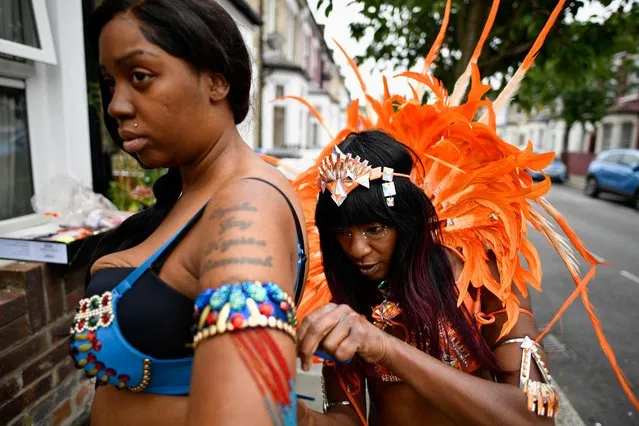
A reveller helps a woman prepare her costume after the normal Notting Hill Carnival festivities were cancelled for a second year running, amid the coronavirus disease (COVID-19) outbreak, in London, Britain, August 30, 2021. (Photo by Beresford Hodge/Reuters)

A reveller helps a woman prepare her costume after the normal Notting Hill Carnival festivities were cancelled for a second year running, amid the coronavirus disease (COVID-19) outbreak, in London, Britain, August 30, 2021. (Photo by Beresford Hodge/Reuters)
Details
31 Aug 2021 07:52:00
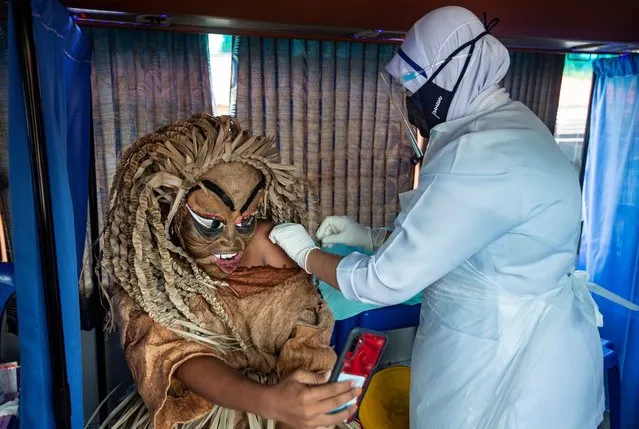
An indigenous man of Mahmeri tribe wearing a costume of Puteri Gunung Ledang character receives a dose of the vaccine against Covid-19 in Banting, near Kuala Lumpur, Malaysia,15 August 2021. Malaysia recorded another 20,670 new Covid-19 cases on 14 August, bringing the cumulative total to 1,384,353 cases. (Photo by Ahmad Yusni/EPA/EFE)

An indigenous man of Mahmeri tribe wearing a costume of Puteri Gunung Ledang character receives a dose of the vaccine against Covid-19 in Banting, near Kuala Lumpur, Malaysia,15 August 2021. Malaysia recorded another 20,670 new Covid-19 cases on 14 August, bringing the cumulative total to 1,384,353 cases. (Photo by Ahmad Yusni/EPA/EFE)
Details
03 Sep 2021 08:25:00
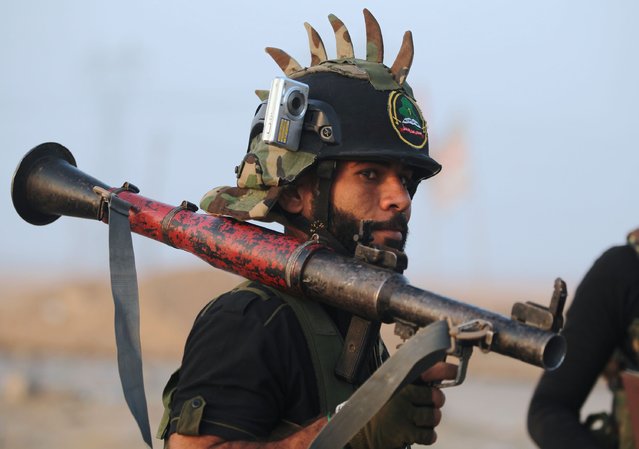
A Shiite fighter from the Hashed al-Shaabi (Popular Mobilisation) patrols in the village of Ayn Nasir, south of Mosul, on October 29, 2016, after recapturing it from Islamic State group jihadists in an ongoing operation to retake the city of Mosul. Iraqi paramilitary forces launched an operation to cut the Islamic State group's supply lines between its Mosul bastion and neighbouring Syria, opening a new front in the nearly two-week-old offensive. (Photo by Ahmad Al-Rubaye/AFP Photo)

A Shiite fighter from the Hashed al-Shaabi (Popular Mobilisation) patrols in the village of Ayn Nasir, south of Mosul, on October 29, 2016, after recapturing it from Islamic State group jihadists in an ongoing operation to retake the city of Mosul. Iraqi paramilitary forces launched an operation to cut the Islamic State group's supply lines between its Mosul bastion and neighbouring Syria, opening a new front in the nearly two-week-old offensive. (Photo by Ahmad Al-Rubaye/AFP Photo)
Details
31 Oct 2016 11:20:00
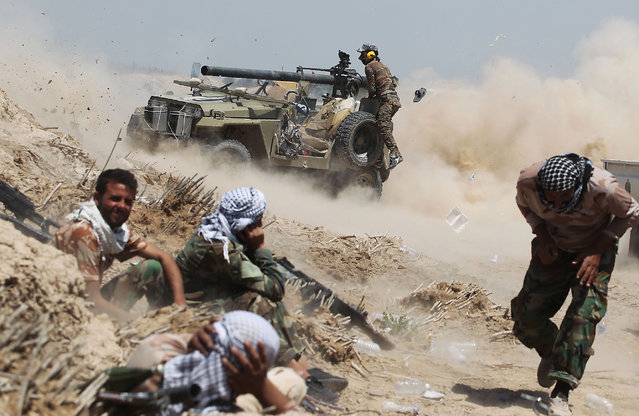
Iraqi pro-government forces fire an anti-tank cannon near al-Sejar village, north-east of Fallujah, on May 25, 2016, as they take part in a major assault to retake the city from the Islamic State (IS) group. Iraqi forces, consisting of special forces, soldiers, police, paramilitary-fighters and pro-government tribesmen, launched a major assault to retake Fallujah, the scene of deadly battles during the US occupation and one of the toughest targets yet in Baghdad's war on the Islamic State group. (Photo by Ahmad Al-Rubaye/AFP Photo)

Iraqi pro-government forces fire an anti-tank cannon near al-Sejar village, north-east of Fallujah, on May 25, 2016, as they take part in a major assault to retake the city from the Islamic State (IS) group. Iraqi forces, consisting of special forces, soldiers, police, paramilitary-fighters and pro-government tribesmen, launched a major assault to retake Fallujah, the scene of deadly battles during the US occupation and one of the toughest targets yet in Baghdad's war on the Islamic State group. (Photo by Ahmad Al-Rubaye/AFP Photo)
Details
26 May 2016 12:42:00
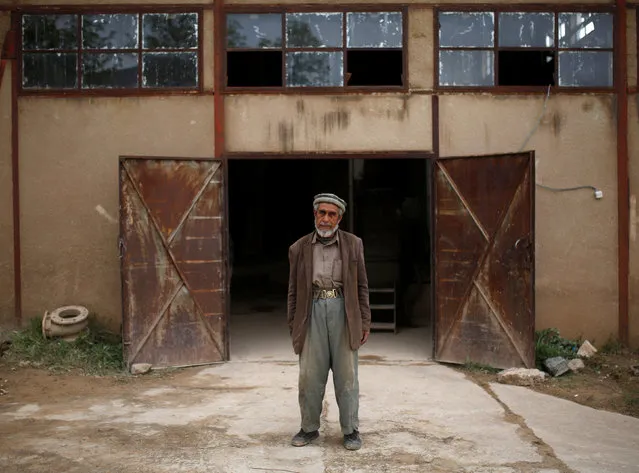
A worker at the Jabal Saraj cement factory poses for a photograph in Jabal Saraj, north of Kabul, Afghanistan April 19, 2016. (Photo by Ahmad Masood/Reuters)

A worker at the Jabal Saraj cement factory poses for a photograph in Jabal Saraj, north of Kabul, Afghanistan April 19, 2016. In an area desperately short of industry and jobs, local workers hope that the relaunch of the plant in Jabal Saraj, built by Czech engineers in 1957 and closed down by the Taliban in 1995, can show that Afghanistan's shattered industry can climb back to its feet after decades of war and destruction. But the outdated state-owned plant some 75 kilometres outside Kabul also shows how far it has to go before that promise can be achieved and there are serious questions over whether it has a viable future unless a new, modern facility is built to replace it. (Photo by Ahmad Masood/Reuters)
Details
31 May 2016 11:29:00
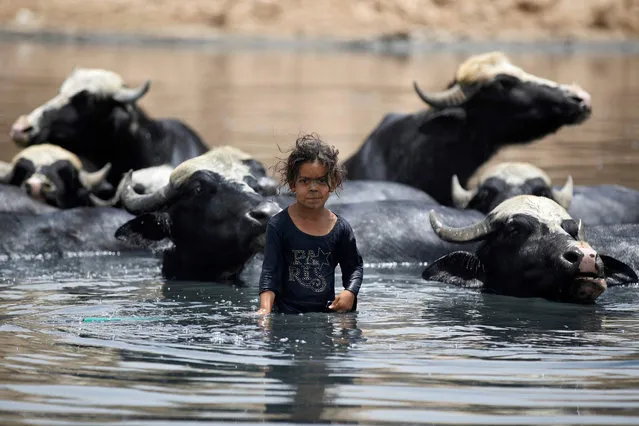
A young Iraqi shepherdess cools down buffaloes in wastewater filling the dried-up Diyala river which was a tributary of the Tigris, in the Al-Fadiliyah district east of Baghdad, on June 26, 2022. Iraq's drought reflects a decline in the level of waterways due to the lack of rain and lower flows from upstream neighboring countries Iran and Turkey. (Photo by Ahmad Al-Rubaye/AFP Photo)

A young Iraqi shepherdess cools down buffaloes in wastewater filling the dried-up Diyala river which was a tributary of the Tigris, in the Al-Fadiliyah district east of Baghdad, on June 26, 2022. Iraq's drought reflects a decline in the level of waterways due to the lack of rain and lower flows from upstream neighboring countries Iran and Turkey. (Photo by Ahmad Al-Rubaye/AFP Photo)
Details
07 Jul 2022 04:21:00
Iraqis run for cover as they flee Mosul's Al-Tayaran neighbourhood on February 28, 2017, during an offensive by Iraqi forces to retake the area from Islamic State (IS) group fighters. Hundreds of civilians fled through the desert to escape fighting and privation in Mosul, joining thousands of others who left their homes as conditions worsen in the city's west. (Photo by Ahmad Al-Rubaye/AFP Photo)

Iraqis run for cover as they flee Mosul's Al-Tayaran neighbourhood on February 28, 2017, during an offensive by Iraqi forces to retake the area from Islamic State (IS) group fighters. Hundreds of civilians fled through the desert to escape fighting and privation in Mosul, joining thousands of others who left their homes as conditions worsen in the city's west. (Photo by Ahmad Al-Rubaye/AFP Photo)
Details
02 Mar 2017 00:01:00