Loading...
Done


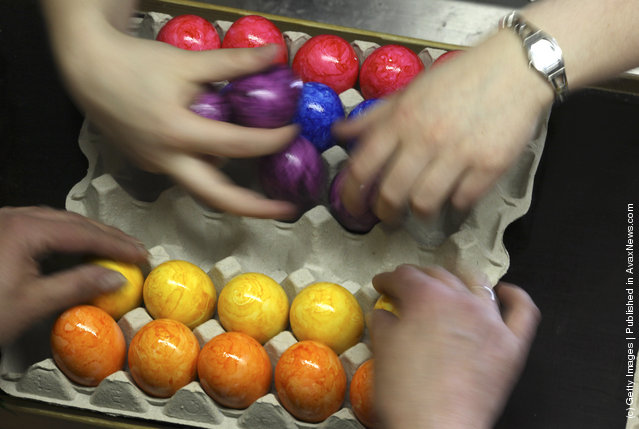
Workers sort freshly-painted Easter eggs at the Lueck poultry farm on April 7, 2011 in Sommerkahl near Aschaffenburg, Germany. The farm is currently working 24-hour shifts to meet demand for its brightly-coloured eggs two weeks before Easter. (Photo by Ralph Orlowski/Getty Images)
Details
10 Apr 2011 11:46:00


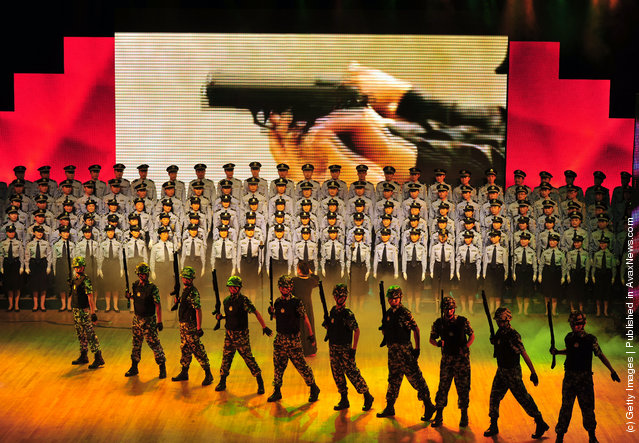
Officers from the municipal authorities of Huaian city perform red songs at the Huaian Great Hall of the People on June 13, 2011 in Huaian, Jiangsu Province of China. This year's celebrations will mark the 90th anniversary of the founding of the Communist Party of China. (Photo by ChinaFotoPress/Getty Images)
Details
15 Jun 2011 10:16:00
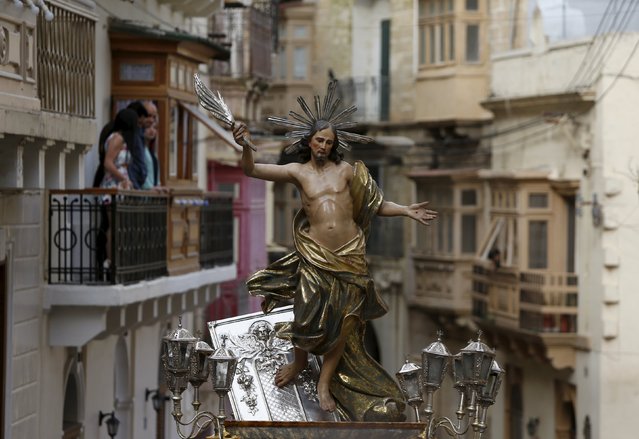
A statue of the Risen Christ is carried during an Easter Sunday procession in Cospicua, outside Valletta April 5, 2015. (Photo by Darrin Zammit Lupi/Reuters)

A statue of the Risen Christ is carried during an Easter Sunday procession in Cospicua, outside Valletta, Malta April 5, 2015. (Photo by Darrin Zammit Lupi/Reuters)
Details
06 Apr 2015 09:31:00
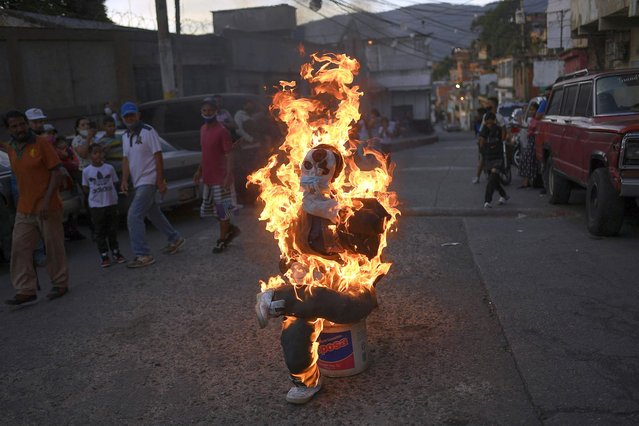
An effigy representing Judas Iscariot burns as some people wearing masks watch during Holy Week in the Catia neighborhood of Caracas, Venezuela, Sunday, April 4, 2021. The Burning of Judas is an Easter-time ritual in many communities, where an effigy of Judas Iscariot is hanged on Good Friday, then burned on Easter Sunday. (Photo by Matias Delacroix/AP Photo)

An effigy representing Judas Iscariot burns as some people wearing masks watch during Holy Week in the Catia neighborhood of Caracas, Venezuela, Sunday, April 4, 2021. The Burning of Judas is an Easter-time ritual in many communities, where an effigy of Judas Iscariot is hanged on Good Friday, then burned on Easter Sunday. (Photo by Matias Delacroix/AP Photo)
Details
22 Apr 2021 09:53:00
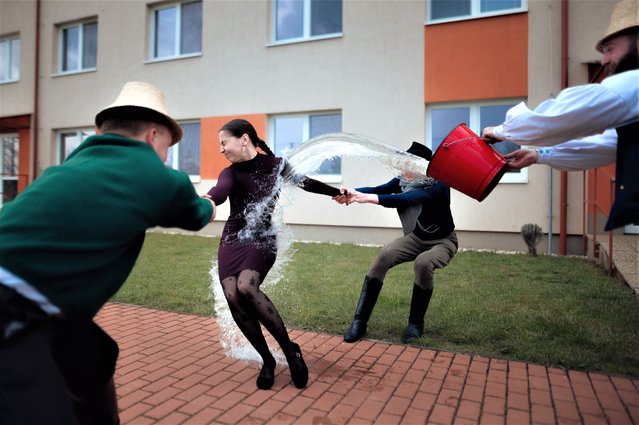
Boys and younger men from the Ilosvai Selymes Peter folk dance group pour buckets of cold water on a girl as they attend the traditional watering of local girls on Easter Monday in Komarovce, Velke Trakany, Slovakia on April 10, 2023. During Easter Holy Week, the ancient tradition of Easter sprinkling known as “watering of the girls” when Hungarian boys visit their female friends, recite poems, and pour water on them, and in exchange the girls offer the boys food and drink. (Photo by Robert Nemeti/Anadolu Agency via Getty Images)

Boys and younger men from the Ilosvai Selymes Peter folk dance group pour buckets of cold water on a girl as they attend the traditional watering of local girls on Easter Monday in Komarovce, Velke Trakany, Slovakia on April 10, 2023. During Easter Holy Week, the ancient tradition of Easter sprinkling known as “watering of the girls” when Hungarian boys visit their female friends, recite poems, and pour water on them, and in exchange the girls offer the boys food and drink. (Photo by Robert Nemeti/Anadolu Agency via Getty Images)
Details
20 Aug 2024 03:44:00
A young girl takes selfie with Easter rabbit sculpture during the Easter eggs (Pysanka) and rabbit exhibition in front of St. Sophia Cathedral in Kiev, Ukraine, 05 April 2018. Ukrainians will mark Orthodox Easter on 08 April 2018, according to Julian calendar. (Photo by Sergey Dolzhenko/EPA/EFE/Rex Features/Shutterstock)

A young girl takes selfie with Easter rabbit sculpture during the Easter eggs (Pysanka) and rabbit exhibition in front of St. Sophia Cathedral in Kiev, Ukraine, 05 April 2018. Ukrainians will mark Orthodox Easter on 08 April 2018, according to Julian calendar. (Photo by Sergey Dolzhenko/EPA/EFE/Rex Features/Shutterstock)
Details
10 Apr 2018 09:03:00
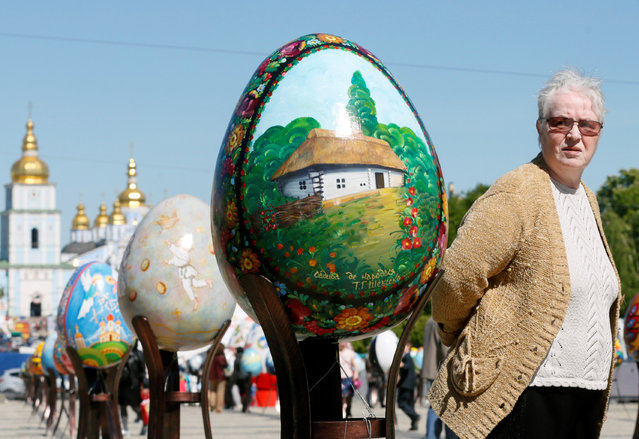
A woman looks at traditional Ukrainian Easter eggs “Pysanka”, installed as part of the upcoming celebrations of Easter, in central Kiev, Ukraine, April 29, 2016. A pysanka is a Ukrainian Easter egg, decorated with traditional Ukrainian folk designs using a wax-resist (batik) method. The word pysanka comes from the verb pysaty, “to write”, as the designs are not painted on, but written with beeswax. Many other eastern European ethnic groups decorate eggs using wax resist for Easter. These include the Belarusians, Bulgarians, Croats, Czechs, Hungarians, Lithuanians, Poles, Romanians, Serbs, Slovaks, Slovenes and Sorbs. (Photo by Valentyn Ogirenko/Reuters)

A woman looks at traditional Ukrainian Easter eggs “Pysanka”, installed as part of the upcoming celebrations of Easter, in central Kiev, Ukraine, April 29, 2016. A pysanka is a Ukrainian Easter egg, decorated with traditional Ukrainian folk designs using a wax-resist (batik) method. The word pysanka comes from the verb pysaty, “to write”, as the designs are not painted on, but written with beeswax. Many other eastern European ethnic groups decorate eggs using wax resist for Easter. These include the Belarusians, Bulgarians, Croats, Czechs, Hungarians, Lithuanians, Poles, Romanians, Serbs, Slovaks, Slovenes and Sorbs. (Photo by Valentyn Ogirenko/Reuters)
Details
30 Apr 2016 09:00:00
Easter Lamb

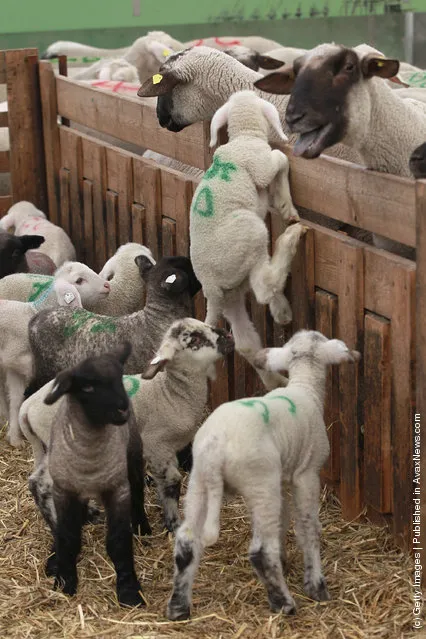
A merino lamb attempts to jump out of its enclosure to find its mother shortly before feeding time at the Educational and Reserach Station for Animal Breeding (Lehr- und Versuchsanstalt fuer Tierzucht und Tierhaltung, or LVAT) in Brandenburg state on January 27, 2012 in Gross Kreutz, Germany. Hundreds of lambs have been born at the LVAT in recent weeks in the midst of the station's lambing season. Many of the lambs will be sold just before Easter, when they will have grown to a weight of over 40kg, as lamb is the traditional German Easter meal. (Photo by Sean Gallup/Getty Images)
Details
29 Jan 2012 12:12:00