Loading...
Done
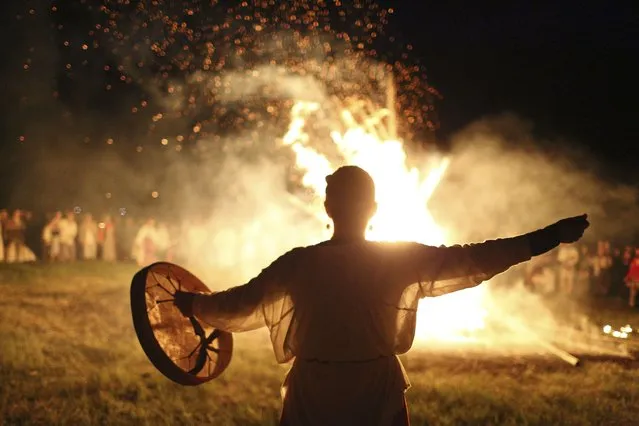
A person waves a drum while other people wearing traditional Russian village-style clothes celebrate the summer solstice near a bonfire in the village of Okunevo, about 200 kilometers (about 125 miles) northeast of the Siberian city of Omsk, Russia, on Wednesday, June 21, 2023. The festivities of Ivan Kupala, or John the Baptist, are similar to Mardi Gras and reflect pre-Christian Slavic traditions and practices. (Photo by Evgeniy Sofiychuk/AP Photo)

A person waves a drum while other people wearing traditional Russian village-style clothes celebrate the summer solstice near a bonfire in the village of Okunevo, about 200 kilometers (about 125 miles) northeast of the Siberian city of Omsk, Russia, on Wednesday, June 21, 2023. The festivities of Ivan Kupala, or John the Baptist, are similar to Mardi Gras and reflect pre-Christian Slavic traditions and practices. (Photo by Evgeniy Sofiychuk/AP Photo)
Details
26 Jun 2023 03:09:00


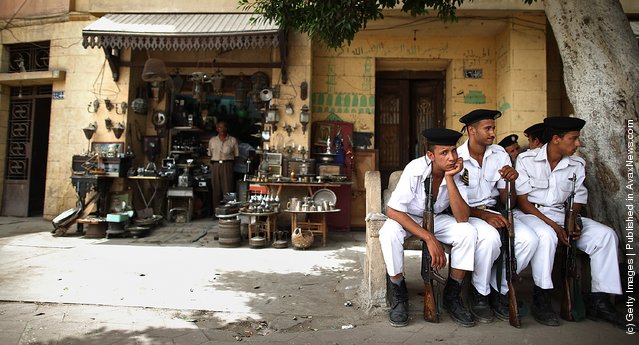
Tourist Police sit in the shade on a road leading to the Coptic Cairo area on May 27, 2011 in Cairo, Egypt. Protests in January and February brought an end to 30 years of autocratic rule by President Hosni Mubarak who will now face trial. Food prices have doubled and youth unemployment stands at 30%. Tourism is yet to return to pre-uprising levels. (Photo by Peter Macdiarmid/Getty Images)
Details
29 May 2011 11:42:00
Buddha

The Leshan Giant Buddha was built during the Tang Dynasty (618–907AD). It is carved out of a cliff face that lies at the confluence of the Minjiang, Dadu and Qingyi rivers in the southern part of Sichuan province in China, near the city of Leshan. The stone sculpture faces Mount Emei, with the rivers flowing below his feet. It is the largest carved stone Buddha in the world[1] and it is by far the tallest pre-modern statue in the world.
Details
14 Jul 2012 04:50:00
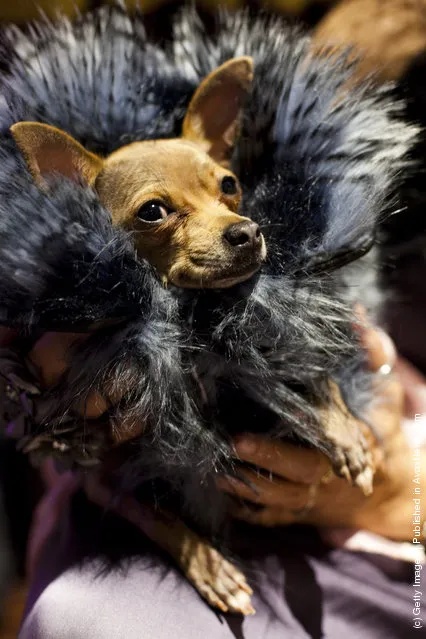
Dog Fashion Show Held Ahead Of Next Week's Westminster Kennel Club Dog Show

Miu Miu, a Chihuahua, poses at the pre-Westminster Fashion Show at Hotel Pennsylvania ahead of next week's Westminster Kennel Club Dog Show on February 10, 2012 in New York City. (Photo by Michael Nagle/Getty Images)
Details
11 Feb 2012 14:08:00
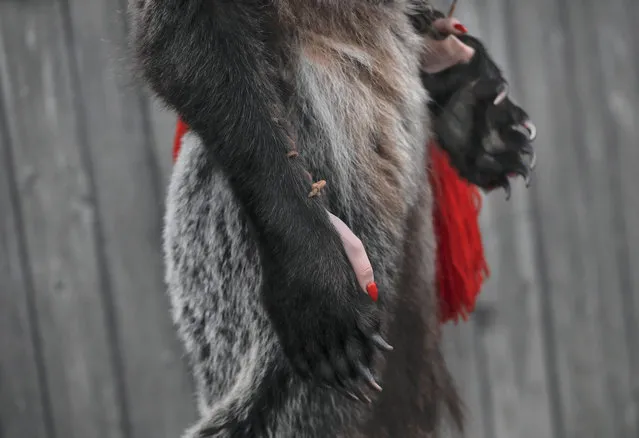
In this Saturday, December 30, 2017, picture a girl wearing a bear fur costume takes part in an annual bear parade in Comanesti, Romania. (Photo by Vadim Ghirda/AP Photo)

In this Saturday, December 30, 2017, picture a girl wearing a bear fur costume takes part in an annual bear parade in Comanesti, Romania. It's a tradition that originated in pre-Christian times, when dancers wearing colored costumes or animal furs went from house to house in villages, singing and dancing to ward off evil. (Photo by Vadim Ghirda/AP Photo)
Details
08 Jan 2018 07:05:00
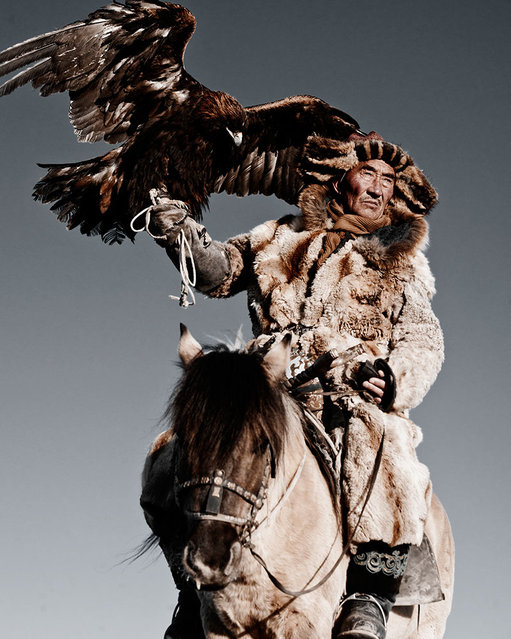
Fine Horses And Fierce Eagles Are The wings Of The Kazakh

The Kazakhs are the descendants of Turkic, Mongolic and Indo-Iranian tribes and Huns that populated the territory between Siberia and the Black Sea. They are a semi-nomadic people and have roamed the mountains and valleys of western Mongolia with their herds since the 19th century. The ancient art of eagle hunting is one of many traditions and skills that the Kazakhs have, in recent decades, been able to hold on to. They rely on their clan and herds, believing in pre-Islamic cults of the sky, the ancestors, fire and the supernatural forces of good and evil spirits.
Details
20 Feb 2014 12:12:00
Young revelers take part in a parade called "La Calabiuza" on November 1, 2015, on the eve of the Day of the Dead in Tonacatepeque, 20 kms (13 miles) north of San Salvador. During the celebration, the residents of Tonacatepeque, originally an indigenous community, recall the characters from the mythology of Cuscatlan – pre-Columbian west and central regions of El Salvador – and their dead relatives. (Photo by Marvin Recinos/AFP Photo)

Young revelers take part in a parade called "La Calabiuza" on November 1, 2015, on the eve of the Day of the Dead in Tonacatepeque, 20 kms (13 miles) north of San Salvador. During the celebration, the residents of Tonacatepeque, originally an indigenous community, recall the characters from the mythology of Cuscatlan – pre-Columbian west and central regions of El Salvador – and their dead relatives. (Photo by Marvin Recinos/AFP Photo)
Details
04 Nov 2015 11:50:00
A man dressed as a  “Trapajon”, representing entities of nature, poses for a picture after taking part in the Vijanera Festival in Silio, northern Spain, Sunday, Jan. 6, 2013. The Vijanera masquerade, of pre-Roman origin, is the first carnival of the year in Europe symbolizing the triumph of good over evil and involving the participation of crowds of residents wearing different masks, animal skins and brightly colored clothing with its own complex function and symbolism and becoming the living example of the survival of archaic cults to nature. (Photo by Daniel Ochoa de Olza/AP Photo)

A man dressed as a “Trapajon”, representing entities of nature, poses for a picture after taking part in the Vijanera Festival in Silio, northern Spain, Sunday, Jan. 6, 2013. The Vijanera masquerade, of pre-Roman origin, is the first carnival of the year in Europe symbolizing the triumph of good over evil and involving the participation of crowds of residents wearing different masks, animal skins and brightly colored clothing with its own complex function and symbolism and becoming the living example of the survival of archaic cults to nature. (Photo by Daniel Ochoa de Olza/AP Photo)
Details
19 Jan 2013 13:01:00