Loading...
Done
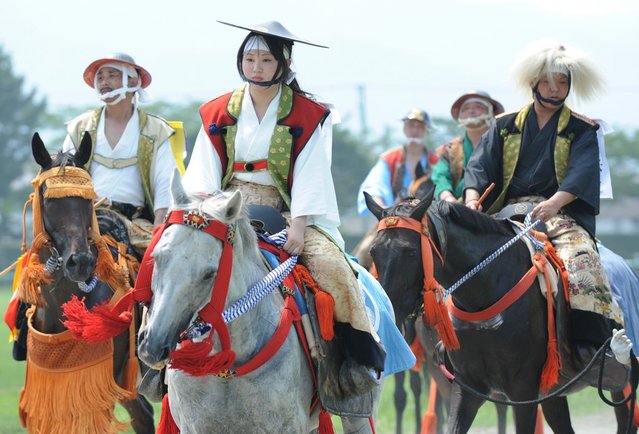
A young woman (C) clad in samurai costume leads other local poeple as she rides her horse during a parade at the annual Soma Nomaoi festival in Minamisoma, Fukushima Prefecture, on July 28, 2012.  The traditional full-scale festival kicked off for the first time after the accident of the Fukushima Dai-ichi Nuclear Power Plant following the massive earthquake and the tsunami on March 11, 2011. (Photo by Toru Yamanaka/AFP Photo)

Soma-Nomaoi is a festival that recreates a battle scene from more than 1,000 years ago. It is annually held for 4 days from July 22 to 25 in Haramachi City, Fukushima Prefecture, in the eastern part of Japan. In this historical event, 600 mounted samurai in traditional Japanese armor, with long swords at their side and ancestral flagstaffs streaming from their backs, ride across open fields. Soma-Nomaoi has been designated an Important Intangible Folk Cultural Property.

Photo: A young woman (C) clad in samurai costume leads other local poeple as she rides her horse during a parade at the annual Soma Nomaoi festival in Minamisoma, Fukushima Prefecture, on July 28, 2012. The traditional full-scale festival kicked off for the first time after the accident of the Fukushima Dai-ichi Nuclear Power Plant following the massive earthquake and the tsunami on March 11, 2011. (Photo by Toru Yamanaka/AFP Photo)
Details
02 Aug 2012 12:59:00
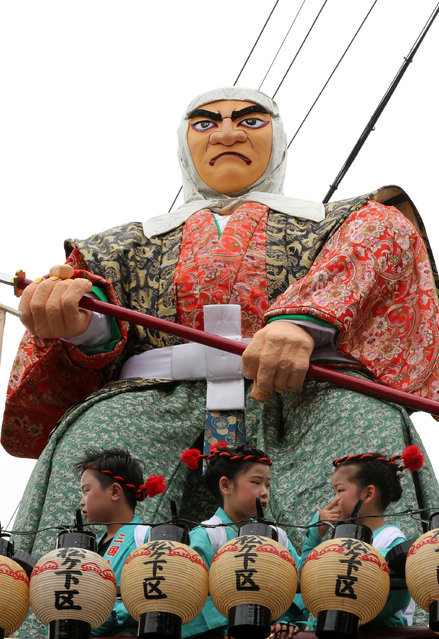
Children dressed in festival costume sit on the huge paper doll of historical Japanese figure named Hashi-Benkeii on the carts during the Mikuini annual festival on May 20, 2014 in Sakai, Japan. The annual festival takes place from May 19-21 and is attended by thousands of visitors. During the festival people dressed in traditional Japanese costumes pull carts carrying 6 meter high dolls of Japanese historical figures through the narrow streets. The origins of the festival are unclear but its history can be traced back more than 250 years. (Photo by Buddhika Weerasinghe/Getty Images)

Children dressed in festival costume sit on the huge paper doll of historical Japanese figure named Hashi-Benkeii on the carts during the Mikuini annual festival on May 20, 2014 in Sakai, Japan. The annual festival takes place from May 19-21 and is attended by thousands of visitors. During the festival people dressed in traditional Japanese costumes pull carts carrying 6 meter high dolls of Japanese historical figures through the narrow streets. The origins of the festival are unclear but its history can be traced back more than 250 years. (Photo by Buddhika Weerasinghe/Getty Images)
Details
21 May 2014 08:49:00
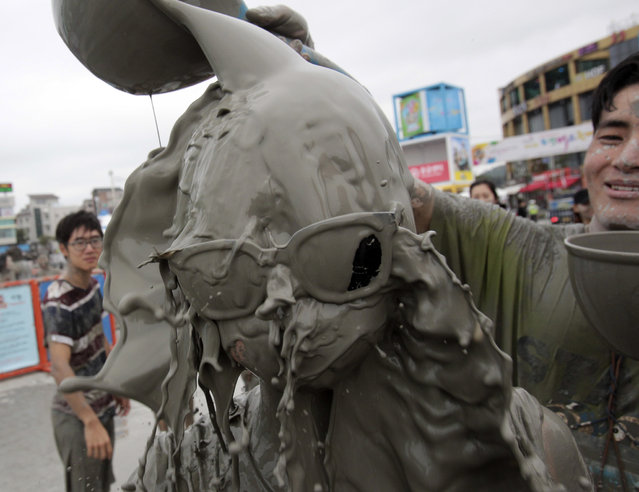
A man pours mud water on the head of his girl friend during the Boryeong Mud Festival at Daecheon Beach in Boryeong, South Korea, Friday, July 18, 2014. The annual mud festival features mud wrestling and mud sliding. (Photo by Ahn Young-joon/AP Photo)

A man pours mud water on the head of his girl friend during the Boryeong Mud Festival at Daecheon Beach in Boryeong, South Korea, Friday, July 18, 2014. The annual mud festival features mud wrestling and mud sliding. (Photo by Ahn Young-joon/AP Photo)
Details
20 Jul 2014 11:29:00
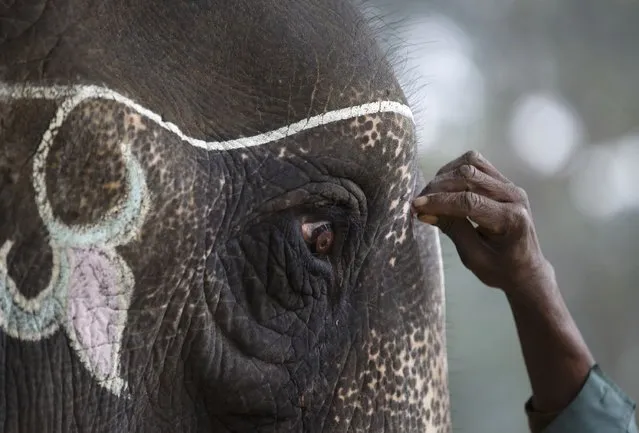
A mahout decorates his elephant using chalk while preparing for the Elephant Festival at Sauraha in Chitwan, south of Kathmandu, December 26, 2014. (Photo by Navesh Chitrakar/Reuters)

A mahout (a person who rides an elephant) decorates his elephant using chalk while preparing for the Elephant Festival at Sauraha in Chitwan, south of Kathmandu, December 26, 2014. Elephants and mahouts from Chitwan will participate in the Elephant festival, which involves elephant races, elephants playing an exhibition soccer match and taking part in various other sporting activities. The event will start from 26 December and will end on 30 December, 2014. (Photo by Navesh Chitrakar/Reuters)
Details
28 Dec 2014 11:38:00
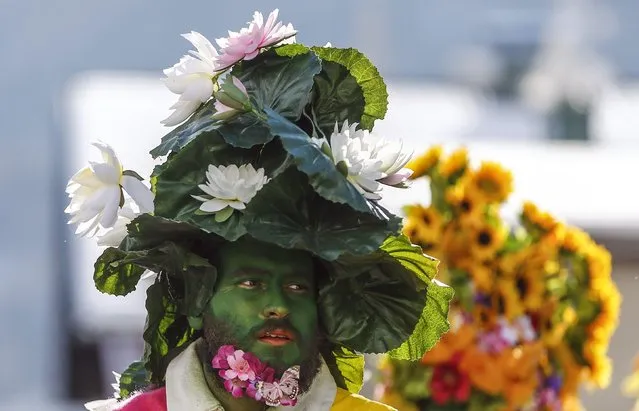
A man with a painted face and traditional costumes takes part in the Schleicherlaufen festival in the western Austrian town of Telfs February 1, 2015. (Photo by Dominic Ebenbichler/Reuters)

A man with a painted face and traditional costumes takes part in the Schleicherlaufen festival in the western Austrian town of Telfs February 1, 2015. (Photo by Dominic Ebenbichler/Reuters)
Details
02 Feb 2015 11:06:00


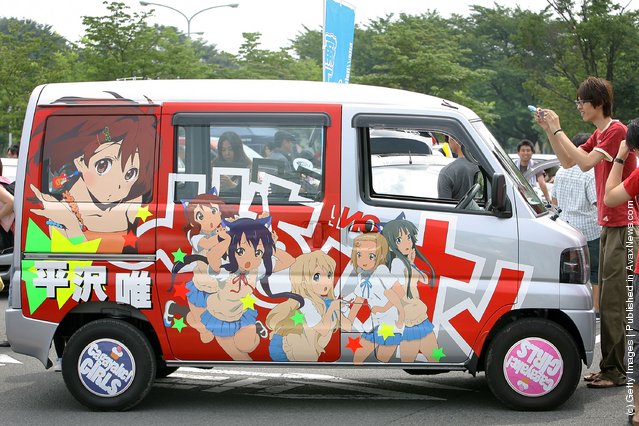
“Itasha (痛車), literally “painmobile”, is a Japanese term for an otaku fad of individuals decorating the bodies of their cars with fictional characters of anime, manga, or video games (especially bishōjo game or eroge). These characters are predominately “cute” female. The decorations usually involve paint schemes and stickers. Automobiles are called Itasha, while similar motorcycles and bicycles are called itansha (痛単車) and itachari (痛チャリ), respectively”. – Wikipedia


Photo: A visitor takes pictures of an anime-decorated «Itasha» car displayed during the “Moe Fes in Washimiya” at Washimiya Town Hall on July 18, 2009 in Washimiya, Saitama, Japan. Itasha, a word derived from “itai” (painful) and “sha” (car), are vehicles decorated with mostly female characters from Japanese manga, anime and video games. (Photo by Kiyoshi Ota/Getty Images)
Details
02 May 2011 08:38:00


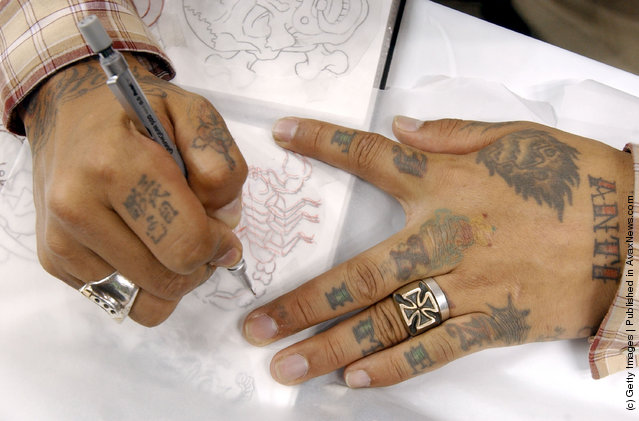
Tattoo artist Tokyo Hiro draws a scorpion to be tattooed on a customer at the Tattoo the Earth Festival August 9, 2002 in Oakland, California. The Tattoo the Earth festival focuses on the tattooing culture and is the largest tattoo event of its kind. (Photo by Justin Sullivan/Getty Images)
Details
06 Jul 2011 10:23:00
Rebellion Punk Rock Festival

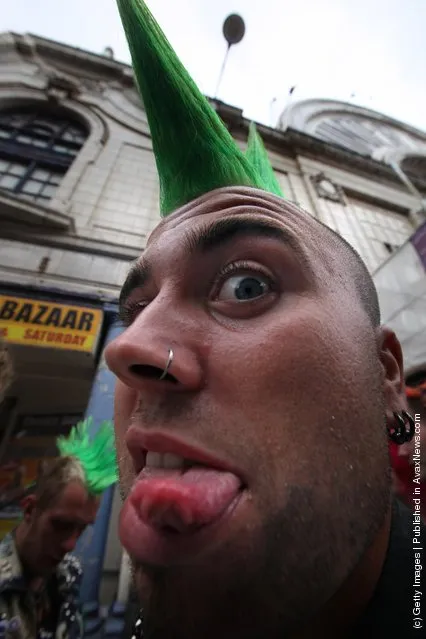
A punks sticks out his tongue at the start of the annual Rebellion Punk Rock Festival on August 4, 2011 in Blackpool, England. This weekend a clash of musical cultures hits the famous seaside town as pogoing punks attending the annual Rebellion Festival at The Winter Gardens come shoulder to shoulder with traditional holidaymakers and the waltzing dancers of the Tower Ballroom. (Photo by Christopher Furlong/Getty Images)
Details
05 Aug 2011 08:56:00