Loading...
Done


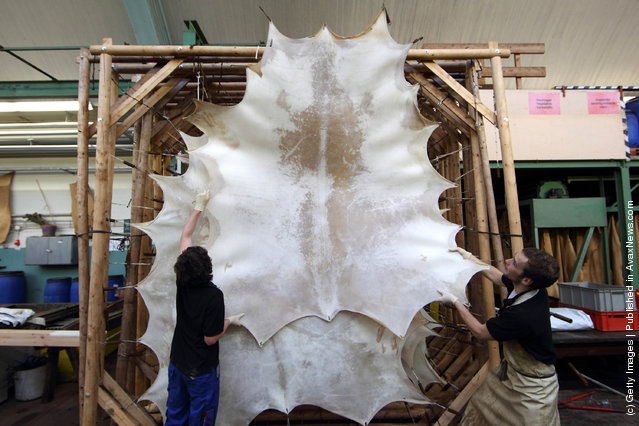
REUTLINGEN, GERMANY - NOVEMBER 17: Students hang out finished parchment leather at the LGR (Lederinstitut Gerberschule Reutlingen) tannery school on November 17, 2010 in Reutlingen, Germany. Even in early antiquity and up their hair or dried goat and sheep skins were used as material for documents. In the small Asian city Pergamon these skins were processed in large quantities for this purpose, so they formed the main trading arm of the city, of which the name is parchment is derived. In medieval times, reached the parchment is of great importance, it was such as France's production under the supervision of the University of Paris. Even now, important documents, placed on their unlimited shelf life as possible large value (eg diplomas, addresses, memory, writings, documents for primary and keystones) written on parchment...
Details
20 Nov 2011 18:17:00
Chimbu Tribe And The Skeleton Body Painting

Skeleton bodypainting in Chimbu tribe. Village Mindima, Simbu (a Highlands Region province in Papua New Guinea), September 14, 2009. (Photo by Rita Willaert; Source: Flickr)
Details
26 Apr 2012 13:39:00
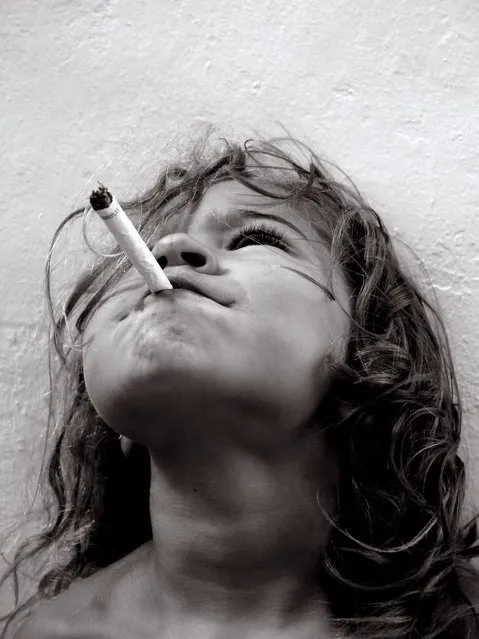
Toddlers by Karolina Bazydlo

Toddlers by Karolina Bazydlo. (Photo by Karolina Bazydlo; Source: Flickr)
Details
14 May 2012 08:53:00
long exposure

Long-exposure photography or time-exposure photography involves using a long-duration shutter speed to sharply capture the stationary elements of images while blurring, smearing, or obscuring the moving elements. The paths of moving light sources become clearly visible.
Details
03 Jul 2012 14:37:00
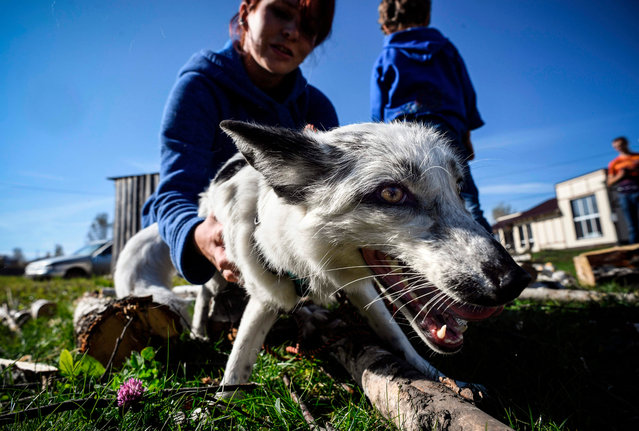
Tatyana Abramova, 33, plays with her home fox Plombir at her countryside house outside Siberian city of Novosibirsk on September 12, 2020. The official start of the Soviet experiment to better understand the domestication of animals by humans began in 1959, and was initiated by geneticists Dmitri Beliaiev and Lioudmila Trout on a farm in Akademgorodok, the scientific center of excellence in Siberia. Their primary objective was to domesticate foxes, to understand how the ancestor of wolves, another canine, evolved into a loyal and loving dog. And understand what this domestication tells us about the genetic evolution of species. (Photo by Alexander Nemenov/AFP Photo)

Tatyana Abramova, 33, plays with her home fox Plombir at her countryside house outside Siberian city of Novosibirsk on September 12, 2020. The official start of the Soviet experiment to better understand the domestication of animals by humans began in 1959, and was initiated by geneticists Dmitri Beliaiev and Lioudmila Trout on a farm in Akademgorodok, the scientific center of excellence in Siberia. Their primary objective was to domesticate foxes, to understand how the ancestor of wolves, another canine, evolved into a loyal and loving dog. And understand what this domestication tells us about the genetic evolution of species. (Photo by Alexander Nemenov/AFP Photo)
Details
25 Oct 2020 00:05:00
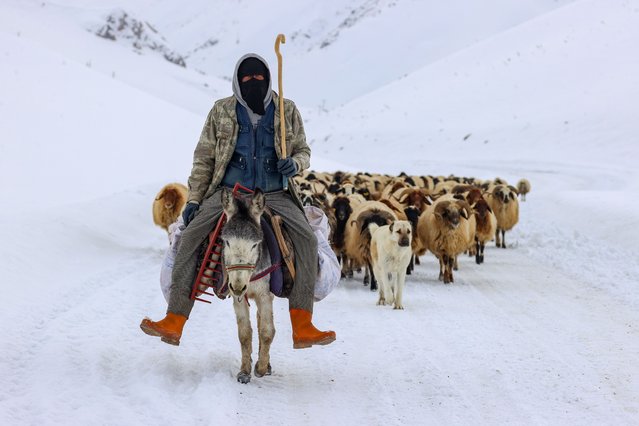
A shepherd rides a donkey as he leads sheep during winter in Van, Turkiye on February 19, 2022. Despite the terrible winter weather and the hard geology of the region, breeders in Van's Gurpnar district, where livestock is the most important source of revenue, do not disregard the care of their animals. Livestock farmers in the Cepkenli and Topcudegirmeni neighborhoods have the similar difficulties as those in rural areas, where the snow depth reaches one meter. (Photo by Ozkan Bilgin/Anadolu Agency via Getty Images)

A shepherd rides a donkey as he leads sheep during winter in Van, Turkiye on February 19, 2022. Despite the terrible winter weather and the hard geology of the region, breeders in Van's Gurpnar district, where livestock is the most important source of revenue, do not disregard the care of their animals. Livestock farmers in the Cepkenli and Topcudegirmeni neighborhoods have the similar difficulties as those in rural areas, where the snow depth reaches one meter. (Photo by Ozkan Bilgin/Anadolu Agency via Getty Images)
Details
04 Mar 2022 06:01:00
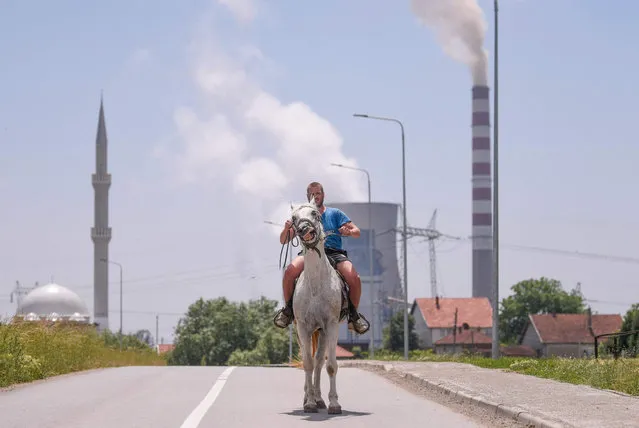
A man rides his horse next to Kosovo's coal-fired power plant near the town of Obilic on May 30, 2022. Two coal-fired power plants, Kosova A and Kosova B, are the main source of the alarming air pollution levels in Kosovo, and particularly in the town of Obilic, which is located between the two plants and near to their ash disposal sites and open-pit lignite mines. (Photo by Armend Nimani/AFP Photo)

A man rides his horse next to Kosovo's coal-fired power plant near the town of Obilic on May 30, 2022. Two coal-fired power plants, Kosova A and Kosova B, are the main source of the alarming air pollution levels in Kosovo, and particularly in the town of Obilic, which is located between the two plants and near to their ash disposal sites and open-pit lignite mines. (Photo by Armend Nimani/AFP Photo)
Details
01 Jun 2022 05:38:00
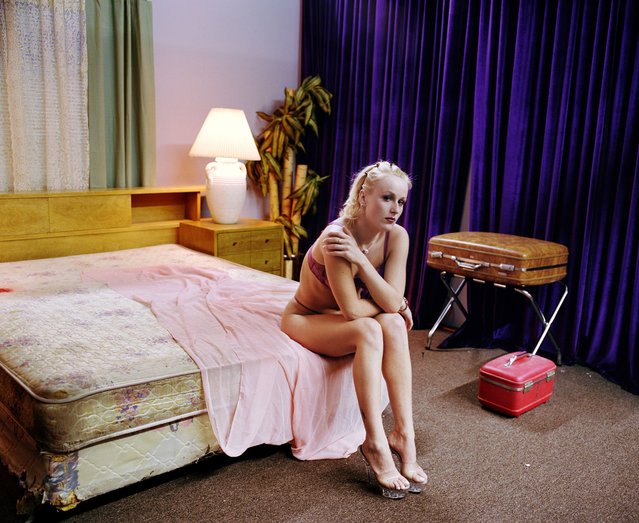
«Sharon Wild (from the series The Valley)», 2001. Larry Sultan grew up in California’s San Fernando Valley, which was a source of inspiration for a number of his projects. His series The Valley (2004) addresses the use of ordinary homes as sets for pornographic films, and asks why the ideal of middle-class domesticity lends itself to this most curious form of cultural appropriation. (Photo by Larry Sultan)

«Sharon Wild (from the series The Valley)», 2001. Larry Sultan grew up in California’s San Fernando Valley, which was a source of inspiration for a number of his projects. His series The Valley (2004) addresses the use of ordinary homes as sets for pornographic films, and asks why the ideal of middle-class domesticity lends itself to this most curious form of cultural appropriation. (Photo by Larry Sultan)
Details
03 Aug 2025 03:50:00