Loading...
Done
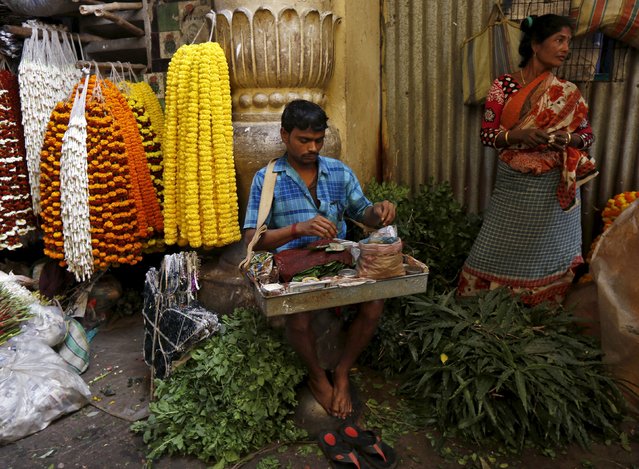
A vendor prepares paan, a betel nut-based chewable stimulant at a flower market in Kolkata, India, January 18, 2016. (Photo by Rupak De Chowdhuri/Reuters)

A vendor prepares paan, a betel nut-based chewable stimulant at a flower market in Kolkata, India, January 18, 2016. (Photo by Rupak De Chowdhuri/Reuters)
Details
04 Feb 2016 11:29:00
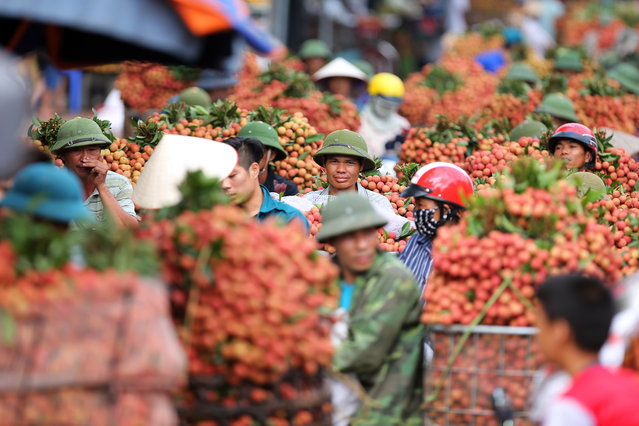
People carry lychee for sale on a motorbike on a street in Luc Ngan, Bac Giang province, Vietnam, 22 June 2016. Lychee output in Bac Giang province is expected to reach 130,000 tonnes this year. China is still Vietnam's main lychee export market so far, buying around 60 percent of the annual crop, according to official reports. (Photo by Luong Thai Linh/EPA)

People carry lychee for sale on a motorbike on a street in Luc Ngan, Bac Giang province, Vietnam, 22 June 2016. Lychee output in Bac Giang province is expected to reach 130,000 tonnes this year. China is still Vietnam's main lychee export market so far, buying around 60 percent of the annual crop, according to official reports. (Photo by Luong Thai Linh/EPA)
Details
30 Jun 2016 11:25:00
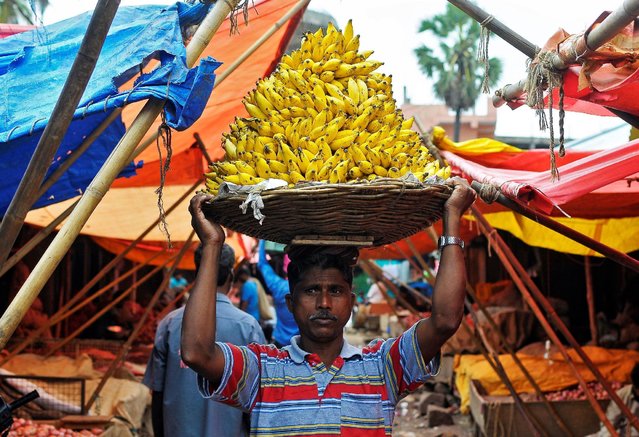
A labourer carries a basket of bananas inside a wholesale fruit and vegetable market in Bengaluru, India, August 22, 2016. (Photo by Abhishek N. Chinnappa/Reuters)

A labourer carries a basket of bananas inside a wholesale fruit and vegetable market in Bengaluru, India, August 22, 2016. (Photo by Abhishek N. Chinnappa/Reuters)
Details
03 Sep 2016 10:02:00
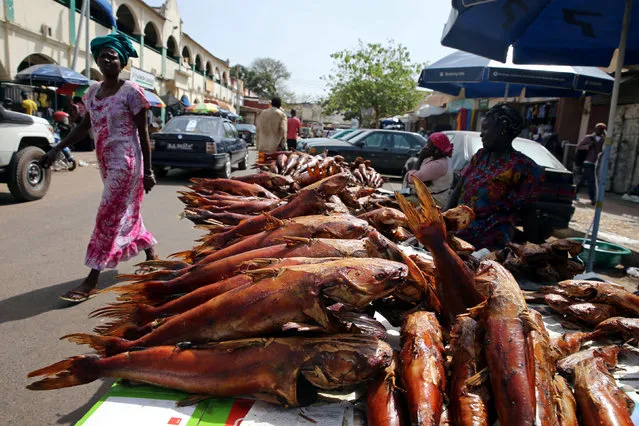
A woman walks past a stall at a market in Banjul, Gambia December 15, 2016. (Photo by Afolabi Sotunde/Reuters)

A woman walks past a stall at a market in Banjul, Gambia December 15, 2016. (Photo by Afolabi Sotunde/Reuters)
Details
03 Jan 2017 11:14:00
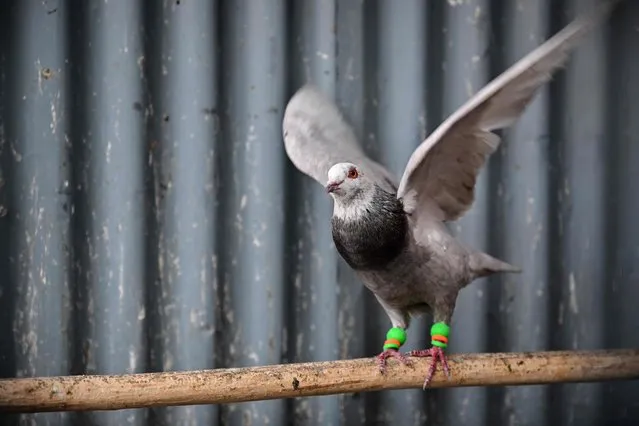
A pigeon stretches its wings in the Ka Faroshi bird market in Kabul on July 16, 2022. (Photo by Lillian Suwanrumpha/AFP Photo)

A pigeon stretches its wings in the Ka Faroshi bird market in Kabul on July 16, 2022. (Photo by Lillian Suwanrumpha/AFP Photo)
Details
20 Jul 2022 04:33:00
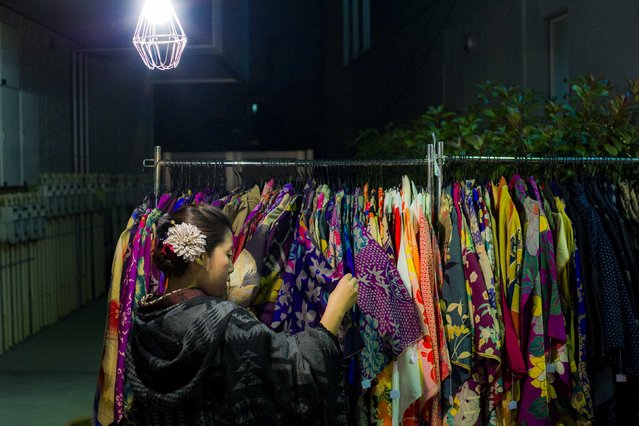
A woman browses through kimonos for sale at Boroichi flea market in Tokyo December 15, 2014. In the 16th century, Boroichi was a place for farmers to buy and sell rags, known as boro, for mending clothes and weaving sandals. Now in its 436th year, the original spirit lingers, with about 700 stands hawking fabric, used clothes and piles of rags. Others sell kitchen tools, pottery, seaweed and spices. (Photo by Thomas Peter/Reuters)

A woman browses through kimonos for sale at Boroichi flea market in Tokyo December 15, 2014. In the 16th century, Boroichi was a place for farmers to buy and sell rags, known as boro, for mending clothes and weaving sandals. Now in its 436th year, the original spirit lingers, with about 700 stands hawking fabric, used clothes and piles of rags. Others sell kitchen tools, pottery, seaweed and spices. About 200,000 people flock to the market, which is only open for four mid-winter days a year – two in December and two in January. (Photo by Thomas Peter/Reuters)
Details
19 Dec 2014 12:50:00
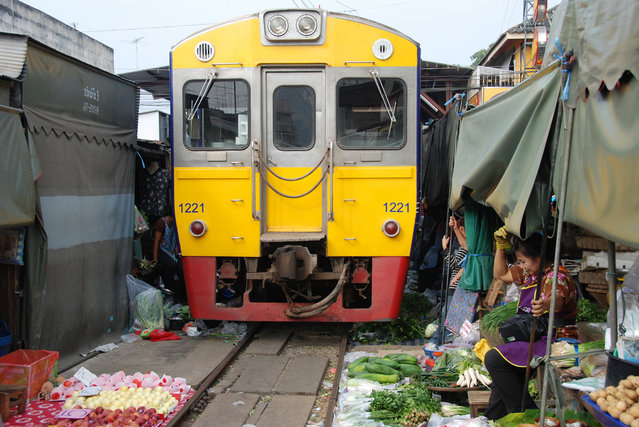
Maeklong Railway Market. (Photo by Trent Strohm)

“Maeklong Railway Market, located in Samut Songkhram, Thailand, around 37 miles west of Bangkok, looks like any other open-air market in Asia. HOWEVER...”. – Kaushik via Amusing Planet. Photo: Maeklong Railway Market (Photo by Trent Strohm)
Details
04 Jan 2013 16:16:00
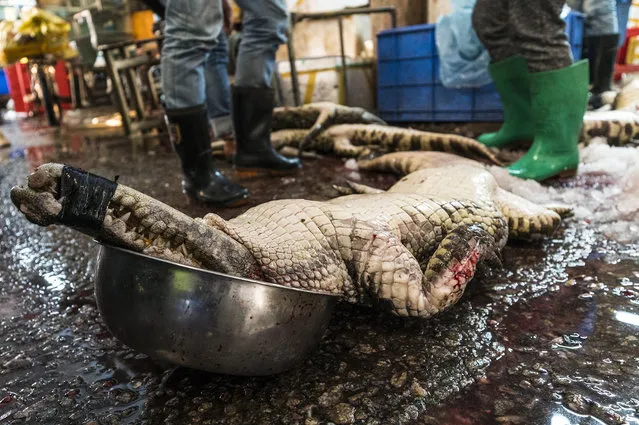
A dead crocodile is seen on Huangsha Seafood Market in Guangzhou, Guandong Province, China, 22 January 2018. Tsukiji Market of China or Huangsha Seafood Market is biggest one in Southern China and one of the biggest in China, as there are literally hundreds of different varieties of fish and seafood scattered throughout the market. Since the proximity of the fish market is so close to the Zhujiang River, it's quite easy for the large fishing vessels and fishermen to unload their fresh catch right at the market, which ensures that the fish and seafood remain fresh. Fish and other seafood are coming there from all around the globe. Seafood Market is full of different kinds of live fish, live shellfish, and live seafood on display in crystal clear tanks and it's common to see 5-star chefs, retailers and expats to source for fresh and high-quality seafood supplies for reasonable prices. While it is a wholesale fish market, since many Guangzhou restaurants and businesses come to purchase their seafood here, the public is welcome to come and even purchase. Many local Chinese have the vendors slice up fresh salmon fillets to take home or carry seafood into one of the nearby specialty restaurants, where they will cook if for them and serve it with vegetables and other side dishes of their choice. One of the biggest attractions for both, tourists and buyers, on market are crocodiles, which are brought there alive in wooden cases with taped jaws so they can?t accidentally bite. They are from crocodile farms from Guangdong, China and from Vietnam. Crocodile meat is popular in most Asian countries and it is consider as delicate one. Crocodiles weight from 10 to 25 kg and bigger ones are about 2 years old. They cost about 70 RMB (8.90 EURO) when bout as whole, or if you buy as parts most expensive and appreciated parts are paws 120 RMB (15.26 EURO) per kg, and tail 100 RMB (12.72 EURO) per kg. (Photo by Aleksandar Plavevski/EPA/EFE)

A dead crocodile is seen on Huangsha Seafood Market in Guangzhou, Guandong Province, China, 22 January 2018. Tsukiji Market of China or Huangsha Seafood Market is biggest one in Southern China and one of the biggest in China, as there are literally hundreds of different varieties of fish and seafood scattered throughout the market. (Photo by Aleksandar Plavevski/EPA/EFE)
Details
17 Apr 2020 00:05:00