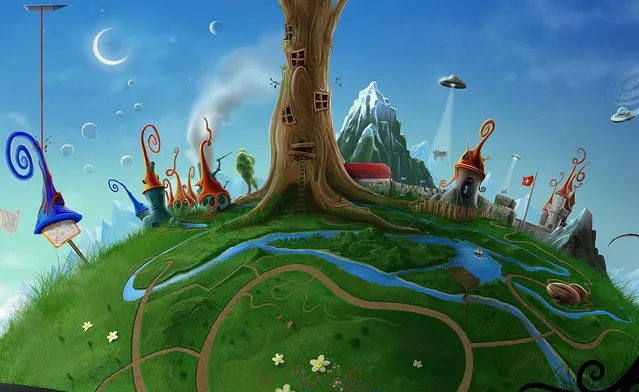
In this article we’ll be featuring a set of unique, highly-detailed surreal artworks created by David Fuhrer AKA Microbot, a self -taught freelance digital artist from Bern, Switzerland.
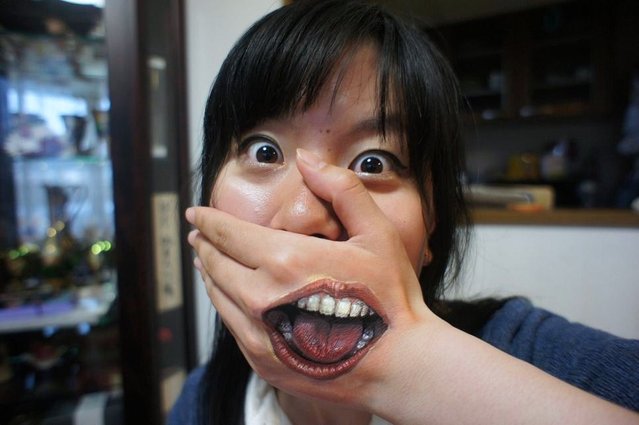
“The images might look like they are digitally altered using Photoshop, but they are actually hand drawn pieces of incredibly realistic body art by Japanese artist and student Chooo-San”. (Via Enpundit.com)
Russian illustrator from South West of Siberia Rhads (Artem Chebokha) creates surreal digital paintings that have a peaceful yet grandiose feel to them.
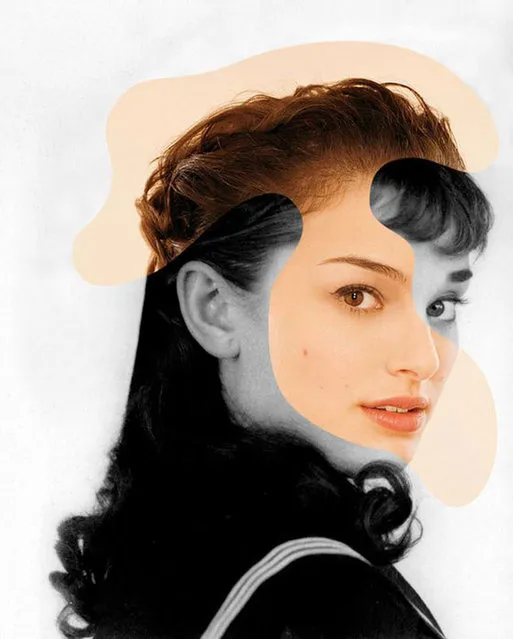
George Chamoun creates a visual mashup of two different Hollywood eras. The name Iconatomy is coined from the words "icon" (starts, celebrities, etc) and "anatomy". It took Chamoun a lot of time and energy trying to find two perfect photographs to digitally pair together. The results are in no way morphed, but collaged together to create an iconic symbol of looks, fortune and fame.
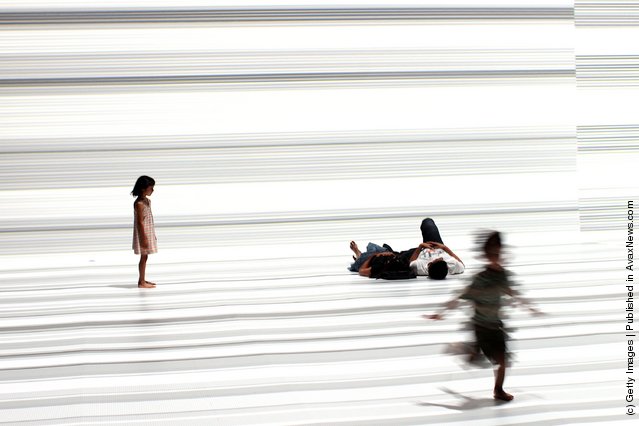
Children play at the Ryoji Ikeda exhibition “the transfinite” at the Park Avenue Armory on June 10, 2011 in New York City. The audio visual installation, which will close after tomorrow, features two back-two-back screens displaying a continual loop of sounds, fragments of numbers and strobe-lit patterns that echo the Japanese artist's interest in mathematics, the subconscious and the digital world. (Photo by Spencer Platt/Getty Images)
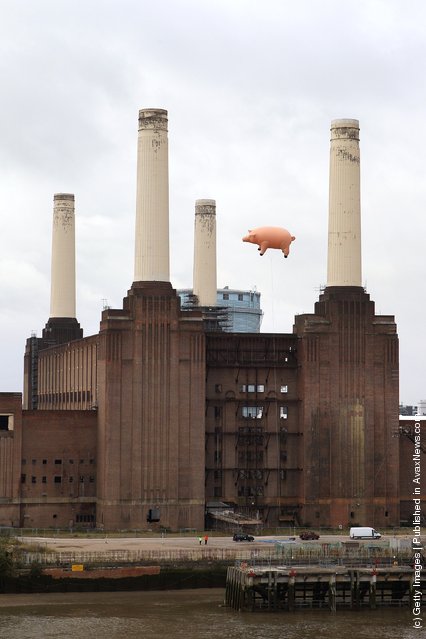
An inflatable pig flies above Battersea Power Station in a recreation of Pink Floyd's “Animals” album cover on September 26, 2011 in London, England. The classic Pink Floyd album artwork was recreated to mark the release of several digitally remastered versions of their albums. (Photo by Oli Scarff/Getty Images)
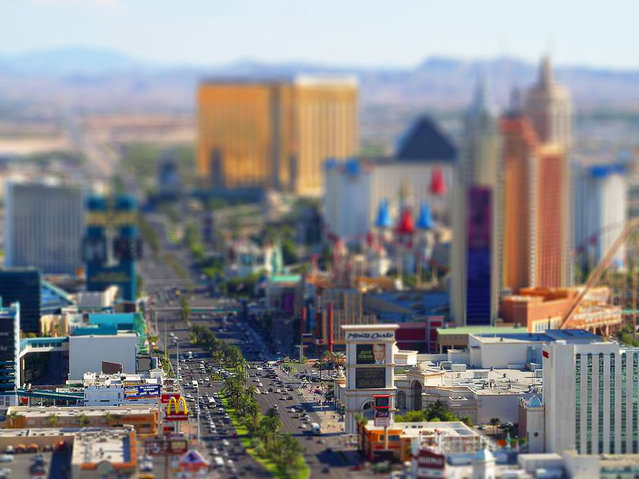
“Tilt-shift photography” refers to the use of camera movements on small- and medium-format cameras, and sometimes specifically refers to the use of tilt for selective focus, often for simulating a miniature scene. Sometimes the term is used when the shallow depth of field is simulated with digital post processing; the name may derive from the tilt-shift lens normally required when the effect is produced optically.