Loading...
Done
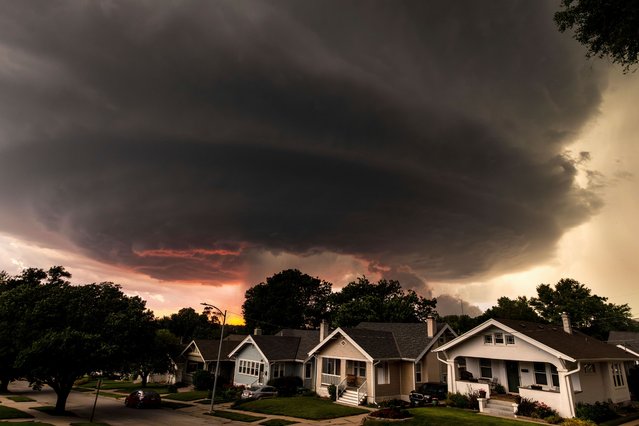
A severe thunderstorm hits Omaha, Neb., on Wednesday, June 12, 2024. (Photo by Chris Machian/Omaha World-Herald via AP Photo)

A severe thunderstorm hits Omaha, Neb., on Wednesday, June 12, 2024. (Photo by Chris Machian/Omaha World-Herald via AP Photo)
Details
10 Sep 2025 04:10:00
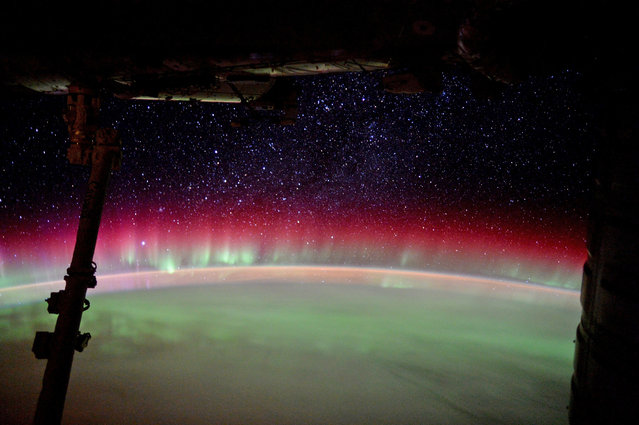
ESA astronaut Tim Peake posted this stunning image on his social media channels, commenting: “Station passed through magnificent aurora Australis last night”. Tim is set to return to Earth on 18 June 2016, bringing his six-month Principia mission to the ISS to an end. During his stay he performed more than 30 scientific experiments for ESA and taking part in numerous others from ESA's international partners. ESA and the UK Space Agency have partnered to develop many exciting educational activities around the Principia mission, aimed at sparking the interest of young children in science and space. (Photo by Tim Peake/ESA/NASA)

ESA astronaut Tim Peake posted this stunning image on his social media channels, commenting: “Station passed through magnificent aurora Australis last night”. Tim is set to return to Earth on 18 June 2016, bringing his six-month Principia mission to the ISS to an end. During his stay he performed more than 30 scientific experiments for ESA and taking part in numerous others from ESA's international partners. ESA and the UK Space Agency have partnered to develop many exciting educational activities around the Principia mission, aimed at sparking the interest of young children in science and space. (Photo by Tim Peake/ESA/NASA)
Details
31 Dec 2016 10:21:00
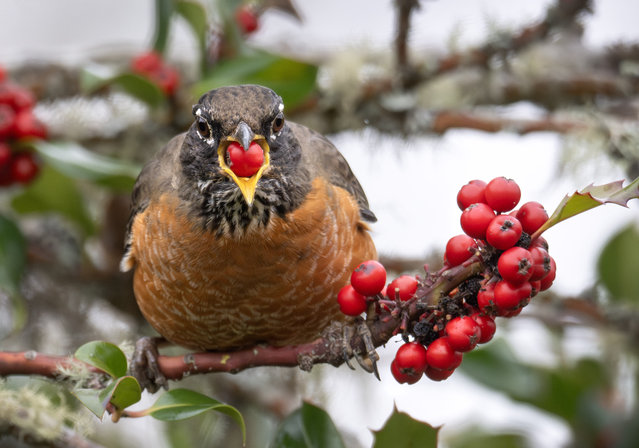
An American robin feeds on holly berries in a thicket near Elkton in southwestern Oregon on November 16, 2024. Many birds can safely consume holly berries, including blackbirds, redwings, and thrushes. There is an old wives tale that if you see a bird eating a berry, it is safe for humans to eat, but this is not true. Birds consume many plants that are poisonous to humans, holly berries included. (Photo by Robin Loznak/ZUMA Press Wire/Rex Features/Shutterstock)

An American robin feeds on holly berries in a thicket near Elkton in southwestern Oregon on November 16, 2024. Many birds can safely consume holly berries, including blackbirds, redwings, and thrushes. There is an old wives tale that if you see a bird eating a berry, it is safe for humans to eat, but this is not true. Birds consume many plants that are poisonous to humans, holly berries included. (Photo by Robin Loznak/ZUMA Press Wire/Rex Features/Shutterstock)
Details
01 Dec 2024 01:43:00
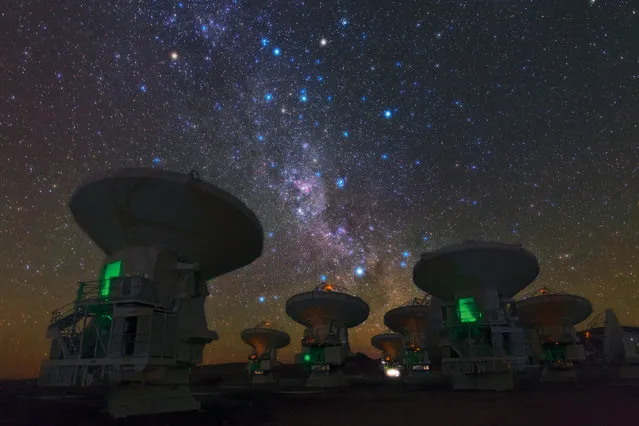
The antennas of the European Southern Observatory's Atacama Large Millimeter/Submillimeter Array, also known as ALMA, are set against the splendor of the Milky Way in this picture by Babak Tafreshi

The antennas of the European Southern Observatory's Atacama Large Millimeter/Submillimeter Array, also known as ALMA, are set against the splendor of the Milky Way in this picture by Babak Tafreshi. Construction of the full ALMA array is due to be completed in Chile's Atacama Desert in 2013, but the facility is already making scientific observations with a partial array of antennas. (Photo by ESO/B. Tafreshi/TWAN)
Details
03 Jun 2012 11:57:00
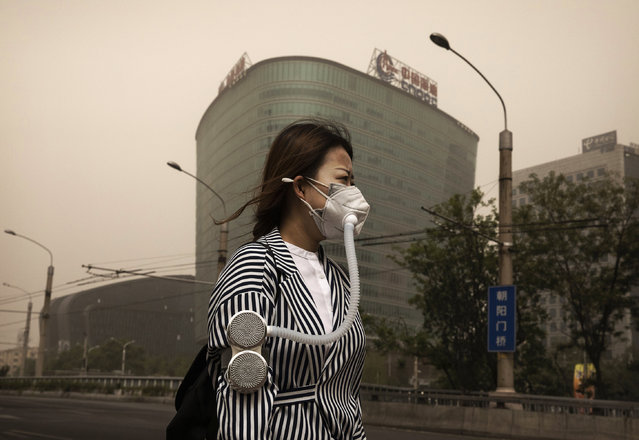
A Chinese woman wears a mask to protect from particles blown in during a sandstorm as she walks in the street on May 4, 2017 in Beijing, China. Sandstorms are common in northern China during the spring season and are caused when heavy winds from Mongolia in the north brings sand and pollutants that can blanket Chinese cities and cause air quality to deteriorate. (Photo by Kevin Frayer/Getty Images)

A Chinese woman wears a mask to protect from particles blown in during a sandstorm as she walks in the street on May 4, 2017 in Beijing, China. Sandstorms are common in northern China during the spring season and are caused when heavy winds from Mongolia in the north brings sand and pollutants that can blanket Chinese cities and cause air quality to deteriorate. (Photo by Kevin Frayer/Getty Images)
Details
12 May 2017 07:06:00
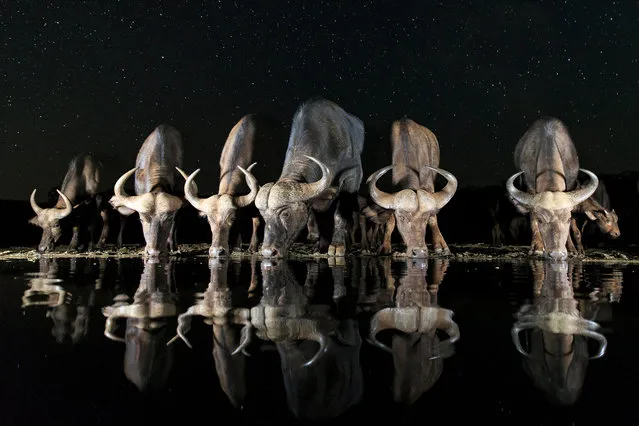
Wildlife category, open shortlist. “Buffaloes and stars”. This picture, taken at Zimanga game reserve in KwaZulu-Natal, South Africa, used an in-camera multiple exposure, with the first lit for the buffaloes and the second focused on the stars. (Photo and caption by Andreas Hemb/2017 Sony World Photography Awards)

Wildlife category, open shortlist. “Buffaloes and stars”. This picture, taken at Zimanga game reserve in KwaZulu-Natal, South Africa, used an in-camera multiple exposure, with the first lit for the buffaloes and the second focused on the stars. (Photo and caption by Andreas Hemb/2017 Sony World Photography Awards)
Details
01 Mar 2017 00:03:00
A traditional game that earned hollers from the crowd saw a male rider gallop after a young woman, stretching for a kiss. Only a handful of the men managed the risky peck before the young women turned the tables and thundered after the men with whips in hand. (Photo by Amos Chapple/Radio Free Europe/Radio Liberty)

A traditional game that earned hollers from the crowd saw a male rider gallop after a young woman, stretching for a kiss. Only a handful of the men managed the risky peck before the young women turned the tables and thundered after the men with whips in hand. (Photo by Amos Chapple/Radio Free Europe/Radio Liberty)
Details
06 Sep 2018 00:01:00
On August 31, 2012, a long filament of solar material that had been hovering in the sun's atmosphere, the corona, erupted out into space at 4:36 p.m. EDT. The coronal mass ejection, or CME, traveled at over 900 miles per second. The CME did not travel directly toward Earth, but did connect with Earth's magnetic environment, or magnetosphere, causing aurora to appear on the night of Monday, September 3. (Photo by NASA/GSFC/SDO)

On August 31, 2012, a long filament of solar material that had been hovering in the sun's atmosphere, the corona, erupted out into space at 4:36 p.m. EDT. The coronal mass ejection, or CME, traveled at over 900 miles per second. The CME did not travel directly toward Earth, but did connect with Earth's magnetic environment, or magnetosphere, causing aurora to appear on the night of Monday, September 3. (Photo by NASA/GSFC/SDO via The Atlantic)
Details
14 Sep 2012 09:01:00