Loading...
Done
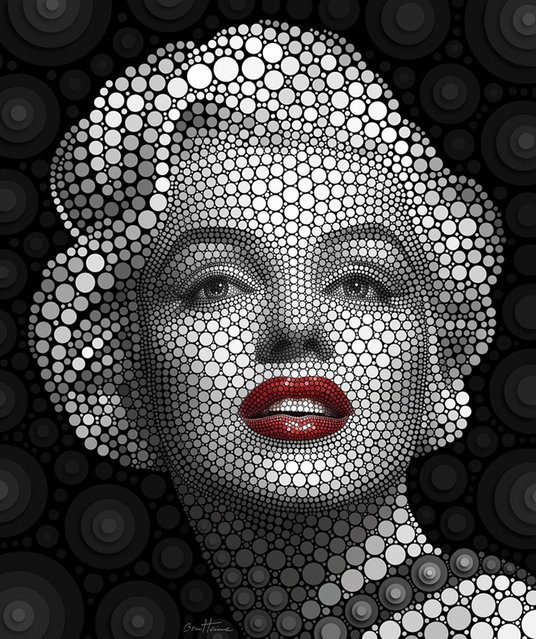
Digital Circlism: Portraits Of Celebrities By Ben Heine

Digital artist Ben Heine creates mind-melting portraits of pop culture icons using bold colour and graphic line elements.
Details
26 Feb 2013 11:18:00
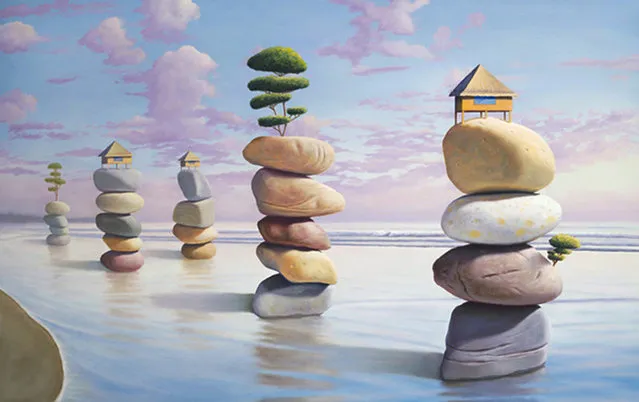
Oil Paintings By Paul David Bond

Paul Bond's art lives in the spaces between dreaming and reality. Drawing from the Latin American genre of Magic Realism where symbolic, surreal and fantastic elements blend with realistic atmospheres, they remove the veil on a world where everything is possible.
Details
31 May 2013 15:58:00
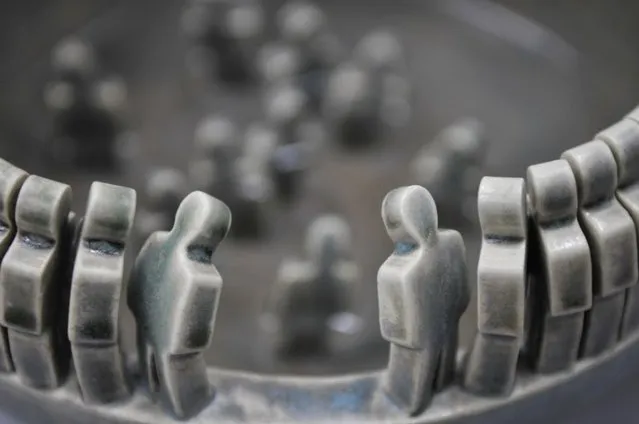
 Sculpture "Around the Rim" By Johnson Tsang

Johnson Cheung-shing Tsang is a Hong Kong sculptor specializing in ceramics, stainless steel sculpture and public artworks. Tsang’s works mostly employ realist sculptural techniques with a surrealist imagination, integrating the two elements, human beings and objects, into creative themes.
Details
16 Feb 2014 12:20:00
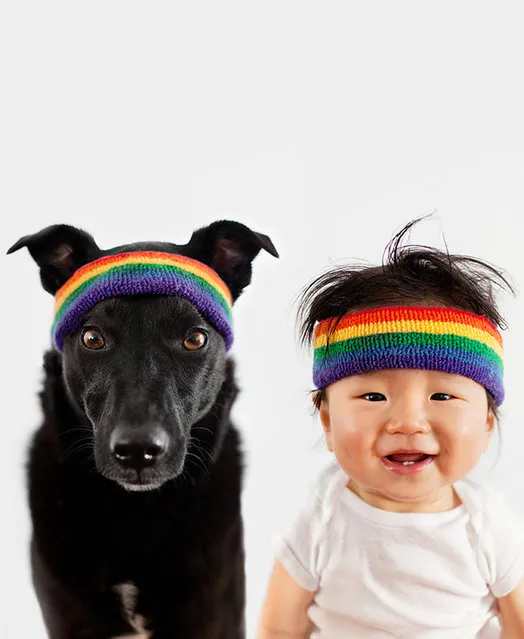
Zoey And Jasper By Grace Chon

Grace Chon has put together a series of portraits featuring her 10-month-old son and her rescue dog. In each picture, the dog and baby are wearing matching apparel with party hats, baseball caps and sunglasses, adding fun elements to these adorable portraits.
Details
24 Apr 2014 12:10:00
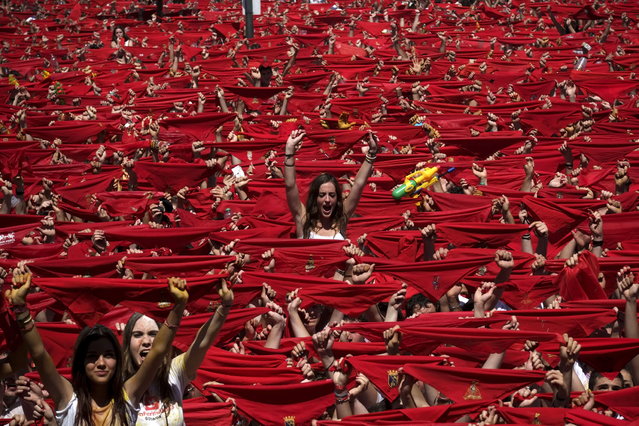
Participants hold red scarves as they celebrate the “Chupinazo” marking the start at noon sharp of the San Fermin Festival at Castle square in Pamplona, northern Spain on July 6, 2013. Ten of thousands of people packed Pamplona's streets for a drunken kick-off to Spain's best-known fiesta: the nine-day San Fermin bull-running festival. (Photo by Pedro Armestre/AFP Photo)

Participants hold red scarves as they celebrate the “Chupinazo” marking the start at noon sharp of the San Fermin Festival at Castle square in Pamplona, northern Spain on July 6, 2013. Ten of thousands of people packed Pamplona's streets for a drunken kick-off to Spain's best-known fiesta: the nine-day San Fermin bull-running festival. (Photo by Pedro Armestre/AFP Photo)
Details
11 Jul 2013 09:30:00
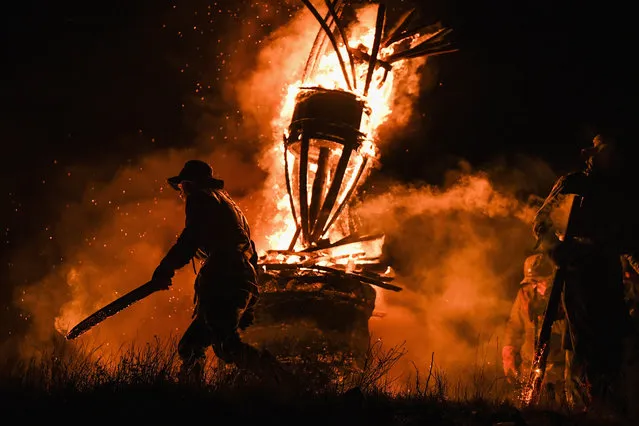
The Clavie, a burning barrel packed with tar soaked sticks fixed on the top of a pole, is surrounded by people at the Doorie Hill on January 11, 2018 in Burghead, Scotland. People welcome in the New Year with the fire ceremony which has ancient roots dating back to the 1750s, when the Julian calendar was reformed in Britain. It is believed to bring good luck for the coming year. (Photo by Jeff J. Mitchell/Getty Images)

The Clavie, a burning barrel packed with tar soaked sticks fixed on the top of a pole, is surrounded by people at the Doorie Hill on January 11, 2018 in Burghead, Scotland. People welcome in the New Year with the fire ceremony which has ancient roots dating back to the 1750s, when the Julian calendar was reformed in Britain. It is believed to bring good luck for the coming year. (Photo by Jeff J. Mitchell/Getty Images)
Details
12 Jan 2018 08:34:00
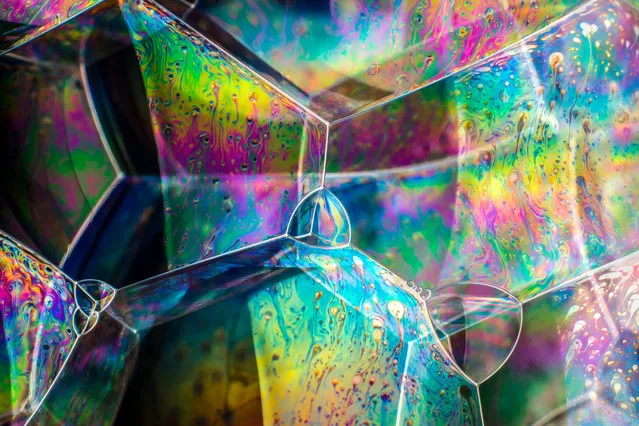
Soap Bubble Structures by Kym Cox. Bubbles optimise space and minimise their surface area for a given volume of air. This phenomenon makes them a useful tool in many areas of research, in particular, materials science and ‘packing’ – how things fit together. Bubble walls drain under gravity, thin at the top, thick at the bottom, which interferes with travelling lightwaves to create bands of colour. Black spots show the wall is too thin for interference colours, indicating the bubble is about to burst. (Photo by Kym Cox/2019 Science Photographer of the Year/RPS)

Soap Bubble Structures by Kym Cox. Bubbles optimise space and minimise their surface area for a given volume of air. This phenomenon makes them a useful tool in many areas of research, in particular, materials science and “packing” – how things fit together. Bubble walls drain under gravity, thin at the top, thick at the bottom, which interferes with travelling lightwaves to create bands of colour. Black spots show the wall is too thin for interference colours, indicating the bubble is about to burst. (Photo by Kym Cox/2019 Science Photographer of the Year/RPS)
Details
15 Aug 2019 00:03:00
Art by Christian Faur

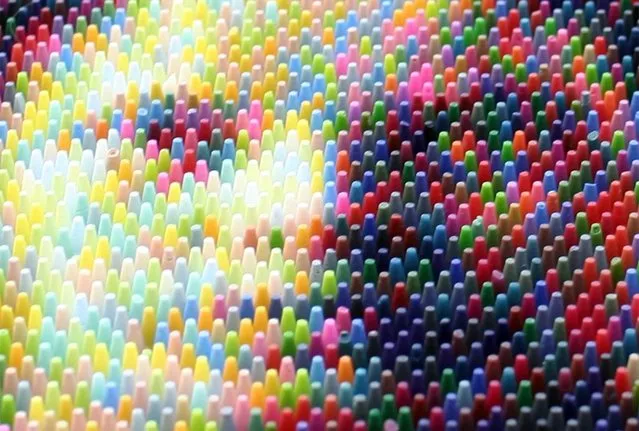
Christian Faur is an artist based in Granville, Ohio. Looking for a new technique, he experimented with painting with wax, but he didn’t feel the results were satisfactory.Then, at Christmas in 2005, his young daughter opened a box of 120 Crayola crayons he’d bought her, and everything clicked into place. Faur decided he would create pictures out of the crayons themselves, packing thousands of them together so they become like the colored pixels on a TV screen. He starts each work by scanning a photo into a computer and breaking the image down into colored blocks He then draws a grid that shows him exactly where to place each crayon The finished artworks are packed tightly into wooden frames. He actually makes the crayons himself, hand-casting each one in a mould.
Details
28 Jul 2012 10:03:00