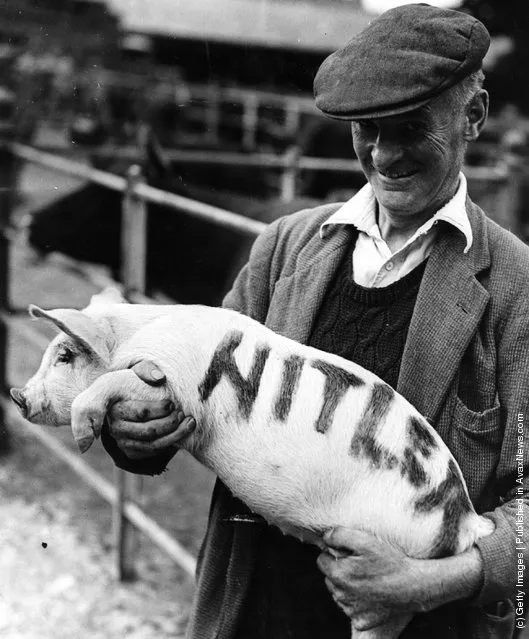
This greedy piglet was isolated from the rest of its litter by the farmer who named it Hitler after it tried to grab all the food at feeding time. (Photo by R J Lewis/Getty Images). 1942
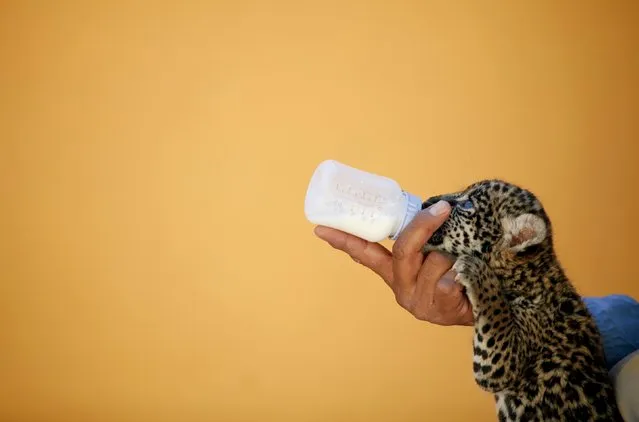
A keeper feeds a four-week-old jaguar while presenting it to the media, at a zoo in Ciudad Juarez, Mexico, October 14, 2015. (Photo by Jose Luis Gonzalez/Reuters)
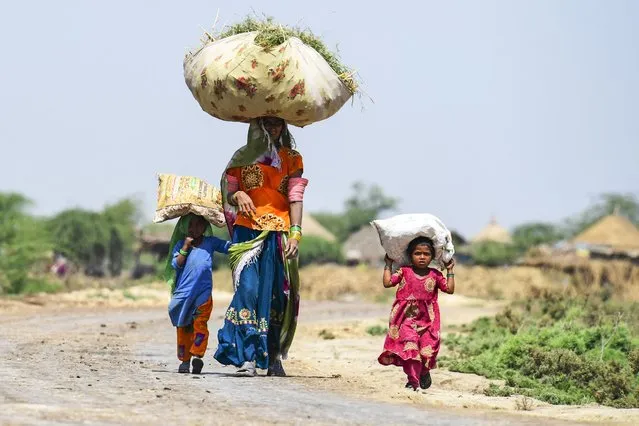
A woman along with her children carry hay to feed cattle in Sanjar Chang village, Mirpurkhas district in Sindh province on April 9, 2023. (Photo by Asif Hassan/AFP Photo)
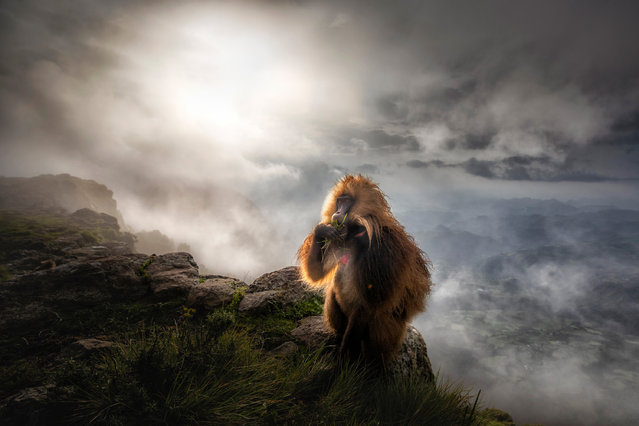
Highly commended, mammals: Gelada after the storm – Marco Gaiotti (Italy). “Gelada baboons are the only monkey species in the world that feed on grasses. They are native to the tableland of Ethiopia. Every morning large family groups wander from their sleeping places in the steep rock face, up to 1,000 metres high, to the feeding grounds at the tablelands. This image clearly depicts their feeding strategy: they pull out bunches of grass, sort the stalks and then lift them to their mouth. This shot was taken towards the end of the rainy season after a heavy storm”. (Photo by Marco Gaiotti/2019 GDT European Wildlife Photographer of the Year)
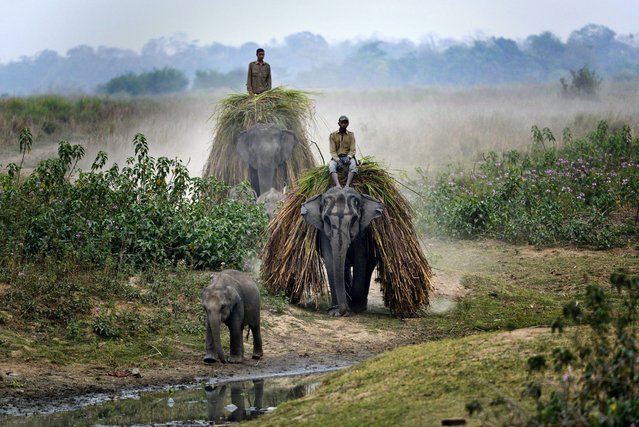
Mahouts return home with their elephants carrying grass to feed them on the eve of the rhino census in Kaziranga National Park in Assam state, India, 24 March 2015. Kaziranga will be closed to visitors for the next two days for a census of the rhinos commencing 25 March, in a previous census in 2013 in the park the population of the Indian rhinos was 2329. (Photo by EPA/Stringer)
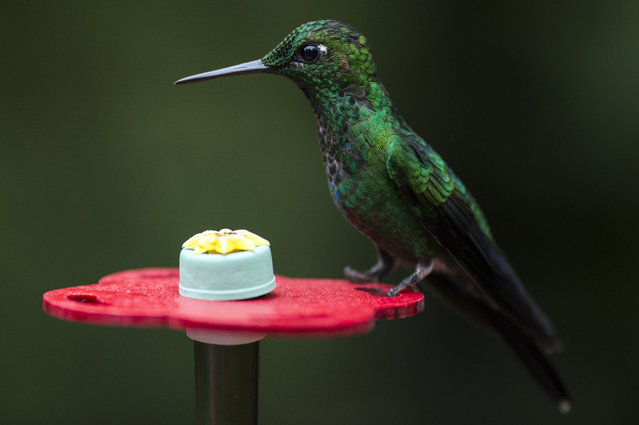
A Green Crowned Brilliant is pictured at a Hummingbird feeding station on January 15, 2016 in Alajuela Costa Rica. Of the 338 known species of Hummingbird worldwide there are around 50 in Costa Rica. Hummingbirds are named for the distinctive sound made by their tiny beating wings, and are admired for their vibrantly coloured iridescent plumage. Their ability to hover, with wings beating between 12 and 90 times a second, and to fly backwards makes them different from all other birds. (Photo by Dan Kitwood/Getty Images)
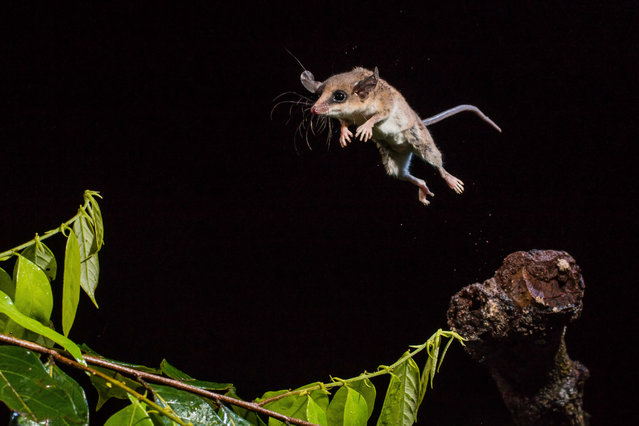
Tropical acrobatics by Adrià López Baucells in Manaus, Brazil. An unidentified South American marsupial, although the characteristic black markings on its face indicate it may be a mouse opossum. These small creatures are nocturnal and feed on bugs, fruit and bird eggs. (Photo by Adrià López Baucells/2019 Royal Society of Biology Photography Competition)
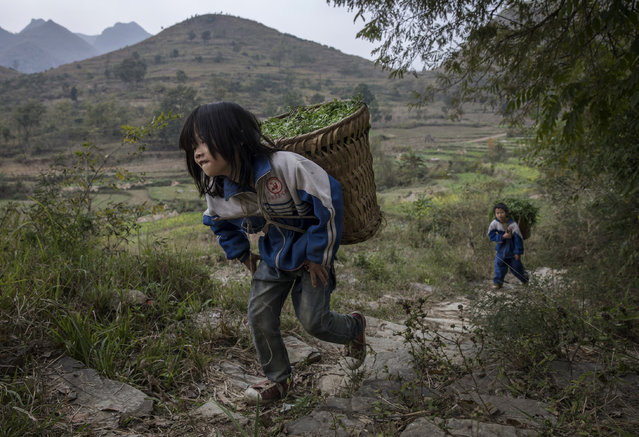
“Left behind” children Luo Hongni, 11 (L) and brother Luo Gan,10, carry flowers to be used as feed while doing chores in the fields on December 18, 2016 in Anshun, China. Like millions of Chinese children, the four Luo siblings are being raised by their grandparents in rural China as their parents left to find work in urban areas. (Photo by Kevin Frayer/Getty Images)