Loading...
Done
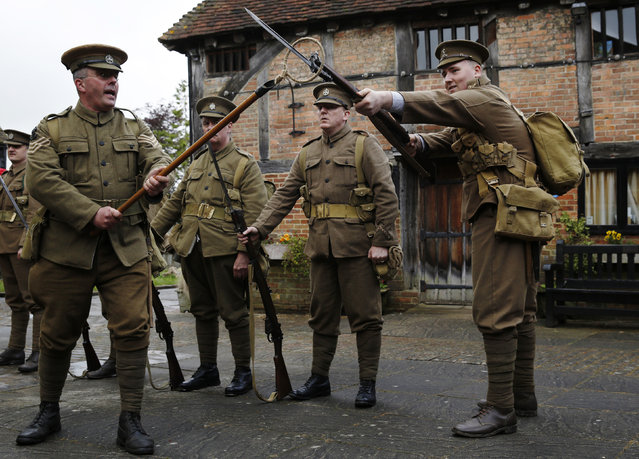
Factory landlord Lawrence Taylor (L), portraying a Colour Sergeant from the King's Royal Rifle Corps, part of the Rifles Living History Society, performs a drill with Connor Young (R) of the Queen's Own Royal West Kent Regiment Living History Group as they recreate the life of a First World War soldier at the Eden Valley Museum in Edenbridge in southeast England May 10, 2014. (Photo by Luke MacGregor/Reuters)

Factory landlord Lawrence Taylor (L), portraying a Colour Sergeant from the King's Royal Rifle Corps, part of the Rifles Living History Society, performs a drill with Connor Young (R) of the Queen's Own Royal West Kent Regiment Living History Group as they recreate the life of a First World War soldier at the Eden Valley Museum in Edenbridge in southeast England May 10, 2014. Lawrence has always had an interest in military history and specifically “The Rifles” – his veteran father's WWII regiment. When he became a re-enactor he chose not to re-enact WWII as many of the veterans are still alive, and he felt uncomfortable as he remembers his father would have flashbacks and nightmares about the war. United by a fascination with military history and a fondness for dressing up, groups such as the Rifles Living History Society and the Queen's Own Royal West Kent Regiment Living History Group get together to recreate aspects of life during the First World War. Reuters photographer Luke MacGregor photographed members of the groups, both as they took part in living history events and at their day jobs. (Photo by Luke MacGregor/Reuters)
Details
26 Aug 2014 10:12:00
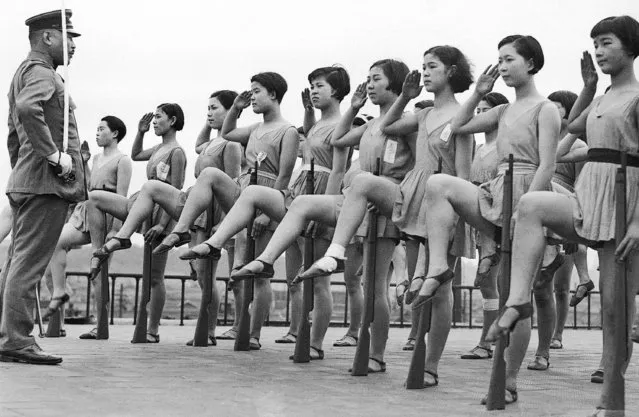
Japanese chorus girls appear to be drilling in military tactics atop their theater building as they perform salutes, June 30, 1937. The officer is from the Japanese regular army and says the girls display more rhythm in their drills than do the regular troops. (Photo by AP Photo)

Japanese chorus girls appear to be drilling in military tactics atop their theater building as they perform salutes, June 30, 1937. The officer is from the Japanese regular army and says the girls display more rhythm in their drills than do the regular troops. (Photo by AP Photo)
Details
12 Jul 2017 07:35:00
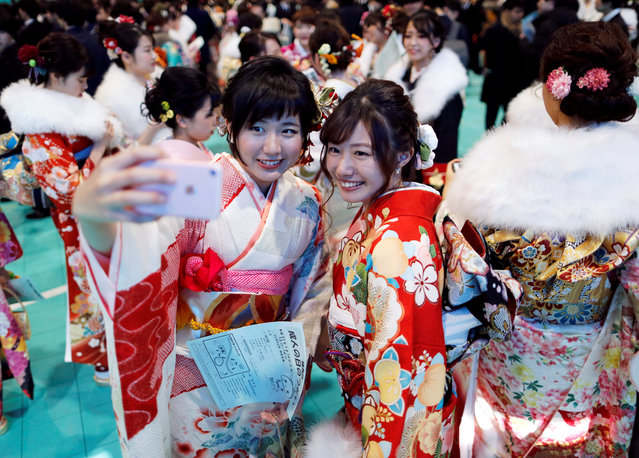
Japanese women wearing kimonos take a selfie as they attend their Coming of Age Day celebration ceremony at Toshimaen amusement park in Tokyo, Japan on January 14, 2019. (Photo by Issei Kato/Reuters)

Japanese women wearing kimonos take a selfie as they attend their Coming of Age Day celebration ceremony at Toshimaen amusement park in Tokyo, Japan on January 14, 2019. Coming of Age Day is a Japanese holiday held every January to celebrate people who have reached 20 – the official age of adulthood in Japan. (Photo by Issei Kato/Reuters)

Details
17 Jan 2019 00:01:00
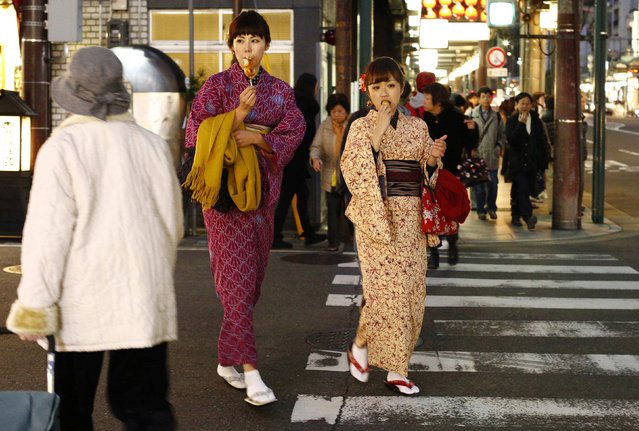
Women, dressed in traditional Japanese kimonos, cross a street in Kyoto, western Japan November 19, 2014. (Photo by Thomas Peter/Reuters)

Women, dressed in traditional Japanese kimonos, cross a street in Kyoto, western Japan November 19, 2014. (Photo by Thomas Peter/Reuters)
Details
20 Nov 2014 12:25:00
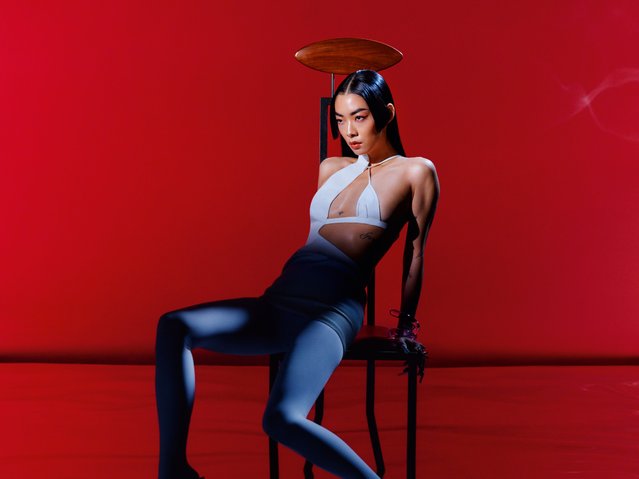
Japanese–British singer-songwriter and model Rina Sawayama, date unknown. (Photo by Press Handout for SFTW)

Japanese–British singer-songwriter and model Rina Sawayama, date unknown. (Photo by Press Handout for SFTW)
Details
03 Oct 2023 03:16:00
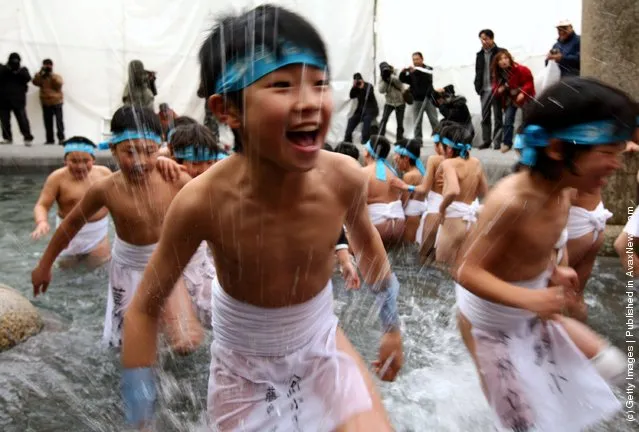
Japanese children wear loincloths as they splash about in freezing cold water during Saidaiji Naked Festival, at Saidaiji Temple

“A Hadaka Matsuri (“Naked Festival”) is a type of Japanese festival, or matsuri, in which participants wear a minimum amount of clothing; usually just a Japanese loincloth (called fundoshi), sometimes with a short happi coat, and rarely completely naked. Whatever the clothing, it is considered to be above vulgar, or everyday, undergarments, and on the level of holy Japanese shrine attire. Naked festivals are held in dozens of places throughout Japan every year, usually in the summer or winter. The most famous festival is held in Okayama, where the festival originated. Every year, over 9,000 men participate in this festival”. – Wikipedia

Photo: Japanese men wear loincloths as they splash about in freezing cold water during Saidaiji Naked Festival, at Saidaiji Temple on February 18, 2012 in Okayama, Japan. (Photo by Buddhika Weerasinghe/Getty Images)
Details
19 Feb 2012 12:18:00
For her series “Japanese Whispers”, Belgian photographer Zaza Bertrand headed inside the intimate world of rabuhos – Japanese love hotels. Love hotels became popular in Japan from the 1960s onwards, due to a lack of privacy in many family homes. There are now around 37,000 of these hotels in Japan, allowing short daytime “rests” or overnight stays. (Photo by Zaza Bertrand/The Guardian)

For her series “Japanese Whispers”, Belgian photographer Zaza Bertrand headed inside the intimate world of rabuhos – Japanese love hotels. Love hotels became popular in Japan from the 1960s onwards, due to a lack of privacy in many family homes. There are now around 37,000 of these hotels in Japan, allowing short daytime “rests” or overnight stays. (Photo by Zaza Bertrand/The Guardian)
Details
02 Dec 2016 11:30:00
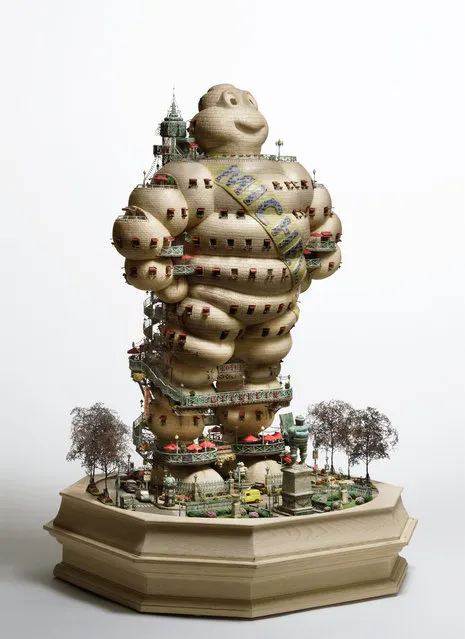
Miniature Architecture By Takanori Aiba

The Japanese art of raising bonsai trees is a beautiful way to infuse greenery into indoor spaces. But artist Takanori Aiba takes the art to a new level with his incredibly intricate series of bonsai castles. The Japanese artist carves miniature masterpieces that weave in and out of the miniature trees, creating cohesive architectural marvels that burst forth with life!
Details
15 Jun 2014 12:38:00