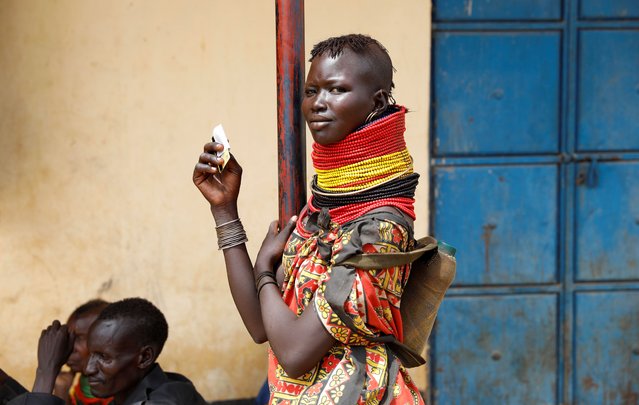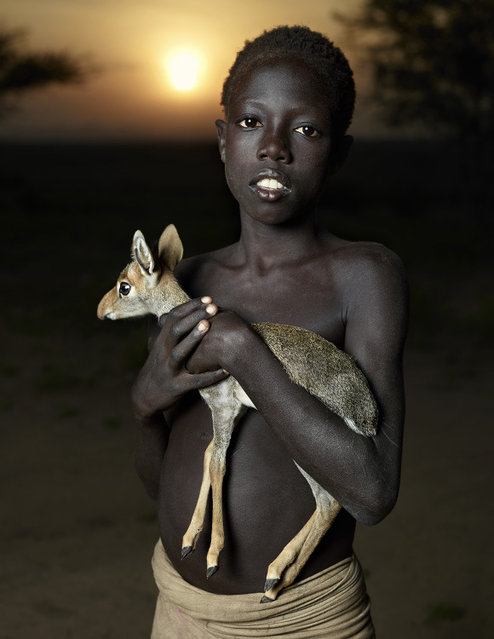
A woman from the Turkana tribe waits at a shop at the village of Lorengippi near the town of Lodwar, Turkana county, Kenya, July 3, 2020. (Photo by Baz Ratner/Reuters)
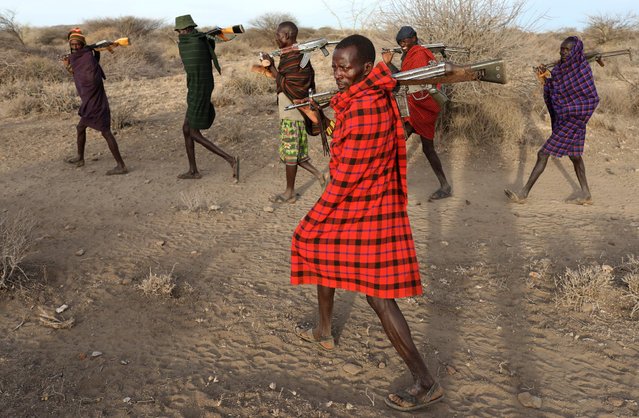
Turkana tribesmen walk with guns in order to protect their cattle from rival Pokot and Sambur tribesmen near Baragoy, Kenya February 14, 2017. Cattle rustling and competition for grazing have long troubled northern Kenya, but severe drought and political rivalries ahead of the elections have exacerbated the situation between ethnic tribes. (Photo by Goran Tomasevic/Reuters)
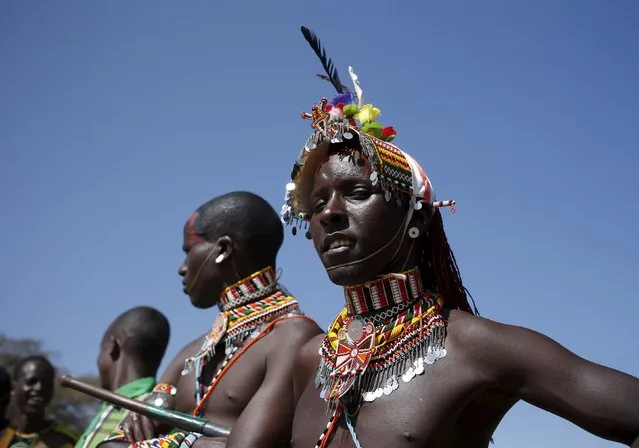
Samburu tribesmen stand during the Maralal Camel Derby, Kenya, August 15, 2015. Maralal, a small, arid town about an eight-hour drive north of the Kenyan capital Nairobi, holds an annual camel festival, bringing together members of the Samburu, Turkana and Pokot semi-nomadic cattle-herding tribes. (Photo by Goran Tomasevic/Reuters)
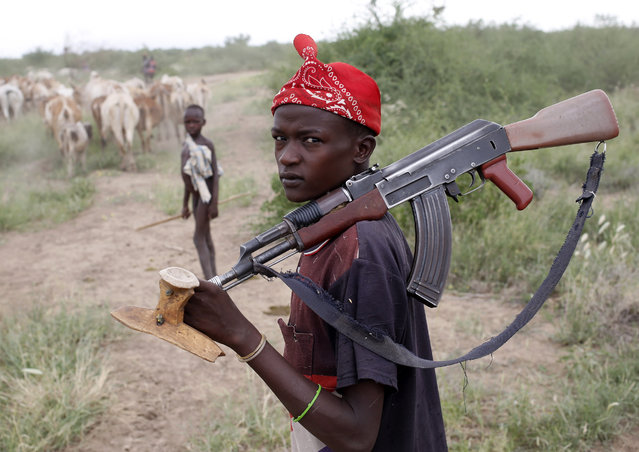
A Turkana boy herds cows as he carries a rifle in north western Kenya near the town of Kibish inside the Turkana region of the Ilemy Triangle September 26, 2014. The Turkana people have historically clashed over ethnic differences and precious resources such as fishing, pasture and fresh water with other tribes bordering their territory, such as the Dassanach from southern Ethiopia. (Photo by Goran Tomasevic/Reuters)
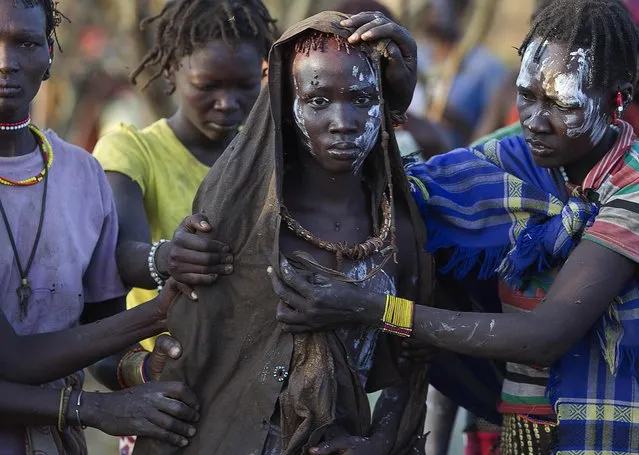
Reuters photographer Siegfried Modola gained access to a circumcision ceremony in rural Kenya for young girls of the Pokot tribe, in Baringo County. Here: a Pokot girl, covered in animal skins, walks to a place where she will rest after being circumcised in a tribal ritual in a village about 80 kilometres from the town of Marigat in Baringo County, October 16, 2014. (Photo by Siegfried Modola/Reuters)
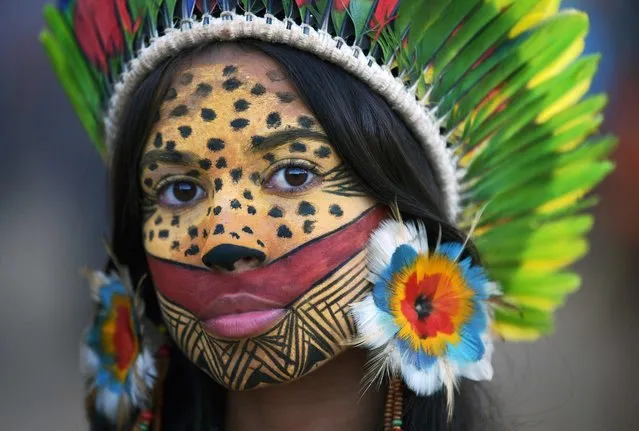
A woman from the Pataxo tribe poses for a photo at an indigenous protest camp on the fourth day of the Terra Livre Indigenous Camp in Brasilia on April 7, 2022. The 10-day annual protest is held by indigenous people from tribes that arrive from all over Brazil, and calls for greater protection of their land and rights. (Photo by Carl de Souza/AFP Photo)
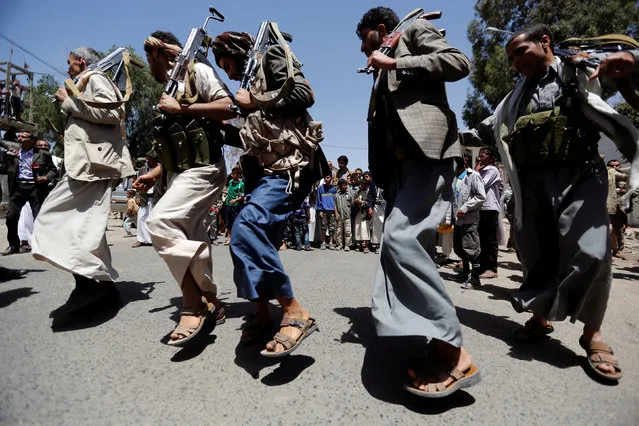
Tribesmen loyal to the Houthi movement perform the Baraa dance during a gathering to show support to the movement in Sanaa, Yemen, May 19, 2016. Bara or Baraa dance is one of the several traditional outdoor dances performed by men in the country of Yemen. Bara dance literally means a dagger dance, where each dancer holds a dagger. The style of the Bara dance differs from tribe to tribe. It is performed on special occasions. (Photo by Khaled Abdullah/Reuters)