Loading...
Done
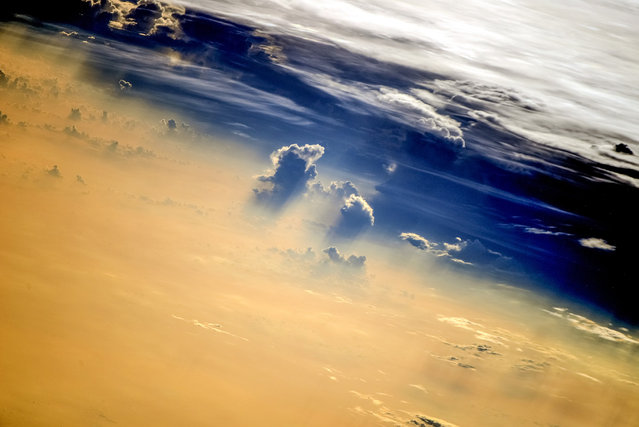
The huge storm which generated the lightning strike on Saturn can be seen in the top right of this image

An incredible view of daytime lightning on Saturn during one of the biggest storms the ringed planet has ever seen has been captured by a NASA spacecraft.

Photo: The huge storm which generated the lightning strike on Saturn can be seen in the top right of this image. (Photo by NASA)
Details
22 Jul 2012 08:43:00
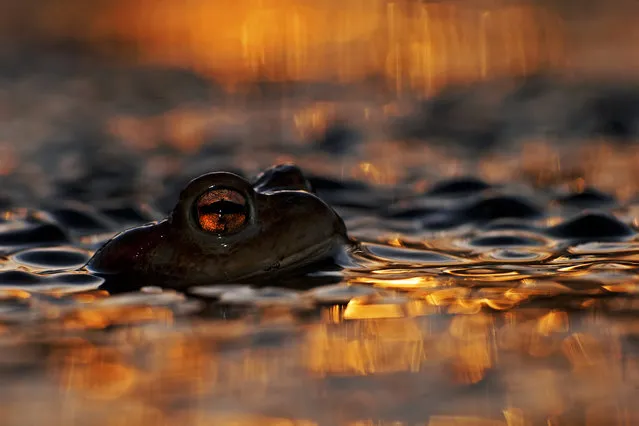
“Eye of a toad”. Animal Portraits, Łukasz Bożycki, Poland.  (Photo by Łukasz Bożycki)

“Eye of a toad”. Animal Portraits, Łukasz Bożycki, Poland. Early spring sees a pond near Łukasz’s home city of Warsaw, Poland, full of mating frogs and a few toads. On this March day, Łukasz shared the pond with them for an evening, sitting in the icy water in his chest-high waders, keeping as still as possible, despite the numbing cold, so that the amphibians could get used to him. “I wanted to find a fresh way of portraying the amphibians”, he says, “at water level”. Using a telephoto lens, he focused on one lone toad and waited for the sun to dip almost below the horizon before pressing the shutter, using flash to bring out the details in the shadow. His prize was “the glorious pool of sunset colour” and fiery glow of the toad’s eye. Nikon D80 + 70-300mm f4.5-5.6 lens + extension tube; 1/125 sec at f9 (-2.3 e/v); ISO 100; built-in flash. (Photo by Łukasz Bożycki)

Details
28 Aug 2013 11:45:00
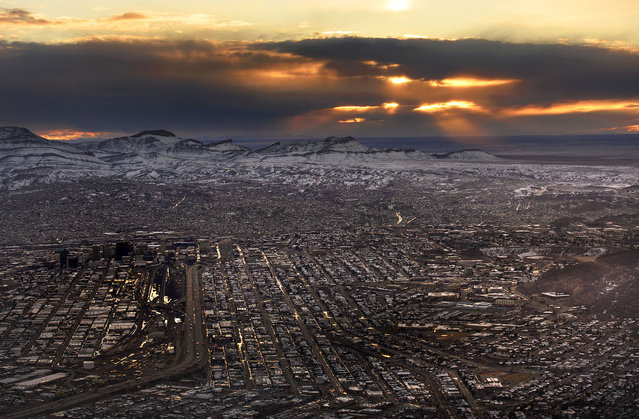
It’s the United States of Air-merica! Pilot Jassen Todorov from San Francisco spent three weeks flying across eight states in a 1976 Piper Warrior plane to capture the this shots – from deep craters in Arizona’s red desert and the swamps and wetlands in Florida and Louisiana, that look like they could be on alien planets, to freeways and stretches of suburban Texas. Here: El Paso, Texas at sunset. (Photo by Jassen Todorov/Caters News)

It’s the United States of Air-merica! Pilot Jassen Todorov from San Francisco spent three weeks flying across eight states in a 1976 Piper Warrior plane to capture the this shots – from deep craters in Arizona’s red desert and the swamps and wetlands in Florida and Louisiana, that look like they could be on alien planets, to freeways and stretches of suburban Texas. Here: El Paso, Texas at sunset. (Photo by Jassen Todorov/Caters News)
Details
22 Jan 2016 10:53:00
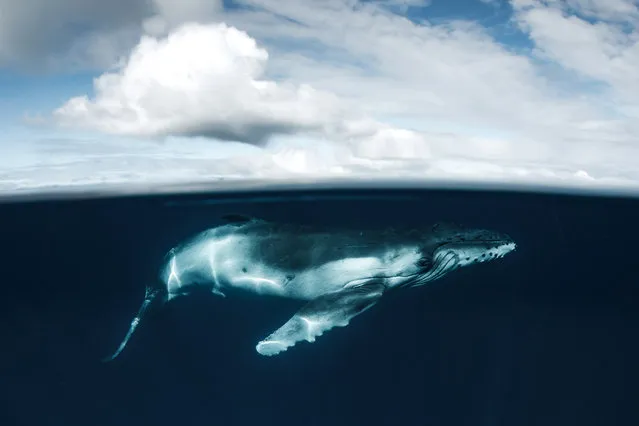
The images were taken off the coast of Tonga in the South Pacific. Photographer Grant Thomas said: “Through my images I aim to show off the amazing life we have on our planet in hope of inspiring more people to experience it for themselves and, most importantly, care for it. There is nothing to be afraid of with the humpback whales, as these animals are some of the most majestic and peaceful creatures in the sea. They will often be very curious of people in the water and will even seek out interactions with us”. (Photo by Grant Thomas/Caters News Agency)

The images were taken off the coast of Tonga in the South Pacific. Photographer Grant Thomas said: “Through my images I aim to show off the amazing life we have on our planet in hope of inspiring more people to experience it for themselves and, most importantly, care for it”. (Photo by Grant Thomas/Caters News Agency)
Details
28 Nov 2019 00:03:00
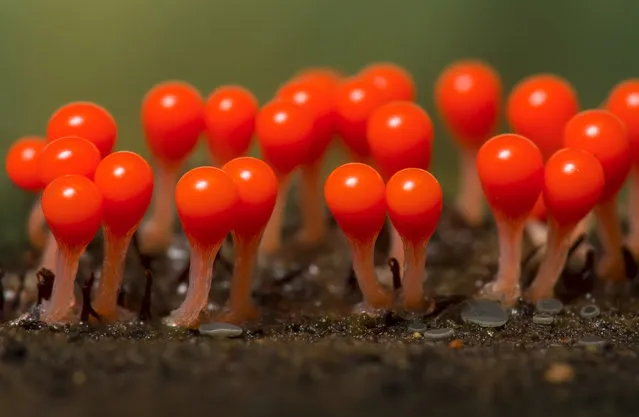
These may look like alien creatures from another planet, but the odd organisms are, in fact, colorful, microscopic life forms found in our forests. The bizarre slime molds, known as mycetozoa or fungus animals, were captured by geologist Valeriya Zvereva. (Photo by Valeriya Zvereva/Caters News)

These may look like alien creatures from another planet, but the odd organisms are, in fact, colorful, microscopic life forms found in our forests. The bizarre slime molds, known as mycetozoa or fungus animals, were captured by geologist Valeriya Zvereva. She spent months documenting the common life forms that are found beneath our feet – but are rarely seen. Incredibly, the organisms can move and hunt for other microscopic life forms on which to feed. Zvereva, who is from Moscow, used a special macro lens to capture the vibrant and up-close shots, which show off the organisms’ unlikely beauty. (Photo by Valeriya Zvereva/Caters News)
Details
20 Apr 2015 13:27:00
A visitor takes a selfie with “The Breach” by Leandro Erlich, during a photo call for Kew Gardens' forthcoming “Food Forever” exhibition, examining the fragile future of food and the impact of our day-to-day eating habits on the planet, at the Royal Botanic Gardens, in Kew, Richmond, Surrey on Thursday, June 16, 2022. (Photo by Dominic Lipinski/PA Images via Getty Images)

A visitor takes a selfie with “The Breach” by Leandro Erlich, during a photo call for Kew Gardens' forthcoming “Food Forever” exhibition, examining the fragile future of food and the impact of our day-to-day eating habits on the planet, at the Royal Botanic Gardens, in Kew, Richmond, Surrey on Thursday, June 16, 2022. (Photo by Dominic Lipinski/PA Images via Getty Images)
Details
19 Aug 2022 04:53:00
This NASA photo shows a United Launch Alliance Atlas V rocket with NASA’s Mars 2020 Perseverance rover onboard as it launches from Space Launch Complex 41 at Cape Canaveral Air Force Station, on July 30, 2020, from NASA’s Kennedy Space Center in Florida. The Perseverance rover is part of NASA’s Mars Exploration Program, a long-term effort of robotic exploration of the Red Planet. (Photo by Joel Kowsky/NASA)

This NASA photo shows a United Launch Alliance Atlas V rocket with NASA’s Mars 2020 Perseverance rover onboard as it launches from Space Launch Complex 41 at Cape Canaveral Air Force Station, on July 30, 2020, from NASA’s Kennedy Space Center in Florida. The Perseverance rover is part of NASA’s Mars Exploration Program, a long-term effort of robotic exploration of the Red Planet. (Photo by Joel Kowsky/NASA)
Details
05 Aug 2020 00:01:00
An empty camp is shown beneath a colourful sky in Siberia, December 2016. (Photo by Timothy Allen/Barcroft Productions)

A British photographer has captured life at the “edge of the world”. Timothy Allen, best known for his work on BBC's Human Planet, trekked through the freezing Siberian wilderness for 16 days as he joined part of an 800km migration of reindeer in the Yamal-Nenets region – a name that roughly translates to “edge of the world”. The stunning pictures feature the nomadic Nenets tribe, who drink blood to survive in -45°C temperatures. Timothy's epic journey, which will be revealed in an eight-minute documentary on Animal Planet USA, saw him travel across the bleak terrain of the frozen Ob River with the Nenets people in December last year. Here: An empty camp is shown beneath a colourful sky in Siberia, December 2016. (Photo by Timothy Allen/Barcroft Productions)
Details
19 Sep 2017 07:48:00