Loading...
Done
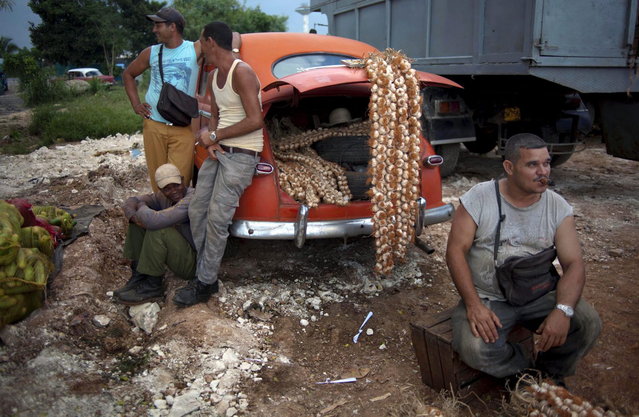
In this September 30, 2013 photo, farmers wait for customers next to their 1950s Chevrolet loaded with garlic for sale at the 114th Street Market on the outskirts of Havana, Cuba. The market s bustle is a result of economic reforms begun in 2010 by President Raul Castro, which includes relaxing rules on private farming. (Photo by Ramon Espinosa/AP Photo)

In this September 30, 2013 photo, farmers wait for customers next to their 1950s Chevrolet loaded with garlic for sale at the 114th Street Market on the outskirts of Havana, Cuba. The market s bustle is a result of economic reforms begun in 2010 by President Raul Castro, which includes relaxing rules on private farming. (Photo by Ramon Espinosa/AP Photo)
Details
02 Oct 2013 11:32:00
Performers take part in a parade during the annual Cervantes market (Mercado Cervantino) in the hometown of famous Spanish writer Miguel de Cervantes, Alcala de Henares, Spain, October 9, 2015. (Photo by Susana Vera/Reuters)

Performers take part in a parade during the annual Cervantes market (Mercado Cervantino) in the hometown of famous Spanish writer Miguel de Cervantes, Alcala de Henares, Spain, October 9, 2015. The Mercado Cervantino, which represents a market and fair from the 16th and 17th centuries, takes place in the city's historic centre and commemorates Miguel de Cervantes' baptism, which took place on October 9, 1547. (Photo by Susana Vera/Reuters)
Details
13 Oct 2015 08:06:00
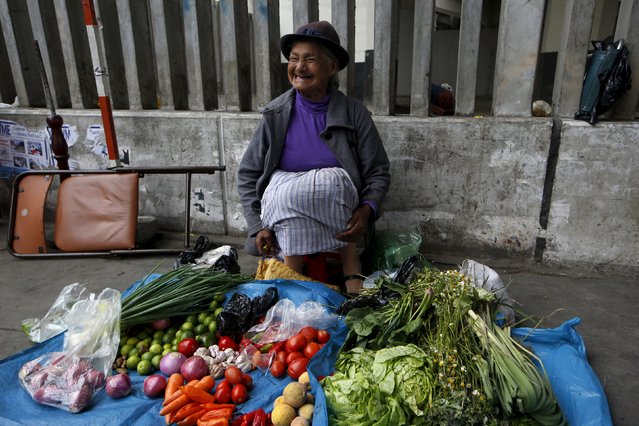
A woman sells vegetables near a Metro train station in downtown Lima, Peru December 1, 2015. (Photo by Mariana Bazo/Reuters)

A woman sells vegetables near a Metro train station in downtown Lima, Peru December 1, 2015. (Photo by Mariana Bazo/Reuters)
Details
09 Dec 2015 08:03:00
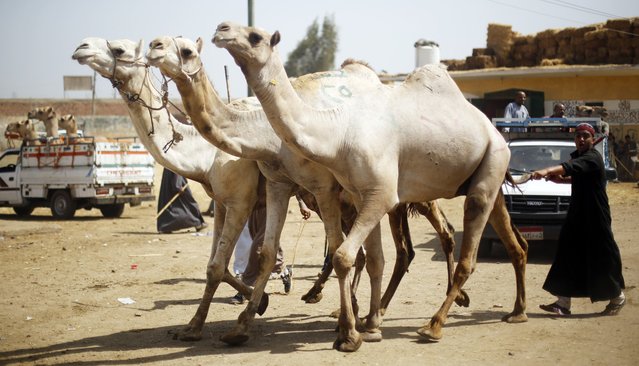
A man walks behind camels at the Birqash Camel Market, ahead of Eid al-Adha or Festival of Sacrifice, on the outskirts of Cairo September 29, 2014. (Photo by Amr Abdallah Dalsh/Reuters)

A man walks behind camels at the Birqash Camel Market, ahead of Eid al-Adha or Festival of Sacrifice, on the outskirts of Cairo September 29, 2014. Birqash Camel Market, one of the biggest markets for camel meat in Africa, draws sellers from Libya, Sudan, Somalia and other regions in Egypt. The camels sold at the market are also used in tourism. Traders say that the selling rate for a camel in 2014 is anywhere between 5,000 and 20,000 Egyptian pounds (700 – 2800 USD). (Photo by Amr Abdallah Dalsh/Reuters)
Details
02 Oct 2014 10:20:00
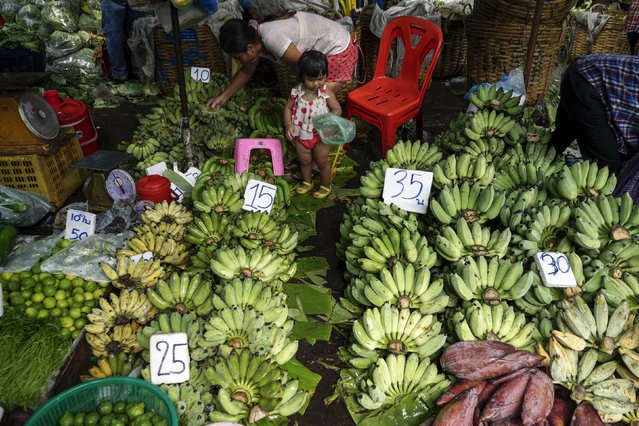
A mother and her daughter shop for bananas at a market in Bangkok, Thailand, March 31, 2016. (Photo by Athit Perawongmetha/Reuters)

A mother and her daughter shop for bananas at a market in Bangkok, Thailand, March 31, 2016. (Photo by Athit Perawongmetha/Reuters)
Details
14 Apr 2016 12:17:00
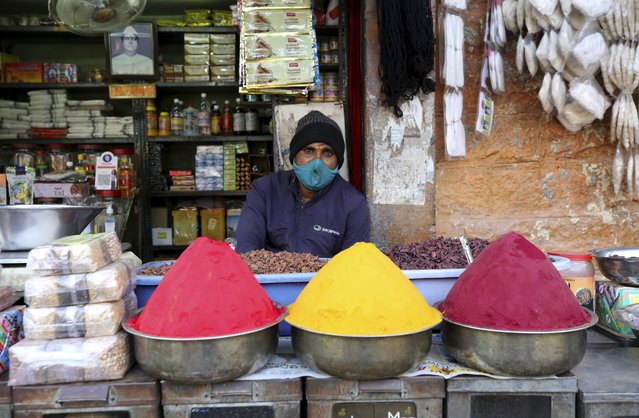
A shopkeeper wears a face mask as a precaution against the coronavirus waits for customers at a market in Bengaluru, India, Friday, November 20, 2020. India's total number of coronavirus cases since the pandemic began has crossed 9 million. Nevertheless the country's new daily cases have seen a steady decline for weeks now and the total number of cases represents 0.6% of India's 1.3 billion population. (Photo by Aijaz Rahi/AP Photo)

A shopkeeper wears a face mask as a precaution against the coronavirus waits for customers at a market in Bengaluru, India, Friday, November 20, 2020. India's total number of coronavirus cases since the pandemic began has crossed 9 million. Nevertheless the country's new daily cases have seen a steady decline for weeks now and the total number of cases represents 0.6% of India's 1.3 billion population. (Photo by Aijaz Rahi/AP Photo)
Details
09 Apr 2021 10:10:00
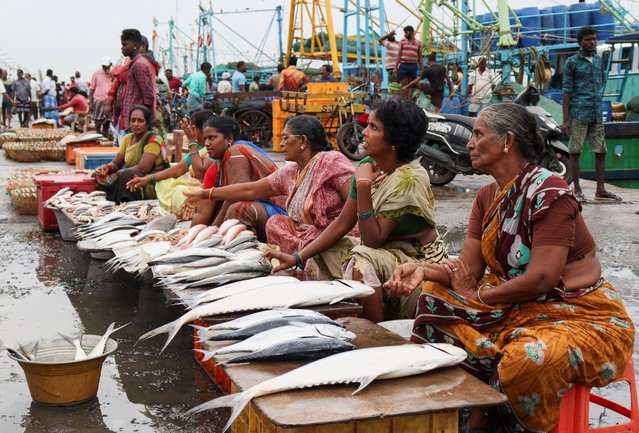
Women wait for customers at the fish harbour in Kasimedu Fish market, Chennai, India, on June 26, 2024. (Photo by Riya Mariyam R./Reuters)

Women wait for customers at the fish harbour in Kasimedu Fish market, Chennai, India, on June 26, 2024. (Photo by Riya Mariyam R./Reuters)
Details
06 Nov 2024 03:43:00
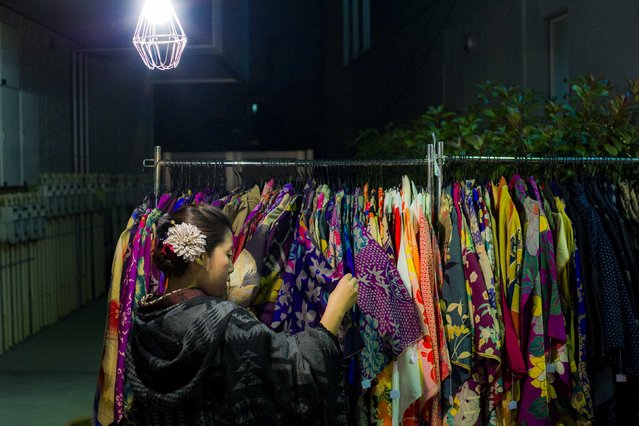
A woman browses through kimonos for sale at Boroichi flea market in Tokyo December 15, 2014. In the 16th century, Boroichi was a place for farmers to buy and sell rags, known as boro, for mending clothes and weaving sandals. Now in its 436th year, the original spirit lingers, with about 700 stands hawking fabric, used clothes and piles of rags. Others sell kitchen tools, pottery, seaweed and spices. (Photo by Thomas Peter/Reuters)

A woman browses through kimonos for sale at Boroichi flea market in Tokyo December 15, 2014. In the 16th century, Boroichi was a place for farmers to buy and sell rags, known as boro, for mending clothes and weaving sandals. Now in its 436th year, the original spirit lingers, with about 700 stands hawking fabric, used clothes and piles of rags. Others sell kitchen tools, pottery, seaweed and spices. About 200,000 people flock to the market, which is only open for four mid-winter days a year – two in December and two in January. (Photo by Thomas Peter/Reuters)
Details
19 Dec 2014 12:50:00