Loading...
Done
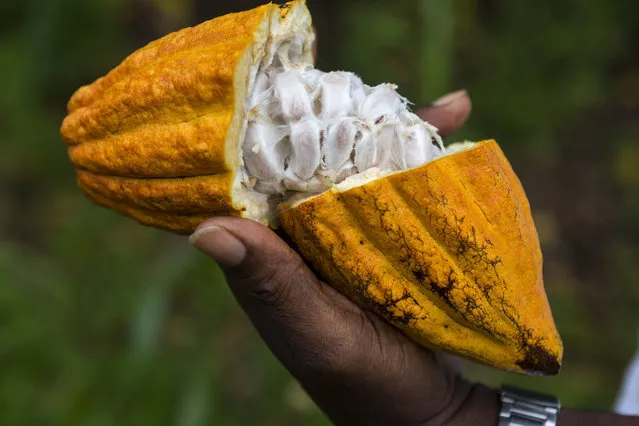
Farmer holding a freshly cut cocoa bean pod, revealing the pulp and seed inside on a rainforest farm. (Photo by Doug McKinlay/Getty Images)

Chocolate is the greatest gift the Earth has given us. The dessert table would be a sad sight without it. It’s so beloved, so appreciated, that the Swedish scientist who named the cocoa plant that gives us chocolate called it Theobroma cacao, which means “food of the gods”. Here: Farmer holding a freshly cut cocoa bean pod, revealing the pulp and seed inside on a rainforest farm. (Photo by Doug McKinlay/Getty Images)
Details
10 Aug 2016 10:20:00
Colored Owl Drawings by John Pusateri

Using pencils, charcoal, and pastels artist John Pusateri creates near photo-realistic drawings of beautifully colored owls. Pusateri currently teaches in the Department of Architecture at Unitec New Zealand and currently has a number of works available through Seed Gallery. See more from this owl series in his portfolio.
Details
16 Sep 2013 10:00:00
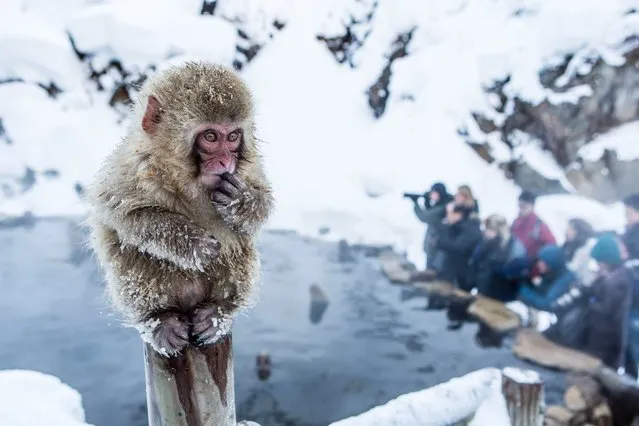
A young macaque perches on a pole, observing nearby tourists while eating some seeds in Jigokudani Yaen-koen wild macaque monkey park on February 16, 2015 in Yamanouchi, Nagano, Japan. (Photo by Manuel Romaris/Getty Images)

A young macaque perches on a pole, observing nearby tourists while eating some seeds in Jigokudani Yaen-koen wild macaque monkey park on February 16, 2015 in Yamanouchi, Nagano, Japan. (Photo by Manuel Romaris/Getty Images)
Details
12 Feb 2023 02:56:00
Van Gogh Paintings On Matchboxes By Salavat Fidai

Russian artist Salavat Fidai is obsessed with things in miniature, and he has previously painted miniatures on pumpkin seeds and carved sculptures into the graphite tips of pencils.

Please Subscribe To: Our Youtube Channel
Details
24 Dec 2016 23:21:00
Nepalese Hindu devotees offer oil lamps in the Bagmati River as they observe the festival of Bala Chaturdashi in the early morning hours at the Pashupati Temple in Kathmandu, Nepal, 28 November 2016. Seven kinds of seeds – paddy, barley, sesame, wheat, gram, maize and finger millet – are sown around the temple premises in the name of loved ones departed during the last three years, in the belief that the departed souls will receive salvation. (Photo by Narendra Shrestha)

Nepalese Hindu devotees offer oil lamps in the Bagmati River as they observe the festival of Bala Chaturdashi in the early morning hours at the Pashupati Temple in Kathmandu, Nepal, 28 November 2016. Seven kinds of seeds – paddy, barley, sesame, wheat, gram, maize and finger millet – are sown around the temple premises in the name of loved ones departed during the last three years, in the belief that the departed souls will receive salvation. (Photo by Narendra Shrestha)
Details
05 Dec 2016 11:28:00
“I think as mothers we are all just trying our best”. – Gisele Bundchen. (Photo by Mads Nissen/AFP Photo)

“I think as mothers we are all just trying our best”. – Gisele Bundchen. (Photo by Mads Nissen/AFP Photo)
Details
31 Mar 2014 09:56:00
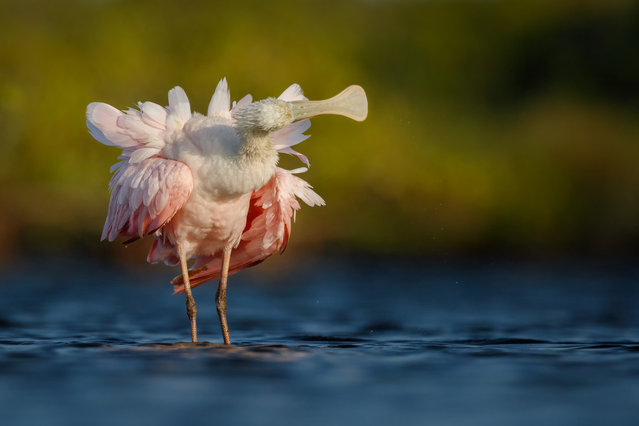
Best portfolio winner. Roseate Spoonbill, Platalea ajaja, by Petr Bambousek, Czech Republic. (Photo by Petr Bambousek/2018 Bird Photographer of the Year)

Best portfolio winner. Roseate Spoonbill, Platalea ajaja, by Petr Bambousek, Czech Republic. (Photo by Petr Bambousek/2018 Bird Photographer of the Year)
Details
24 Aug 2018 00:05:00
Luling, Louisiana US. New evidence contradicts previous claims of the relative safety of glyphosate, the world’s most widely used herbicide, which is manufactured here. It is often used in conjunction with seeds that have been genetically modified to tolerate its application, meaning that anyone consuming these crops is eating a genetically modified plant, and whatever residue of the pesticide that remains. (Photo by J. Henry Fair/Industrial Scars/Papadakis Publisher)

Luling, Louisiana, US. New evidence contradicts previous claims of the relative safety of glyphosate, the world’s most widely used herbicide, which is manufactured here. It is often used in conjunction with seeds that have been genetically modified to tolerate its application, meaning that anyone consuming these crops is eating a genetically modified plant, and whatever residue of the pesticide that remains. (Photo by J. Henry Fair/Industrial Scars/Papadakis Publisher)
Details
25 Oct 2016 10:40:00