Loading...
Done
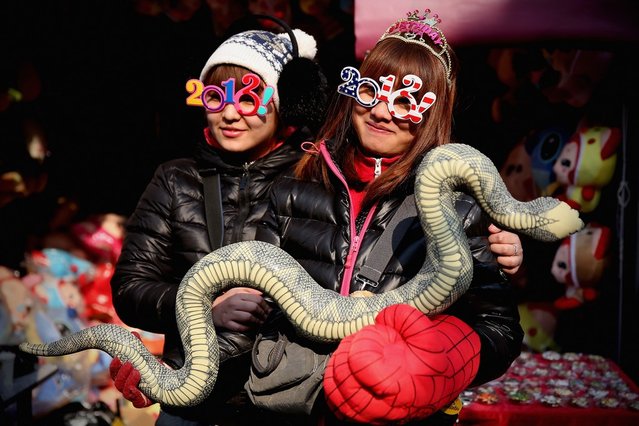
The vendors show the toy of snake at the Spring Festival Temple Fair for celebrating Chinese Lunar New Year of Snake at the Temple of Earth park on February 9, 2013 in Beijing, China. The Chinese Lunar New Year of Snake also known as the Spring Festival, which is based on the Lunisolar Chinese calendar, is celebrated from the first day of the first month of the lunar year and ends with Lantern Festival on the Fifteenth day.  (Photo by Feng Li)

The vendors show the toy of snake at the Spring Festival Temple Fair for celebrating Chinese Lunar New Year of Snake at the Temple of Earth park on February 9, 2013 in Beijing, China. The Chinese Lunar New Year of Snake also known as the Spring Festival, which is based on the Lunisolar Chinese calendar, is celebrated from the first day of the first month of the lunar year and ends with Lantern Festival on the Fifteenth day. (Photo by Feng Li)
Details
10 Feb 2013 13:03:00
New York's Chinatown Holds Chinese New Years Parade

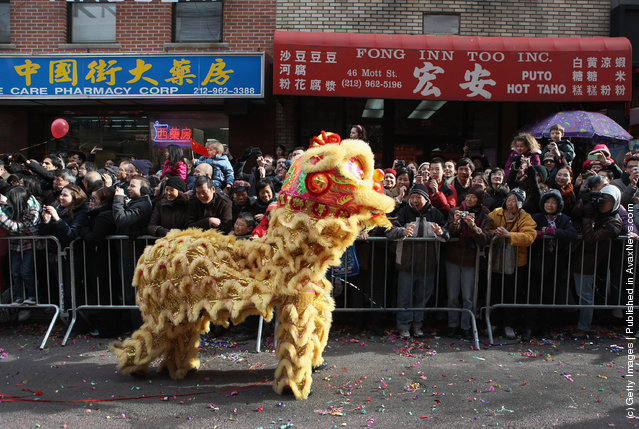
People line the streets as a dragon passes by during the Chinese New Year parade on January 29, 2012 in New York City. Thousands of people turned out to see the event which celebrated the Year of the Dragon. (Photo by John Moore/Getty Images)
Details
30 Jan 2012 09:38:00
New York Celebrates New Year's Eve In Times Square

Crowds Gather For New Year's Ball Drop In Times Square on December 31, 2011 in New York City. (Photo by Michael Loccisano/Getty Images)
Details
02 Jan 2012 12:13:00
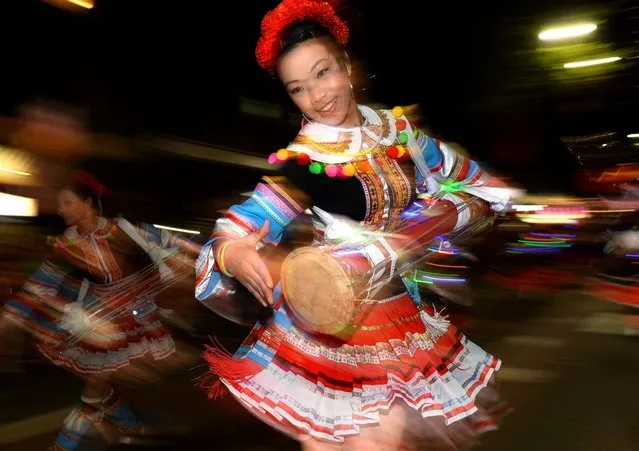
A performer dances in the Chinese New Year parade in Sydney on February 17, 2013.  The parade featured more than 3,500 performers from Australia and China, including 120 performers from Shenzhen, Sydney's offical partner city for this year's festival. (Photo by William West/AFP Photo)

A performer dances in the Chinese New Year parade in Sydney on February 17, 2013. The parade featured more than 3,500 performers from Australia and China, including 120 performers from Shenzhen, Sydney's offical partner city for this year's festival. (Photo by William West/AFP Photo)
Details
18 Feb 2013 11:00:00
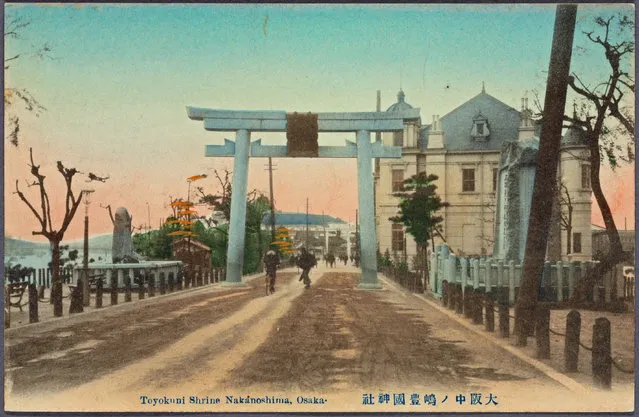
Toyokuni Shrine Nakanoshima, Osaka, Japan. (Photo by New York Public Library/Caters News)

These timeless postcards offer an eye-opening glimpse into life in Japan in the early 20th century. Taken from hand-colored photographs, the postcards showcase the still beauty of the country, depicting a nation on the cusp of modernization. The images feature solemn fishermen, bustling streets, temples and shrines: a country yet to be influenced by Western culture. The tinting effect brings out the rich colors of the natural surroundings, with trees, flowers and cherry blossoms jumping from the original black-and-white images. Here: Toyokuni Shrine Nakanoshima, Osaka, Japan. (Photo by New York Public Library/Caters News)
Details
02 Apr 2016 09:33:00
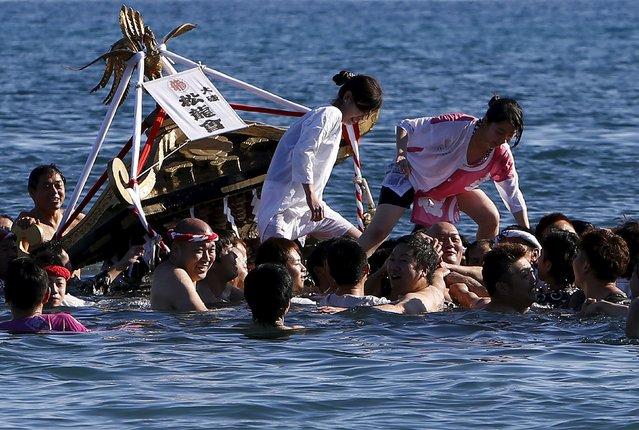
Women balance on a “mikoshi” or portable shrine as people carry it into the sea during a festival to wish for calm waters in the ocean and good fortune in the new year in Oiso, Kanagawa prefecture, west of Tokyo, Japan, January 1, 2016. (Photo by Yuya Shino/Reuters)

Women balance on a “mikoshi” or portable shrine as people carry it into the sea during a festival to wish for calm waters in the ocean and good fortune in the new year in Oiso, Kanagawa prefecture, west of Tokyo, Japan, January 1, 2016. (Photo by Yuya Shino/Reuters)
Details
02 Jan 2016 08:04:00
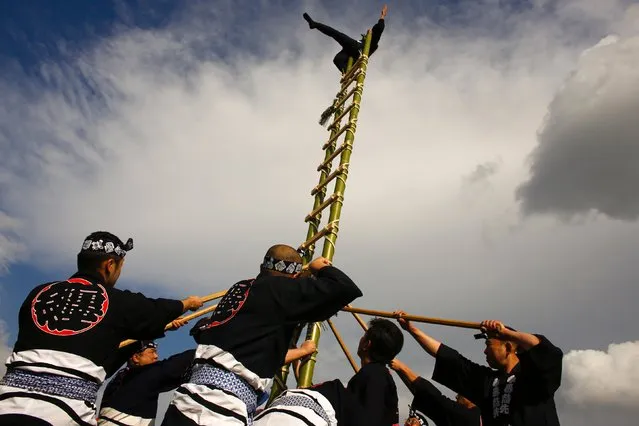
A member of the Edo Firemanship Preservation Association displays his balancing skills atop bamboo ladder during a New Year presentation by the fire brigade in Tokyo January 6, 2015. (Photo by Thomas Peter/Reuters)

A member of the Edo Firemanship Preservation Association displays his balancing skills atop bamboo ladder during a New Year presentation by the fire brigade in Tokyo January 6, 2015. (Photo by Thomas Peter/Reuters)
Details
07 Jan 2015 14:16:00
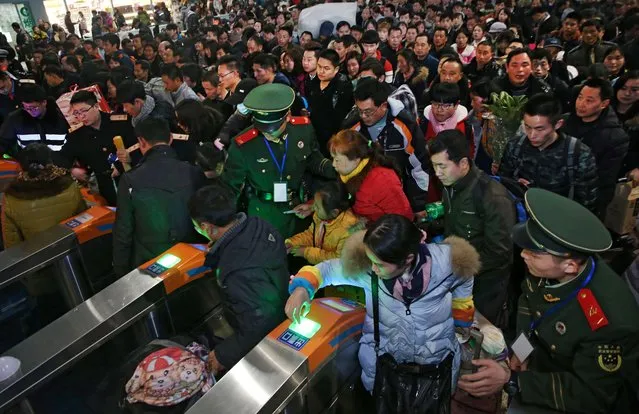
Chinese paramilitary guards monitoring passengers as they head to their train to travel to their hometowns for the “Spring Festival” or Lunar New Year at Nantong Railway Station in Jiangsu province, near Shanghai Travellers taking part in the world' s largest annual human migration must be home by January 27 to usher in the new year on January 28. (Photo by AFP Photo/Stringer)

Chinese paramilitary guards monitoring passengers as they head to their train to travel to their hometowns for the “Spring Festival” or Lunar New Year at Nantong Railway Station in Jiangsu province, near Shanghai Travellers taking part in the world' s largest annual human migration must be home by January 27 to usher in the new year on January 28. (Photo by AFP Photo/Stringer)
Details
27 Jan 2017 11:57:00