Loading...
Done
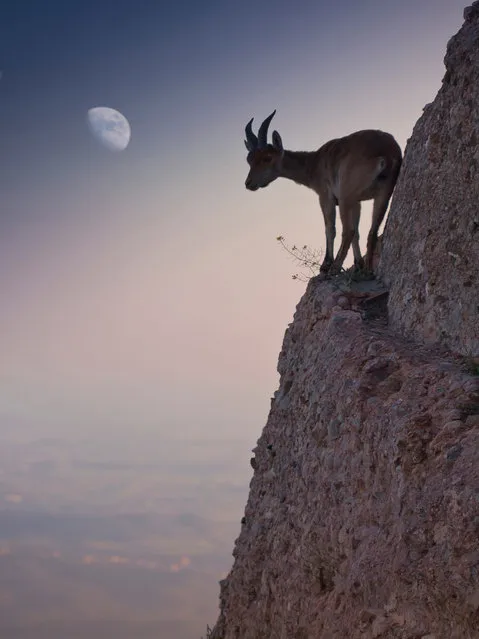
“For a bouquet of flowers”. Photographs made ​​in the last hours of the day. A goat is directed by a dangerous way to eat a small bouquet of flowers. Location: España, Barcelona, Montserrat. (Photo and caption by Renato Lopez Baldo/National Geographic Traveler Photo Contest)

“For a bouquet of flowers”. Photographs made ​​in the last hours of the day. A goat is directed by a dangerous way to eat a small bouquet of flowers. Location: España, Barcelona, Montserrat. (Photo and caption by Renato Lopez Baldo/National Geographic Traveler Photo Contest)

ATTENTION! All pictures are presented in high resolution. To see Hi-Res images – just TWICE click on any picture. In other words, click small picture – opens the BIG picture. Click BIG picture – opens VERY BIG picture.
Details
25 Jun 2013 12:51:00
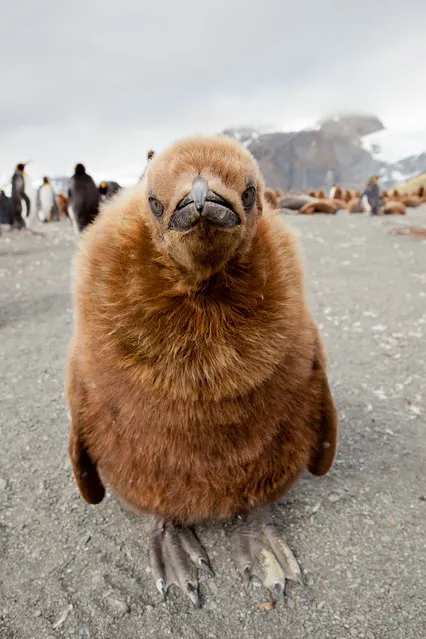
“Cub”. In the colony of penguins in South Georgia. (Photo and caption by Ondrej Zaruba/National Geographic Traveler Photo Contest)

“Cub”. In the colony of penguins in South Georgia. (Photo and caption by Ondrej Zaruba/National Geographic Traveler Photo Contest)

ATTENTION! All pictures are presented in high resolution. To see Hi-Res images – just TWICE click on any picture. In other words, click small picture – opens the BIG picture. Click BIG picture – opens VERY BIG picture.
Details
28 Jun 2013 12:32:00
Indian Muslim devotees travel in an auto rickshaw during the Urs festival in Ajmer, India, Thursday, April 23, 2015. Thousands of devotees from different parts of India travel to the shrine of Sufi saint Khwaja Moinuddin Chisht for the annual festival marking the saint's death anniversary. (Photo by Deepak Sharma/AP Photo)

Indian Muslim devotees travel in an auto rickshaw during the Urs festival in Ajmer, India, Thursday, April 23, 2015. Thousands of devotees from different parts of India travel to the shrine of Sufi saint Khwaja Moinuddin Chisht for the annual festival marking the saint's death anniversary. (Photo by Deepak Sharma/AP Photo)
Details
26 Apr 2015 08:48:00
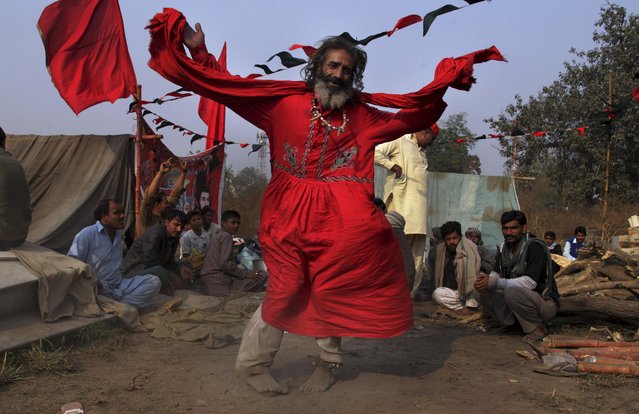
A Pakistani devotee dances to celebrate the three-day annual festival to pay tribute to the famous saint Al-Sheikh Ali Bin Usman Al-Hajveri known as Data Ganjbaksh at outside his shrine in Lahore, Pakistan, Sunday, November 20, 2016. Thousands of people traveled from all over Pakistan to attend the celebrations. (Photo by K.M. Chaudary/AP Photo)

A Pakistani devotee dances to celebrate the three-day annual festival to pay tribute to the famous saint Al-Sheikh Ali Bin Usman Al-Hajveri known as Data Ganjbaksh at outside his shrine in Lahore, Pakistan, Sunday, November 20, 2016. Thousands of people traveled from all over Pakistan to attend the celebrations. (Photo by K.M. Chaudary/AP Photo)
Details
05 Dec 2016 11:33:00
A performer wearing a lion mask performs the Ise Daikagura lion dance at the remote village of Yamanawa on February 08, 2021 in Ryuo, Japan. Ise Daikagura is a group of traditional Lion Dance performers who pray in front of farmers houses and businesses for good grain harvests and disease-free lives. Performers play sacred music using drums and flutes with two lion mask dancers. A lion mask is considered a symbol of God, who enters the house and performs in front of the Shinto God, a statue placed inside the house, mostly in the kitchen. These prayers are called “Kamodo Barai”. After the prayers, they are gifted with money, rice, sake and Japanese sweets from the householders. A group can travel for more than one hundred days to thousands of households and businesses throughout rural-villages in western Japan, and pray to those who are unable to visit the country’s most sacred shrine, the Grand Ise Shrine in Mie Prefecture. The group started its performance in the Edo era between 1603 to 1868 according to Japanese history. The Japanese government designated it as an important folk cultural national property in 1981. (Photo by Buddhika Weerasinghe/Getty Images)

A performer wearing a lion mask performs the Ise Daikagura lion dance at the remote village of Yamanawa on February 08, 2021 in Ryuo, Japan. Ise Daikagura is a group of traditional Lion Dance performers who pray in front of farmers houses and businesses for good grain harvests and disease-free lives. (Photo by Buddhika Weerasinghe/Getty Images)
Details
18 Feb 2021 09:27:00
Nada No Kenka Matsuri, or Nada Fight Festival

Shrine Parishioners pull their portable shrine during Nada No Kenka Matsuri, or Nada Fight Festival at Matsubara Hachiman Shrine on October 16, 2011 in Himeji, Hyogo, Japan. The fight, the highlight of the shrine's Autumn Harvest Festival, attracts 100,000 people. (Photo by Buddhika Weerasinghe/Getty Images)
Details
17 Oct 2011 09:50:00
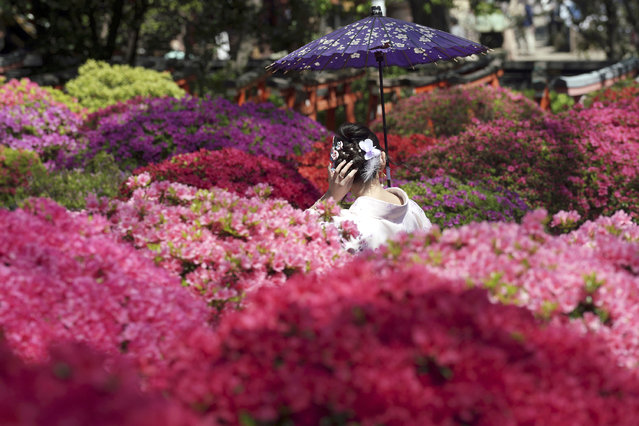
In this Tuesday, April 16, 2019, file photo, a visitor posing for a photo walks though azalea blossoms at Nezu Shrine during a day of mild spring weather in Tokyo. Nezu Shrine is one of the oldest shrines in Tokyo. (Photo by Eugene Hoshiko/AP Photo/File)

In this Tuesday, April 16, 2019, file photo, a visitor posing for a photo walks though azalea blossoms at Nezu Shrine during a day of mild spring weather in Tokyo. Nezu Shrine is one of the oldest shrines in Tokyo. (Photo by Eugene Hoshiko/AP Photo/File)
Details
01 May 2019 00:01:00
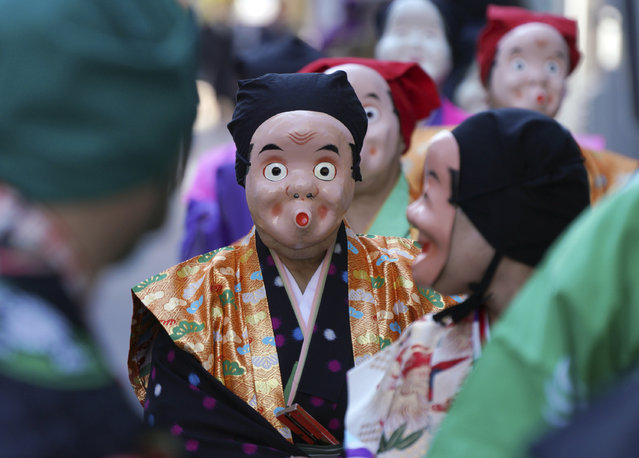
Artists wearing Japanese traditional clown masks march during the First Konpira Festival at Kotohiragu shrine in Tokyo Wednesday, January 10, 2018. The shrine is dedicated to sailors and seafaring. (Photo by Eugene Hoshiko/AP Photo)

Artists wearing Japanese traditional clown masks march during the First Konpira Festival at Kotohiragu shrine in Tokyo Wednesday, January 10, 2018. The shrine is dedicated to sailors and seafaring. (Photo by Eugene Hoshiko/AP Photo)
Details
30 Jan 2018 06:32:00