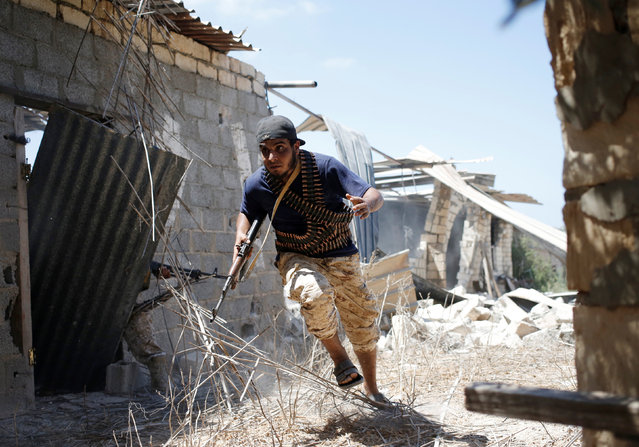
A fighter of Libyan forces allied with the U.N.-backed government runs for cover during a battle with Islamic State fighters in Sirte, Libya, July 31, 2016. (Photo by Goran Tomasevic/Reuters)
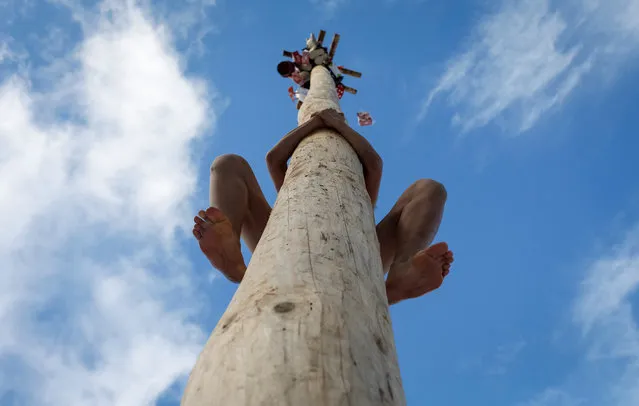
A man climbs up a wooden pole to get a prize during celebration of Maslenitsa, or Pancake Week, a pagan holiday marking the end of winter, near Rumyantsevo, Moscow region, Russia, February 26, 2017. (Photo by Sergei Karpukhin/Reuters)
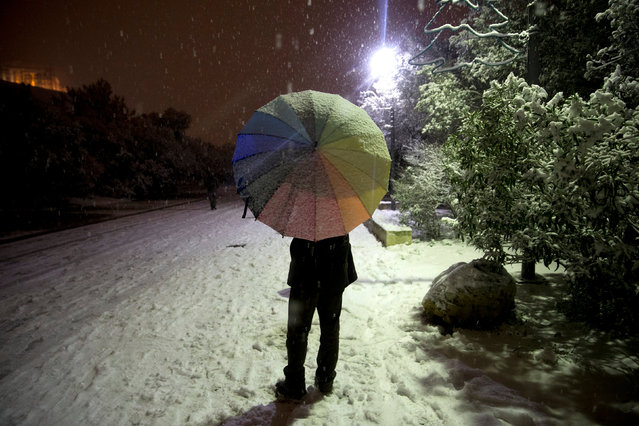
A man holds his umbrella during snowfall on the Areopagitou pedestrian street beneath the Acropolis hill during snowfall in Athens, Greece, January 10, 2017. (Photo by Alkis Konstantinidis/Reuters)
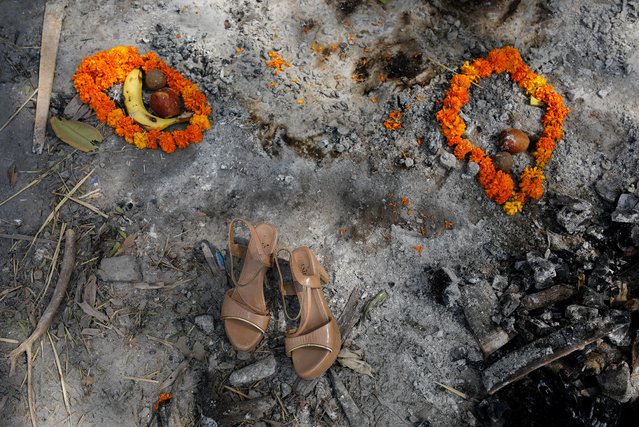
Flower garlands, fruits and a pair of sandals of a woman who died from the coronavirus disease (COVID-19), are placed by her relatives on the spot where she was cremated, as part of a ritual at a crematorium in New Delhi, India, April 30, 2021. (Photo by Adnan Abidi/Reuters)
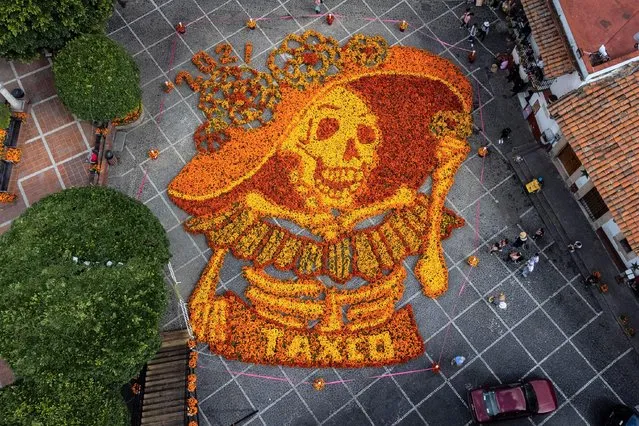
An aerial view of the figure of a Catrina skull made with 18,000 Cempasuchil flowers (Mexican marigold) is on display at the Church of Santa Prisca as part of Day of the Dead celebrations, in Taxco, Mexico on October 27, 2021. (Photo by Daniel Cardenas/Anadolu Agency via Getty Images)
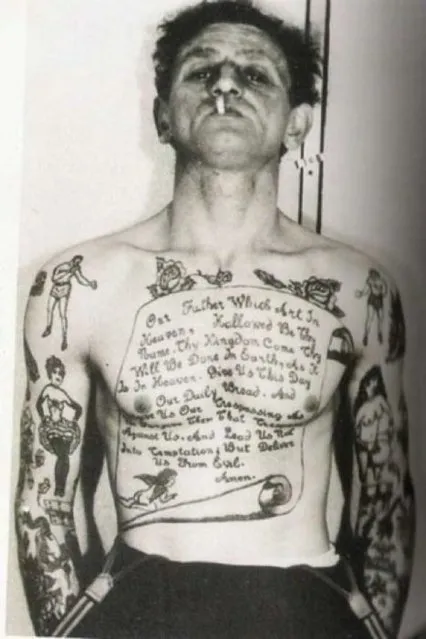
Tattoos are commonly used among criminals to show gang membership and record the wearer's personal history—such as his or her skills, specialties, accomplishments and convictions. They are also used as a means of personal expression. Certain designs have developed recognized coded meanings. The code systems can be quite complex and because of the nature of what they encode, the tattoo designs are not widely recognized.