Loading...
Done
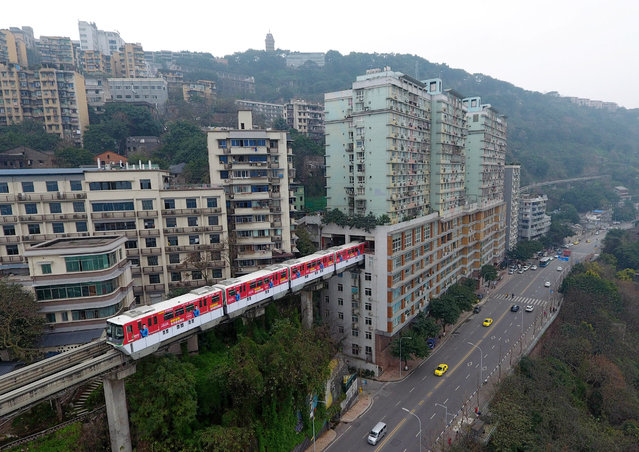
A light railway train passes through a residential building on March 18, 2017 in Chongqing, China. Chongqing Rail Transit No.2 and a 19-storey residential building have been built across each other. The railway set its Liziba Station on the sixth to eighth floor in the building with noise reduction equipment. (Photo by VCG/VCG via Getty Images)

A light railway train passes through a residential building on March 18, 2017 in Chongqing, China. Chongqing Rail Transit No.2 and a 19-storey residential building have been built across each other. The railway set its Liziba Station on the sixth to eighth floor in the building with noise reduction equipment. (Photo by VCG/VCG via Getty Images)
Details
20 Mar 2017 09:50:00


Defined according to wikipedia it is “a recent and informal geologic chronological term that serves to mark the evidence and extent of human activities that have had a significant global impact on the Earth’s ecosystems. The term was coined by ecologist Eugene Stoermer but has been widely popularized by the Nobel Prize-winning atmospheric chemist Paul Crutzen.”

The images here where created by Felix Pharand-Deschenes depicting how various human influences, from road and rail, to internet cables and airlines create significant patterns covering the Earth. What can we learn from these patterns in how they are influencing the environment
Details
19 Aug 2012 10:40:00
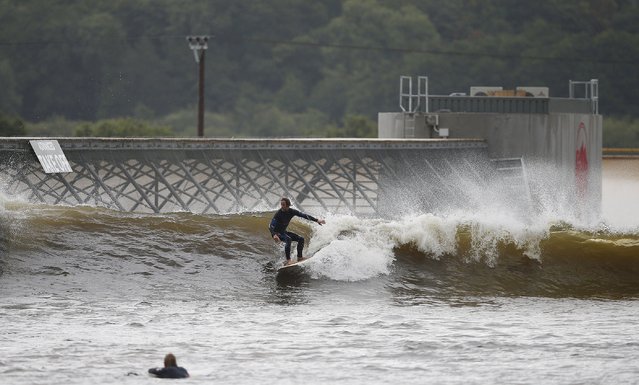
Surfers surf at Surf Snowdonia in Conwy, North Wales, September 3, 2015. (Photo by Andrew Yates/Reuters)

Surfers surf at Surf Snowdonia in Conwy, North Wales, September 3, 2015. The surf park, which cost $22.8 million, opened on August 1 and is the world's first commercial artificial surfing lake, according to the company.The pool is 300 metres (980 ft) long and 110 metres (360 ft) wide, containing a total of six million gallons of water. A bi-directional snowplough-shaped wave-generation mechanism, towed on a cable between the two central towers, moves up and down the pool on a three-rail track, generating the waves. (Photo by Andrew Yates/Reuters)
Details
04 Sep 2015 12:26:00
Pedestrians are falling after a gust of wind in Munich southern Germany, Tuesday, March 31, 2015. (Photo by Sven Hoppe/AP Photo/DPA)

Pedestrians are falling after a gust of wind in Munich southern Germany, Tuesday, March 31, 2015. One of the strongest storm fronts in years hit Germany on Tuesday, as Storm “Niklas” uncovered roofs, toppled scaffolding and caused severe disruption to rail services. (Photo by Sven Hoppe/AP Photo/DPA)
Details
01 Apr 2015 11:30:00
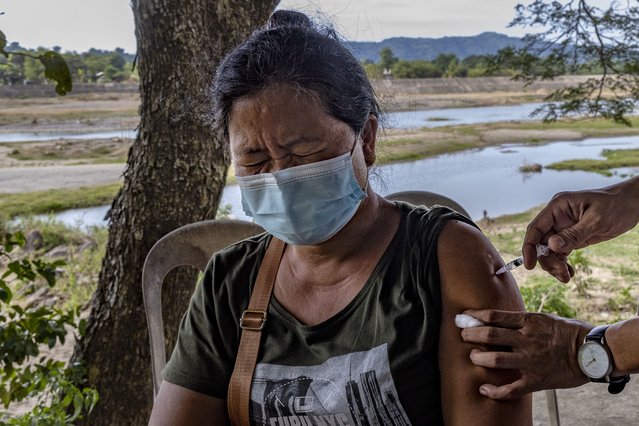
A resident receives a dose of Pfizer BioNTech COVID-19 vaccine at a rural village on December 01, 2021 in Aringay, La Union province, Philippines. The Philippines is rushing to vaccinate its population as it mulls making COVID-19 vaccination mandatory and amid the looming threat of the Omicron variant of the coronavirus. The country, which has just approved booster shots for its adult population, launched a three-day national vaccination holiday on November 29 to December 1 with the goal of vaccinating at least nine million additional people. (Photo by Ezra Acayan/Getty Images)

A resident receives a dose of Pfizer BioNTech COVID-19 vaccine at a rural village on December 01, 2021 in Aringay, La Union province, Philippines. The Philippines is rushing to vaccinate its population as it mulls making COVID-19 vaccination mandatory and amid the looming threat of the Omicron variant of the coronavirus. The country, which has just approved booster shots for its adult population, launched a three-day national vaccination holiday on November 29 to December 1 with the goal of vaccinating at least nine million additional people. (Photo by Ezra Acayan/Getty Images)
Details
24 Dec 2021 08:01:00
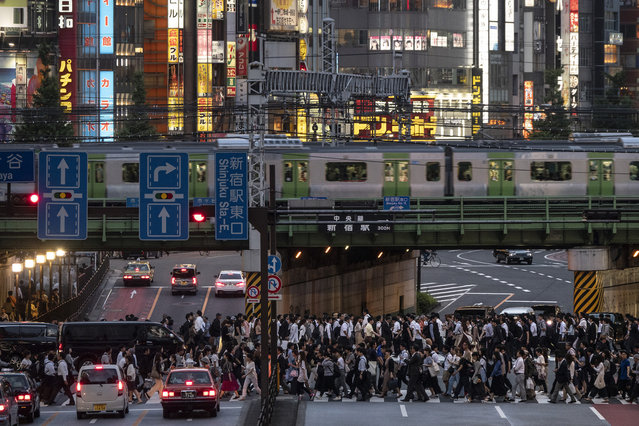
In this Tuesday, June 4, 2019, photo, a Yamanote Line train travels above commuters walking across the crossing during evening rush hours in the Shinjuku district of Tokyo. Operated by the East Japan Railway Co., the Yamanote Line in Tokyo makes a loop around the center of the city, connecting 29 stations that include key stops such as Shinjuku, Shibuya and Ikebukuro. A complete loop of about an hour offers scenes of Japanese daily lives. (Photo by Jae C. Hong/AP Photo)

In this Tuesday, June 4, 2019, photo, a Yamanote Line train travels above commuters walking across the crossing during evening rush hours in the Shinjuku district of Tokyo. Operated by the East Japan Railway Co., the Yamanote Line in Tokyo makes a loop around the center of the city, connecting 29 stations that include key stops such as Shinjuku, Shibuya and Ikebukuro. A complete loop of about an hour offers scenes of Japanese daily lives. (Photo by Jae C. Hong/AP Photo)
Details
27 Jun 2019 00:03:00
Long-tailed mayflies (Palingenia longicauda) mate on the surface of the Tisza river near Tiszakurt, Hungary, June 14, 2016. Millions of these short-lived mayflies engage in a frantic rush to mate and reproduce before they perish in just a few hours during “Tiszaviragzas” or Tisza blooming season from late spring to early summer every year. (Photo by Laszlo Balogh/Reuters)

Long-tailed mayflies (Palingenia longicauda) mate on the surface of the Tisza river near Tiszakurt, Hungary, June 14, 2016. Millions of these short-lived mayflies engage in a frantic rush to mate and reproduce before they perish in just a few hours during “Tiszaviragzas” or Tisza blooming season from late spring to early summer every year. (Photo by Laszlo Balogh/Reuters)
Details
15 Jun 2016 15:12:00
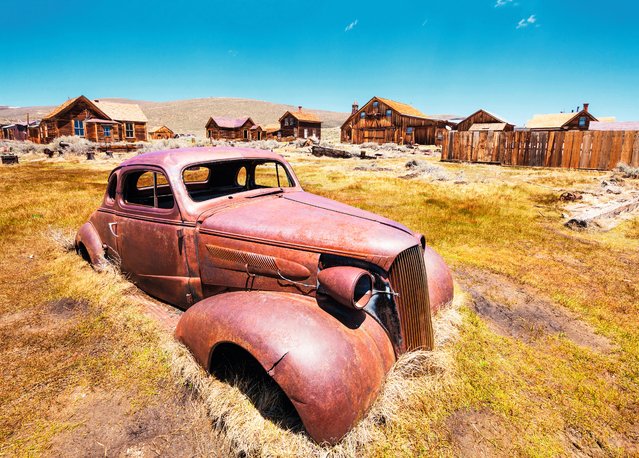
Bodie, Mono County, California. Gold was discovered at Bodie in 1859 (just after the initial California gold rush) and it went from mining camp to boomtown. Its decline began in 1880, when word spread of new boomtowns elsewhere. The Standard Consolidated Mine closed in 1913, and four years later the Bodie Railway was abandoned. By 1940 the population was down to 40. Today, Bodie is maintained in a state of arrested decay as a visitor attraction. (Photo by Alamy Stock Photo)

Kieron Connolly’s new book of photographs of more than 100 once-busy and often elegant buildings gives an idea of how the world might look if humankind disappeared. Here: Bodie, Mono County, California. Gold was discovered at Bodie in 1859 (just after the initial California gold rush) and it went from mining camp to boomtown. Its decline began in 1880, when word spread of new boomtowns elsewhere. The Standard Consolidated Mine closed in 1913, and four years later the Bodie Railway was abandoned. By 1940 the population was down to 40. Today, Bodie is maintained in a state of arrested decay as a visitor attraction. (Photo by Alamy Stock Photo)
Details
07 Sep 2016 09:50:00