Loading...
Done
In this September 21, 2017, local villagers repair a fishing boat in Shah Porir Dwip, an island by the Bay of Bengal at Bangladesh’s southern tip. This island can mean both hope and death for the Rohingya Muslims who are desperate to escape the violence that has engulfed their lives in Myanmar’s Rakhine state. High tide or low, day or night, rough waters or calm, when they can find a boat, the Rohingya take their chance to flee to Bangladesh. More than 430,000 have left Myanmar in less than a month. (Photo by Bernat Armangue/AP Photo)

In this September 21, 2017, local villagers repair a fishing boat in Shah Porir Dwip, an island by the Bay of Bengal at Bangladesh’s southern tip. This island can mean both hope and death for the Rohingya Muslims who are desperate to escape the violence that has engulfed their lives in Myanmar’s Rakhine state. High tide or low, day or night, rough waters or calm, when they can find a boat, the Rohingya take their chance to flee to Bangladesh. More than 430,000 have left Myanmar in less than a month. (Photo by Bernat Armangue/AP Photo)
Details
02 Dec 2017 07:52:00
A tourist carries her luggage in a flooded St. Mark's Square, in Venice, Wednesday, November 13, 2019. The high-water mark hit 187 centimeters (74 inches) late Tuesday, Nov. 12, 2019, meaning more than 85% of the city was flooded. The highest level ever recorded was 194 centimeters (76 inches) during infamous flooding in 1966. (Photo by Luca Bruno/AP Photo)

A tourist carries her luggage in a flooded St. Mark's Square, in Venice, Wednesday, November 13, 2019. The high-water mark hit 187 centimeters (74 inches) late Tuesday, Nov. 12, 2019, meaning more than 85% of the city was flooded. The highest level ever recorded was 194 centimeters (76 inches) during infamous flooding in 1966. (Photo by Luca Bruno/AP Photo)
Details
05 Feb 2020 00:01:00
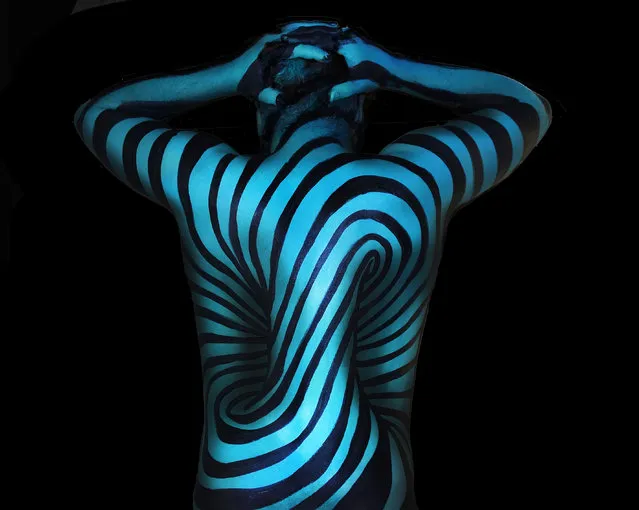
A talented body painter has created a series of mind-bending illusions that cover entire torsos. Natalie Fletcher’s work are enough to make people double-take, the spiraling patterns of some appearing to fade into the abyss. In other works, the artists designs look as though they are never ending, while some show body parts appearing to protrude from models chests. The idea behind the ongoing series came to Natalie, 30, as a means of keeping entertained during the winter months. Here: Optical illusion bodypaint. (Photo by Natalie Fletcher/Cater News)

A talented body painter has created a series of mind-bending illusions that cover entire torsos. Natalie Fletcher’s work are enough to make people double-take, the spiraling patterns of some appearing to fade into the abyss. In other works, the artists designs look as though they are never ending, while some show body parts appearing to protrude from models chests. The idea behind the ongoing series came to Natalie, 30, as a means of keeping entertained during the winter months. Here: Optical illusion bodypaint. (Photo by Natalie Fletcher/Cater News)
Details
13 Apr 2016 09:17:00
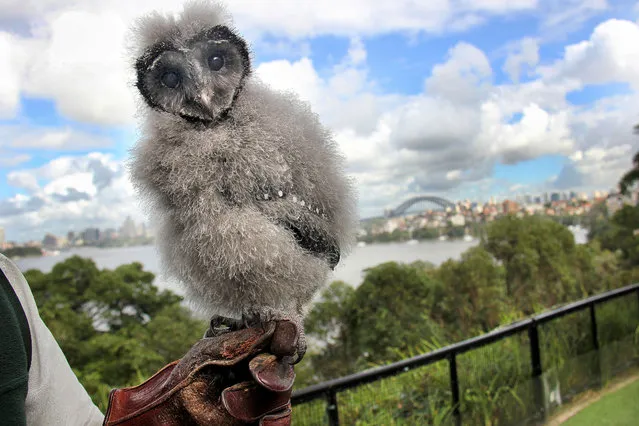
An adorable baby owl has proved to be a real heart-breaker thanks to its heart-shaped head. Although Griffin the Lesser Sooty Owl might look like a feather duster, the tiny eight-week old chick will soon be ready to fly. And the heart outline that surrounds his giant eyes and beak means he is set to be the star of the bird show at Taronga Zoo, Sydney. (Photo by Caters News Agency)

An adorable baby owl has proved to be a real heart-breaker thanks to its heart-shaped head. Although Griffin the Lesser Sooty Owl might look like a feather duster, the tiny eight-week old chick will soon be ready to fly. And the heart outline that surrounds his giant eyes and beak means he is set to be the star of the bird show at Taronga Zoo, Sydney. (Photo by Caters News Agency)
Details
16 May 2015 13:51:00
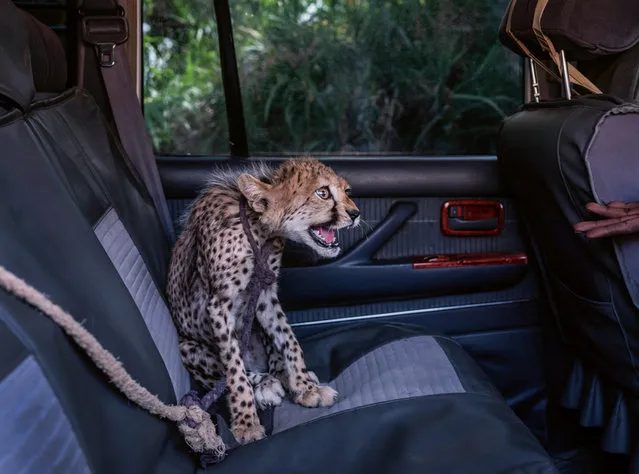
A five-month-old cheetah seated in the back of a Land Cruiser growls at an outstretched hand after being taken from traffickers in Ethiopia and driven to Harirad, Somaliland, in 2020. This photo is part of the work of more than 100 artists in Why We Photograph Animals, a new collection of wildlife photography that aims to help understand why people have photographed animals at different points in history and what it means in the present. (Photo by Nichole Sobecki/Thames & Hudson)

A five-month-old cheetah seated in the back of a Land Cruiser growls at an outstretched hand after being taken from traffickers in Ethiopia and driven to Harirad, Somaliland, in 2020. This photo is part of the work of more than 100 artists in Why We Photograph Animals, a new collection of wildlife photography that aims to help understand why people have photographed animals at different points in history and what it means in the present. (Photo by Nichole Sobecki/Thames & Hudson)
Details
28 Apr 2024 03:15:00


“The pygmy hippopotamus (Choeropsis liberiensis or Hexaprotodon liberiensis) is a large mammal native to the forests and swamps of western Africa (the specific name liberiensis means “of Liberia”, as this is where the vast majority live). The pygmy hippo is reclusive and nocturnal. It is one of only two extant species in the Hippopotamidae family, the other being its much larger cousin the common hippopotamus”. – Wikipedia

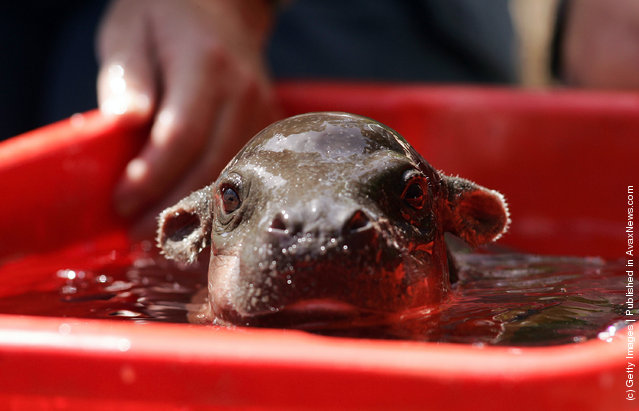
Photo: Monifa, a one month old baby Pygmy Hippopotamus takes a morning bath at Taronga Zoo on November 7, 2008 in Sydney, Australia. Monifa is the first Pygmy Hippopotamus to be born at Taronga Zoo in the past twenty three years. (Photo by Sergio Dionisio/Getty Images)
Details
11 Apr 2011 08:11:00


A Haka is performed before the ceremonial departure of the 'vaka' or traditional canoes ahead of their cross-Pacific voyage from Viaduct Harbour on April 13, 2011 in Auckland, New Zealand. Powered by sun and wind only, the 15,000 nautical mile journey to Hawaii via French Polynesia will set off on April 15, aiming to raise awareness of environmental issues such as ocean noise pollution, acidification and anoxic waters, whilst recapturing traditional Pacific voyaging. The votyage is named “Te Mana o Te Moana” meaning “The Spirit of the Sea”. (Photo by Phil Walter/Getty Images)
Details
13 Apr 2011 07:45:00
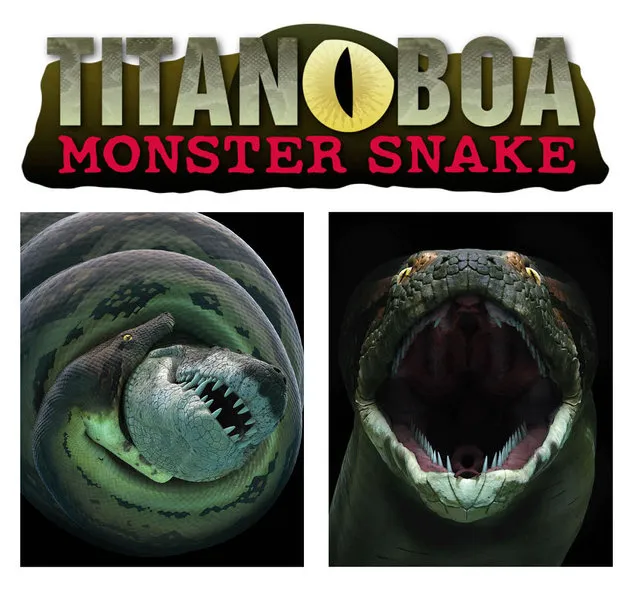
Titanoboa: Monster Snake

Titanoboa, meaning "titanic boa," is an extinct genus of snake that lived approximately 60–58 million years ago, during the Paleocene epoch, a 10-million-year period immediately following the dinosaur extinction event. The only known species is Titanoboa cerrejonensis, the largest, longest, and heaviest snake ever discovered, which supplanted the previous record holder, Gigantophis.

A full-scale model of the snake was unveiled at New York City's Grand Central station before the exhibit opens at the Smithsonian in Washington DC.
Details
06 Feb 2014 12:38:00