Loading...
Done
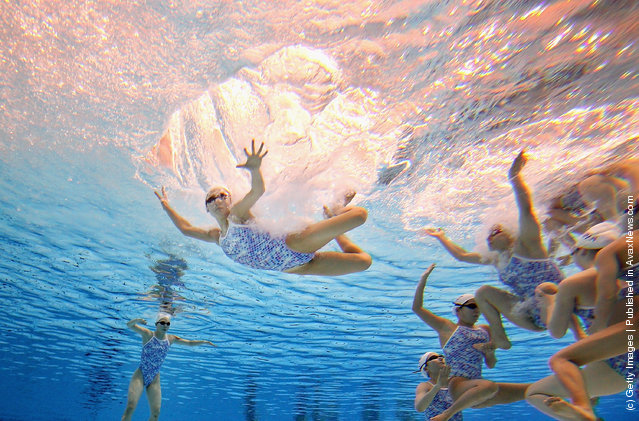
Japanese team trains before the 6th FINA Synchronised Swimming World Trophy at the Water Cube

Japanese team trains before the 6th FINA Synchronised Swimming World Trophy at the Water Cube on December 8, 2011 in Beijing, China. (Photo by Feng Li/Getty Images)
Details
09 Dec 2011 11:09:00
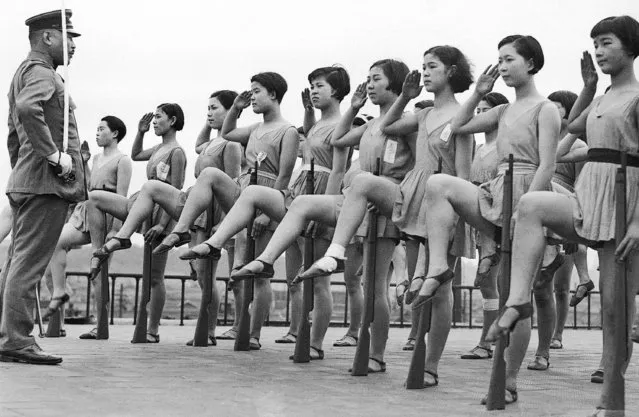
Japanese chorus girls appear to be drilling in military tactics atop their theater building as they perform salutes, June 30, 1937. The officer is from the Japanese regular army and says the girls display more rhythm in their drills than do the regular troops. (Photo by AP Photo)

Japanese chorus girls appear to be drilling in military tactics atop their theater building as they perform salutes, June 30, 1937. The officer is from the Japanese regular army and says the girls display more rhythm in their drills than do the regular troops. (Photo by AP Photo)
Details
12 Jul 2017 07:35:00
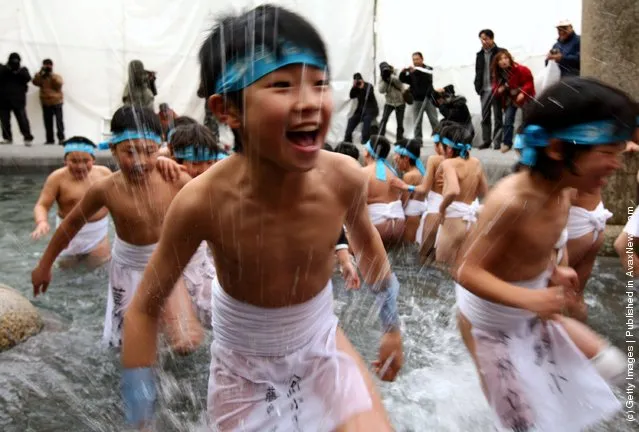
Japanese children wear loincloths as they splash about in freezing cold water during Saidaiji Naked Festival, at Saidaiji Temple

“A Hadaka Matsuri (“Naked Festival”) is a type of Japanese festival, or matsuri, in which participants wear a minimum amount of clothing; usually just a Japanese loincloth (called fundoshi), sometimes with a short happi coat, and rarely completely naked. Whatever the clothing, it is considered to be above vulgar, or everyday, undergarments, and on the level of holy Japanese shrine attire. Naked festivals are held in dozens of places throughout Japan every year, usually in the summer or winter. The most famous festival is held in Okayama, where the festival originated. Every year, over 9,000 men participate in this festival”. – Wikipedia

Photo: Japanese men wear loincloths as they splash about in freezing cold water during Saidaiji Naked Festival, at Saidaiji Temple on February 18, 2012 in Okayama, Japan. (Photo by Buddhika Weerasinghe/Getty Images)
Details
19 Feb 2012 12:18:00
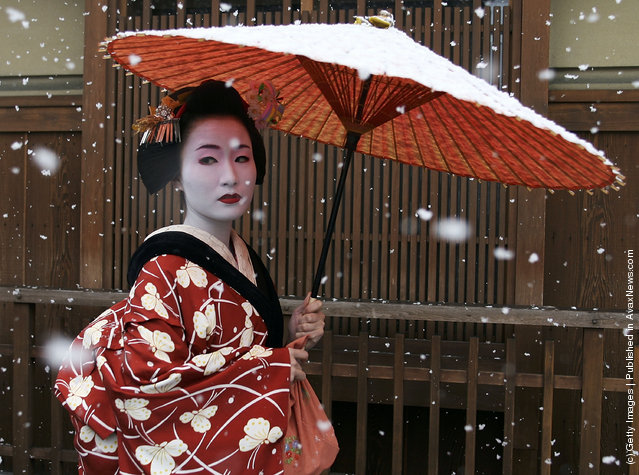
A Maiko, a traditional Japanese dancer, walks in the snow in Gion, Kyoto's famous geisha district

A Maiko, a traditional Japanese dancer, walks in the snow in Gion, Kyoto's famous geisha district, January 7, 2006 in Kyoto, Japan. The ancient city Kyoto attracts the largest number of visitors in Japan and has been increasing every year. (Photo by Koichi Kamoshida/Getty Images)
Details
03 Aug 2011 11:38:00
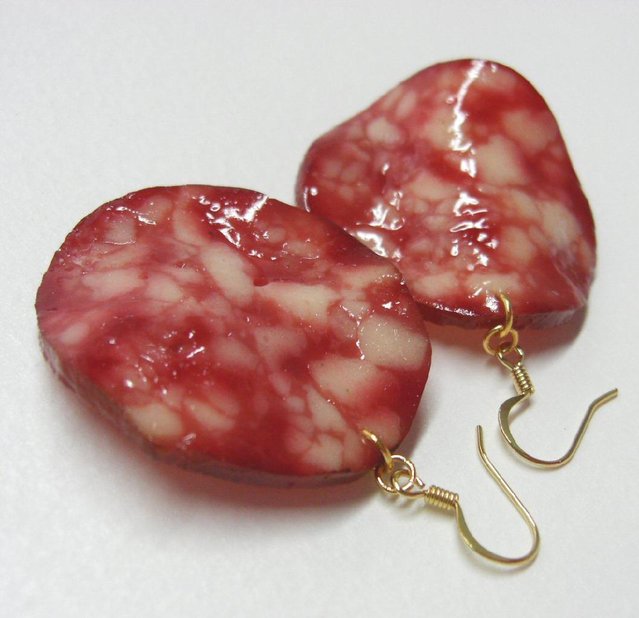
Fake Food Hatanaka

Japanese manufacturer Fake Food Hatanaka had the idea to combine the two to create a line of fashion accessories, strange and twisted! From the Fries/Ketchup hairclip to the Pizza bread necklace through the Cheeseburger pendant, the bacon & eggs headbands or even spaghetti bolognaise earrings and necklace sausages, here is some ultra-realistic and WTF Japanese gadgets to turn Fake Food / Fast Food into fashion accessory!
Details
15 Aug 2013 11:01:00
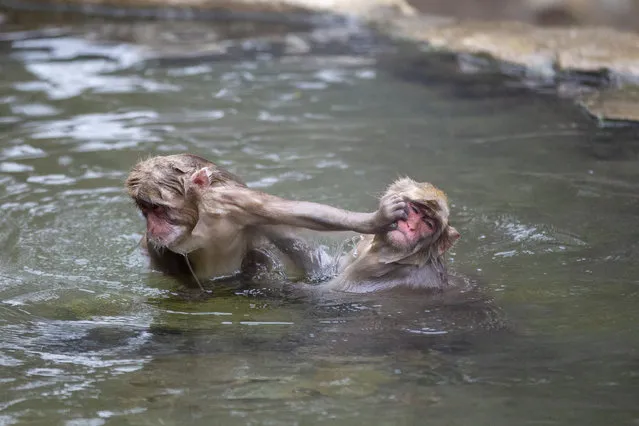
Japanese macaques, also known as snow monkeys, play as they soak in a hot spring in Jigokudani valley in Nagano Prefecture, northwest of Tokyo Saturday, March 6, 2021. (Photo by Kiichiro Sato/AP Photo)

Japanese macaques, also known as snow monkeys, play as they soak in a hot spring in Jigokudani valley in Nagano Prefecture, northwest of Tokyo Saturday, March 6, 2021. (Photo by Kiichiro Sato/AP Photo)
Details
14 Mar 2021 09:11:00
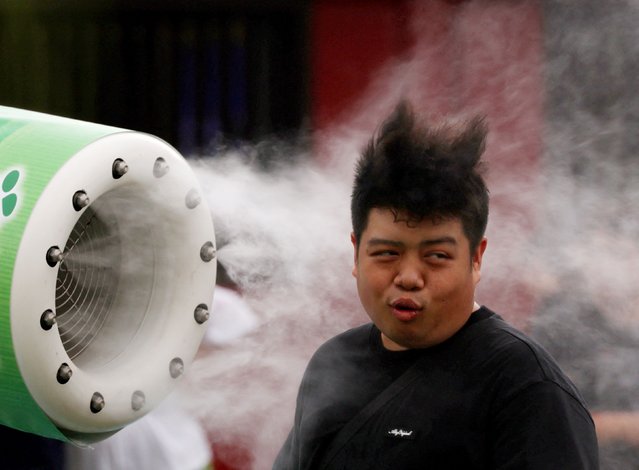
A tourist cools off in front of a misting fan near a venue of the Hozuki-Ichi (Japanese lantern plant fair), at Sensoji temple, in Tokyo, Japan, on July 10, 2025. (Photo by Kim Kyung-Hoon/Reuters)

A tourist cools off in front of a misting fan near a venue of the Hozuki-Ichi (Japanese lantern plant fair), at Sensoji temple, in Tokyo, Japan, on July 10, 2025. (Photo by Kim Kyung-Hoon/Reuters)
Details
05 Aug 2025 04:01:00
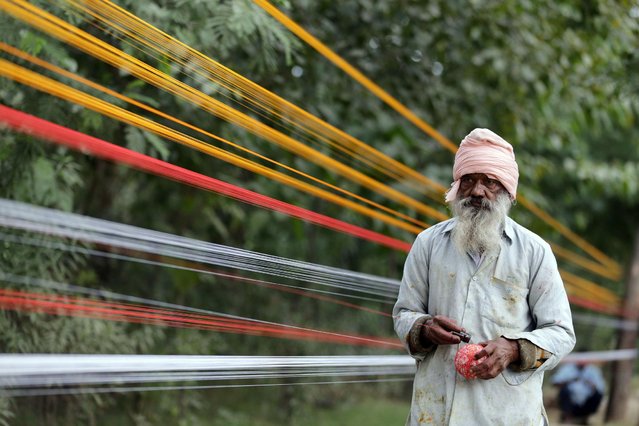
An Indian worker makes a roll of the kite thread being prepared on a roadside on the outskirts of Amritsar, India, 24 November 2020. The kite string or the “Dor”, in the local language, is made of crushed glass, glue, colors, and egg to make it strong enough to hold the kite. With the onset of the winter season, kite flying enthusiasts especially in northern Punjab, ranging from children to aged people, start flying kites as a leisure activity from their homes' rooftops and from open spaces, enjoying warmth of the winter sun at the same time. Kite flying season peaks in Amritsar on Lohri festival which marks the culmination of winter and is celebrated in the month of January every year. (Photo by Raminder Pal Singh/EPA/EFE)

An Indian worker makes a roll of the kite thread being prepared on a roadside on the outskirts of Amritsar, India, 24 November 2020. The kite string or the “Dor”, in the local language, is made of crushed glass, glue, colors, and egg to make it strong enough to hold the kite. (Photo by Raminder Pal Singh/EPA/EFE)
Details
07 Dec 2020 00:01:00