Loading...
Done
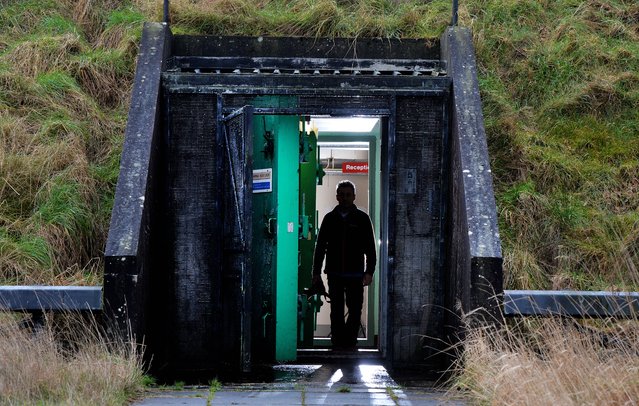
The main entrance and blast door at the nuclear bunker site on the Woodside Road industrial estate on February 4, 2016 in Ballymena, Northern Ireland. The underground shelter has been put up for sale by the offices of the Northern Ireland First and Deputy First Minister. The bunker which was completed in 1990 was built to hold up to 235 people in the event of a nuclear bomb and is complete with kitchen facilities, dormitories and decontamination chambers. (Photo by Charles McQuillan/Getty Images)

The main entrance and blast door at the nuclear bunker site on the Woodside Road industrial estate on February 4, 2016 in Ballymena, Northern Ireland. The underground shelter has been put up for sale by the offices of the Northern Ireland First and Deputy First Minister. The bunker which was completed in 1990 was built to hold up to 235 people in the event of a nuclear bomb and is complete with kitchen facilities, dormitories and decontamination chambers. The site, one of approximately 1,600 nuclear monitoring posts built in the UK since 1955, is on the housing market with an asking price of £575,000. (Photo by Charles McQuillan/Getty Images)
Details
05 Feb 2016 10:55:00
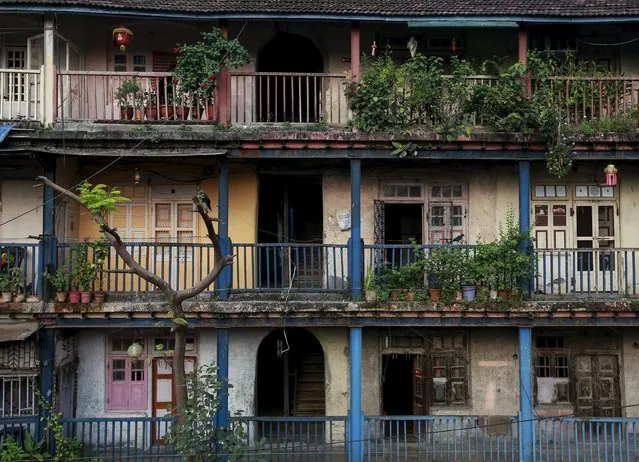
Windows and doors of an old residential building are pictured in central Mumbai October 10, 2014. The cost for buying a residential apartment in Mumbai close to the city centre ranges from 12,000 Indian rupees ($ 200) per square feet to 112,552 Indian rupees ($ 1800) per square feet. (Photo by Danish Siddiqui/Reuters)

In Mumbai, the windows of new high-rise apartment blocks, old low-rise residential buildings and shantytown shacks portray the disparity in living conditions and incomes in the Indian city. Rents for a place to live range from more than $2,000 to less than $5 a month. Here: Windows and doors of an old residential building are pictured in central Mumbai October 10, 2014. The cost for buying a residential apartment in Mumbai close to the city centre ranges from 12,000 Indian rupees ($ 200) per square feet to 112,552 Indian rupees ($ 1800) per square feet. (Photo by Danish Siddiqui/Reuters)
Details
23 Apr 2015 12:29:00
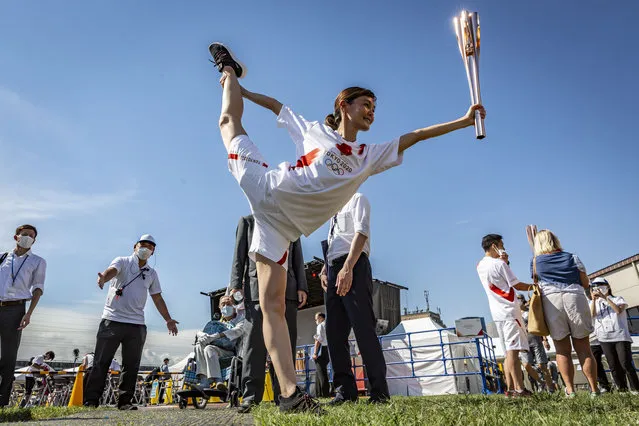
A torch bearer poses for photographs during the Olympic Torch Relay Celebration event on July 21, 2021 in Tokyo, Japan. As the Olympic torch relay makes its way around Tokyo, public relays have been cancelled in favour of daily ceremonies held behind closed doors, as authorities act to avoid large gatherings while the country endures a fourth wave of coronavirus. (Photo by Yuichi Yamazaki/Getty Images)

A torch bearer poses for photographs during the Olympic Torch Relay Celebration event on July 21, 2021 in Tokyo, Japan. As the Olympic torch relay makes its way around Tokyo, public relays have been cancelled in favour of daily ceremonies held behind closed doors, as authorities act to avoid large gatherings while the country endures a fourth wave of coronavirus. (Photo by Yuichi Yamazaki/Getty Images)
Details
24 Mar 2022 05:32:00
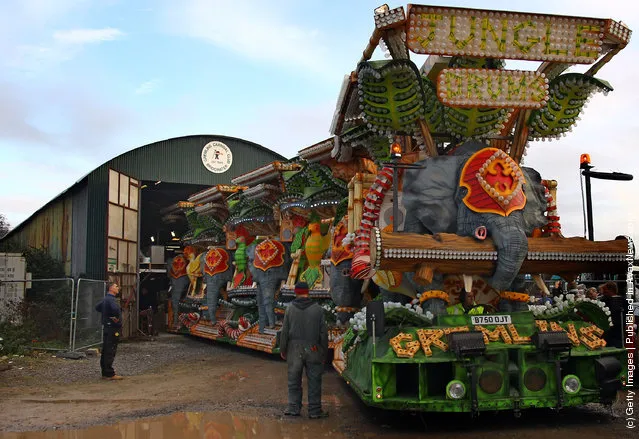
Enthusiasts Unveil Their Carts In Bridgewater Ahead Of The World's Largest Illuminated Carnival in Bridgwater, England

Members of the Gremlins Carnival Club, open the doors to their workshop to unveil for the first time their cart, Jungle Drums, which is their entry to this year's Bridgwater Carnival, on November 4, 2011 in Bridgwater, England. (Photo by Matt Cardy/Getty Images)
Details
04 Nov 2011 13:20:00
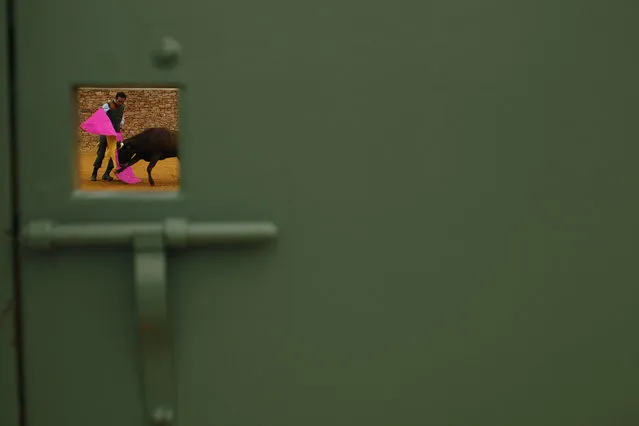
Spanish bullfighter Manuel Jesus “El Cid” is seen through a small window of a door as he performs a pass to a heifer during a “tentadero” (a small bullfight to check the bravery of calves and heifers which are not killed) during the first International Biennial of bullfighting at Reservatauro Ronda cattle ranch in Ronda, near Malaga February 17, 2013. Spain's parliament voted last Tuesday to consider protecting bullfighting as a national pastime, angering animal rights campaigners and politicians in two regions where the sport is banned. (Photo by Jon Nazca/Reuters)

Spanish bullfighter Manuel Jesus “El Cid” is seen through a small window of a door as he performs a pass to a heifer during a “tentadero” (a small bullfight to check the bravery of calves and heifers which are not killed) during the first International Biennial of bullfighting at Reservatauro Ronda cattle ranch in Ronda, near Malaga February 17, 2013. Spain's parliament voted last Tuesday to consider protecting bullfighting as a national pastime, angering animal rights campaigners and politicians in two regions where the sport is banned. (Photo by Jon Nazca/Reuters)
Details
22 Feb 2013 11:15:00
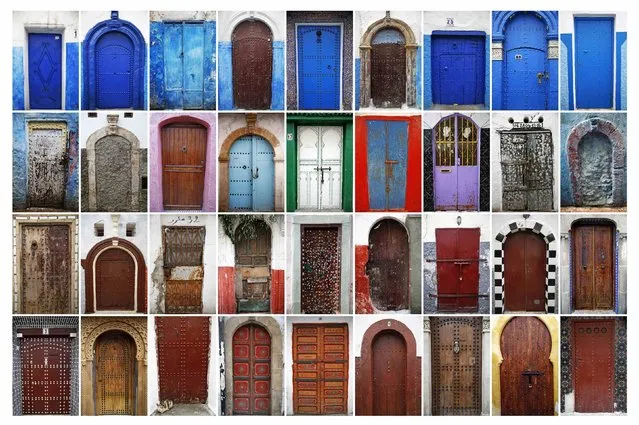
A combination photo shows some of the colourful doors seen in Rabat's Medina and Kasbah of the Udayas, September 2014. UNESCO made Rabat a World Heritage Site two years ago and media and tour operators call it a “must-see destination”. (Photo by Damir Sagolj/Reuters)

A combination photo shows some of the colourful doors seen in Rabat's Medina and Kasbah of the Udayas, September 2014. UNESCO made Rabat a World Heritage Site two years ago and media and tour operators call it a “must-see destination”. But it seems the tourist hordes have yet to find out. While visitors are getting squeezed through the better-known sites of Marrakesh and Fez, the old part of Rabat - with its beautiful Medina and Kasbah of the Udayas - remains an almost unspoiled oasis of calm. Smaller and more compact, its labyrinths of streets, passages and dead ends are a treasure trove of shapes and colours, of moments begging to be caught by the photographer's lens. (Photo by Damir Sagolj/Reuters)
Details
08 Oct 2014 12:08:00
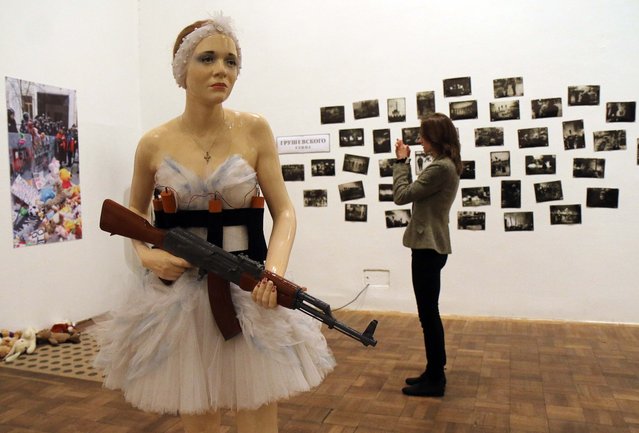
A visitor stands in the exhibition “I Am A Drop In The Ocean” dedicated to the artistic and visual expressions of the protests that shook the Ukraine from November 2013 until February 2014 at the Kuenstlerhaus gallery in Vienna, Austria, Thursday, April 10, 2014. The exhibition opens its doors from April 11 until May 23, 2014. (Photo by Ronald Zak/AP Photo)

A visitor stands in the exhibition “I Am A Drop In The Ocean” dedicated to the artistic and visual expressions of the protests that shook the Ukraine from November 2013 until February 2014 at the Kuenstlerhaus gallery in Vienna, Austria, Thursday, April 10, 2014. The exhibition opens its doors from April 11 until May 23, 2014. (Photo by Ronald Zak/AP Photo)
Details
12 Apr 2014 12:30:00
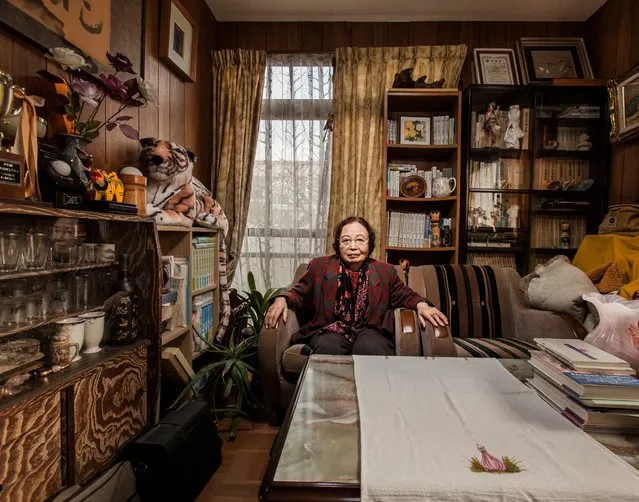
Takeoka Chisaka, Hiroshima, Japan. “One morning in August 1945, I was walking home from the night shift at a factory in Hiroshima. As I reached my door, there was a huge explosion. When I came to, my head was bleeding and I had been blasted 30m away”. (Photo and caption by Sasha Maslov)

Takeoka Chisaka, Hiroshima, Japan. “One morning in August 1945, I was walking home from the night shift at a factory in Hiroshima. As I reached my door, there was a huge explosion. When I came to, my head was bleeding and I had been blasted 30m away. The atomic bomb had detonated. When I found my mother, her eyes were badly burned. A doctor said they had to come out, but he didn’t have the proper tools so used a knife instead. It was hellish. I became a peace-worker after the war. In the 1960s, at a meeting at the UN, I met one of the people who created the atomic bomb. He apologised”. (Photo and caption by Sasha Maslov)
Details
11 May 2015 11:56:00