Loading...
Done
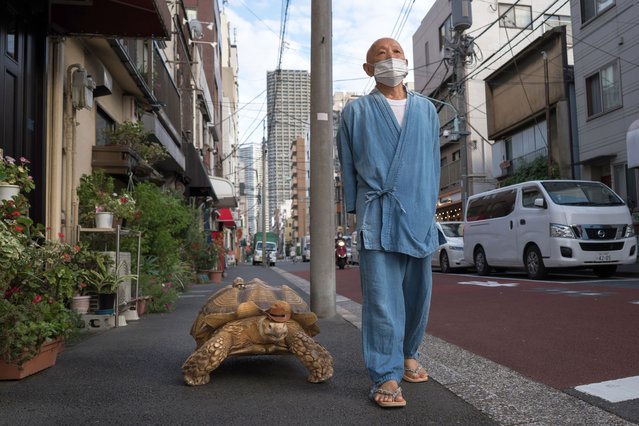
Hisao Mitani walks with an African tortoise, which he named Bon-Chan, on the street on September 16, 2022 in Tokyo, Japan. Bon-chan, the 26-year-old tortoise who is cared for by 69-year-old funeral director Mitani, has become an internet sensation after starring in a viral tiktok video that has gained over seven million views since it was released, making both Mitani and Bon-chan tiktok celebrities. (Photo by Tomohiro Ohsumi/Getty Images)

Hisao Mitani walks with an African tortoise, which he named Bon-Chan, on the street on September 16, 2022 in Tokyo, Japan. Bon-chan, the 26-year-old tortoise who is cared for by 69-year-old funeral director Mitani, has become an internet sensation after starring in a viral tiktok video that has gained over seven million views since it was released, making both Mitani and Bon-chan tiktok celebrities. (Photo by Tomohiro Ohsumi/Getty Images)
Details
13 Oct 2022 04:15:00
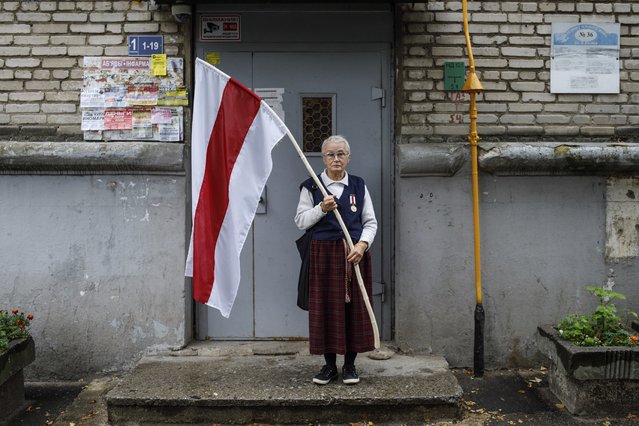
Nina Bahinskaya, 73, poses for a photo holding an old Belarusian national flag at an entrance of her apartment building in Minsk, Belarus, Thursday, September 10, 2020. The 73-year-old former geologist has become one of the most recognizable faces of Belarus protests, fearlessly waving a huge opposition's red-and-white flag in front of riot police. (Photo by AP Photo/Stringer)

Nina Bahinskaya, 73, poses for a photo holding an old Belarusian national flag at an entrance of her apartment building in Minsk, Belarus, Thursday, September 10, 2020. The 73-year-old former geologist has become one of the most recognizable faces of Belarus protests, fearlessly waving a huge opposition's red-and-white flag in front of riot police. (Photo by AP Photo/Stringer)
Details
22 Sep 2020 00:05:00
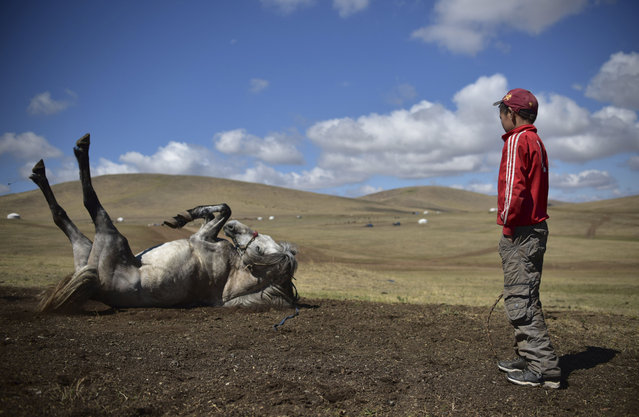
This picture taken on July 8, 2015 shows 13-year-old jockey Purevsurengiin Togtokhsuren (R) watching a horse rolling in the dirt after a training session in Khui Doloon Khudag, some 50 kms west of Ulan Bator. Despite being only 13 years old, Togtokhsuren is riding for the fifth time in the national races for Mongolia's summer festival, known as Naadam, lining up against some 170 other child jockeys. (Photo by Johannes Eisele/AFP Photo)

This picture taken on July 8, 2015 shows 13-year-old jockey Purevsurengiin Togtokhsuren (R) watching a horse rolling in the dirt after a training session in Khui Doloon Khudag, some 50 kms west of Ulan Bator. Despite being only 13 years old, Togtokhsuren is riding for the fifth time in the national races for Mongolia's summer festival, known as Naadam, lining up against some 170 other child jockeys. (Photo by Johannes Eisele/AFP Photo)
Details
17 Nov 2015 08:04:00
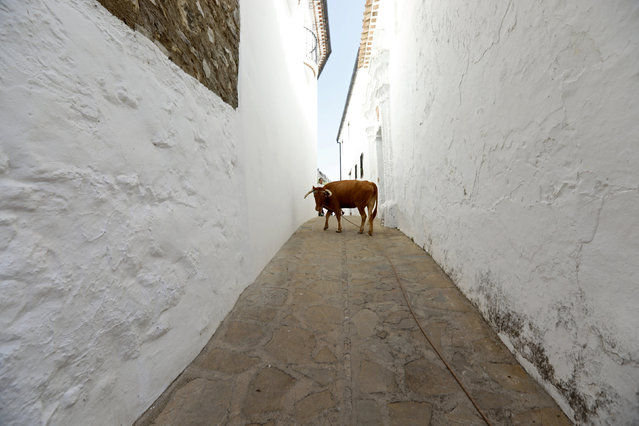
A heifer, tied with a rope, turns during “Toro de Cuerda” in the white village of Villaluenga del Rosario, southern Spain September 3, 2016. Dazzling clusters of cube-shaped houses perched on top of Andalusia's olive tree-studded mountains, the “Pueblos Blancos”, or white villages, of southern Spain are named for the lime wash the buildings are painted with to keep the interiors cool. The labyrinths of narrow alleyways are a throwback to when this region was known as Al-Andalus and was part of a medieval Muslim territory. While this region is stunningly beautiful and a big draw to tourists visiting the south of Spain, it is also one of the poorest areas in the country and has one of the highest unemployment rates in the European Union. (Photo by Marcelo del Pozo/Reuters)

A heifer, tied with a rope, turns during “Toro de Cuerda” in the white village of Villaluenga del Rosario, southern Spain September 3, 2016. Dazzling clusters of cube-shaped houses perched on top of Andalusia's olive tree-studded mountains, the “Pueblos Blancos”, or white villages, of southern Spain are named for the lime wash the buildings are painted with to keep the interiors cool. The labyrinths of narrow alleyways are a throwback to when this region was known as Al-Andalus and was part of a medieval Muslim territory. While this region is stunningly beautiful and a big draw to tourists visiting the south of Spain, it is also one of the poorest areas in the country and has one of the highest unemployment rates in the European Union. (Photo by Marcelo del Pozo/Reuters)
Details
20 Oct 2016 11:09:00
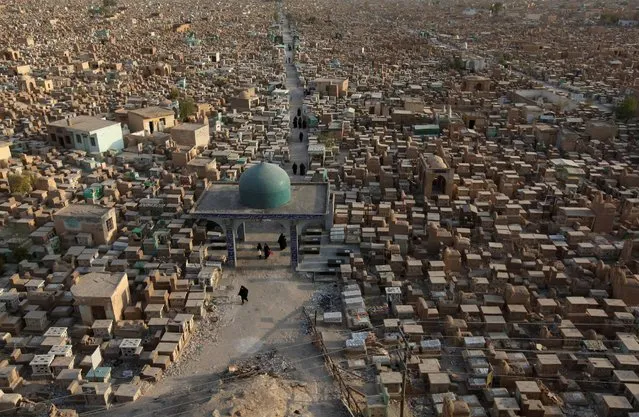
The Wadi al-Salam cemetery, Arabic for “Peace Valley”, is seen in Najaf, south of Baghdad, Iraq August 3, 2016. The world's largest cemetery, in Iraq's Shi'ite holy city of Najaf, is expanding at double its usual rate as Shi'ite militias bury their dead from the war against Islamic State. The Wadi al-Salam cemetery, Arabic for “Peace Valley” has a special place in the hearts of Shi'ite Muslims as it surrounds the Mausoleum of their first imam, Ali Bin Abi Talib, a cousin and son-in-law of Prophet Mohammad. (Photo by Alaa Al-Marjani/Reuters)

The Wadi al-Salam cemetery, Arabic for “Peace Valley”, is seen in Najaf, south of Baghdad, Iraq August 3, 2016. The world's largest cemetery, in Iraq's Shi'ite holy city of Najaf, is expanding at double its usual rate as Shi'ite militias bury their dead from the war against Islamic State. The Wadi al-Salam cemetery, Arabic for “Peace Valley” has a special place in the hearts of Shi'ite Muslims as it surrounds the Mausoleum of their first imam, Ali Bin Abi Talib, a cousin and son-in-law of Prophet Mohammad. (Photo by Alaa Al-Marjani/Reuters)
Details
24 Aug 2016 11:38:00
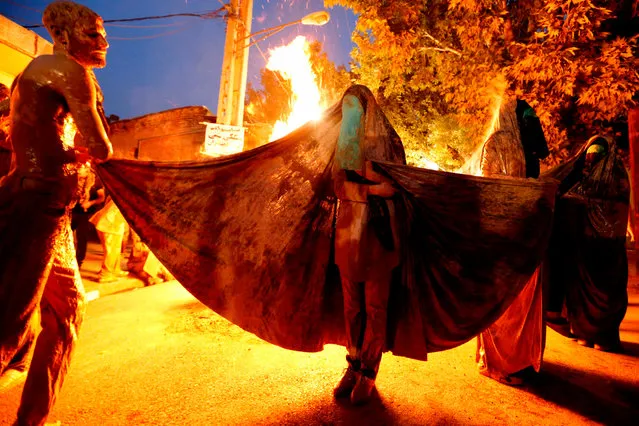
Iranian Shiite Muslim women gather around a bonfire after rubbing mud on their body during the “Kharrah Mali” (Mud Rubbing) ritual to mark the Ashura religious ceremony in the city of Khorramabad, some 470 kms southwest of Tehran, early in the morning on October 1, 2017. “Khrreh Mali” or “Mud Rubbing” is a ritual that is held in the city of Khorramabad every year to commemorate the seventh century slaying of Prophet Mohammed' s grandson Imam Hussein, in which Iranian men roll over in mud and dry themselves by gathering around the bonfires before flagellating themselves. (Photo by Atta Kenare/AFP Photo)

Iranian Shiite Muslim women gather around a bonfire after rubbing mud on their body during the “Kharrah Mali” (Mud Rubbing) ritual to mark the Ashura religious ceremony in the city of Khorramabad, some 470 kms southwest of Tehran, early in the morning on October 1, 2017. “Khrreh Mali” or “Mud Rubbing” is a ritual that is held in the city of Khorramabad every year to commemorate the seventh century slaying of Prophet Mohammed' s grandson Imam Hussein, in which Iranian men roll over in mud and dry themselves by gathering around the bonfires before flagellating themselves. (Photo by Atta Kenare/AFP Photo)
Details
02 Oct 2017 08:38:00
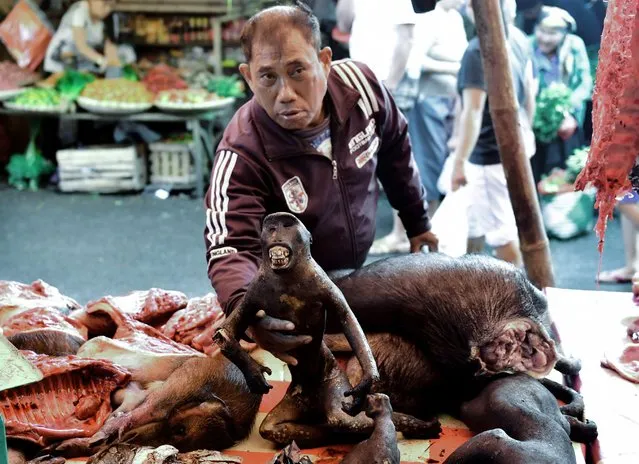
This picture taken on February 18, 2017 shows a customer holding a crested black macaque in Tomohon market in northern Sulawesi, Indonesia. (Photo by Bay Ismoyo/AFP Photo)

This picture taken on February 18, 2017 shows a customer holding a crested black macaque in Tomohon market in northern Sulawesi, Indonesia. Authorities and activists are stepping up efforts to persuade villagers on Sulawesi island to stop consuming the critically endangered crested black macaques, one of many exotic creatures that form part of the local indigenous community' s diet. The macaque' s meat is prized by the ethnic Minahasan people, a largely Christian group in the world' s most populous Muslim- majority country, who have no reservation about eating exotic animals, unlike Indonesia' s Islamic communities. (Photo by Bay Ismoyo/AFP Photo)
Details
04 Apr 2017 10:01:00
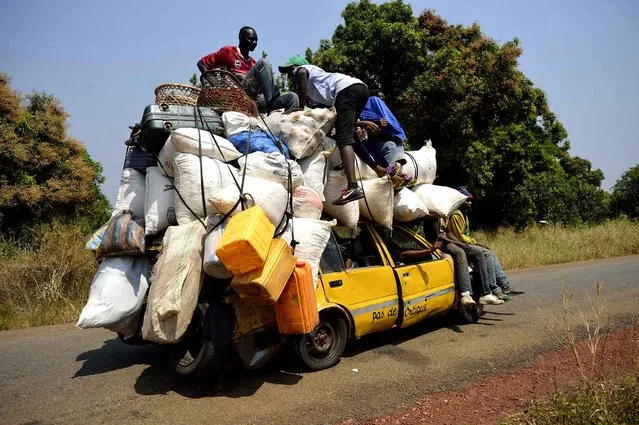
Christian people crowd a bush taxi on a road 55km north of Bangui as they are on their way to the capital where they expect to sell some products on the market on January 19, 2014. Fresh fighting broke out in the strife-torn Central African Republic on the eve of an announcement on Sunday of the candidates seeking to become the new interim president. (Photo by Eric Feferberg/AFP Photo)

Christian people crowd a bush taxi on a road 55km north of Bangui as they are on their way to the capital where they expect to sell some products on the market on January 19, 2014. Fresh fighting broke out in the strife-torn Central African Republic on the eve of an announcement on Sunday of the candidates seeking to become the new interim president. Sectarian violence has gripped the landlocked country after a March 2013 coup launched by the mostly Muslim Seleka rebels, and the UN has warned that the bloodshed could turn into genocide. (Photo by Eric Feferberg/AFP Photo)
Details
26 Jan 2014 12:39:00