Loading...
Done
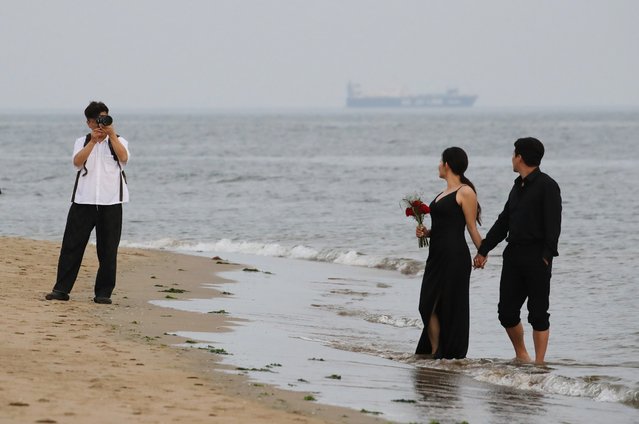
On the afternoon of the June 12, 2025, a couple wearing black dresses took wedding photos at Dadaepo Beach in Saha-gu, Busan. (Photo by Kim Dong-hwan)

On the afternoon of the June 12, 2025, a couple wearing black dresses took wedding photos at Dadaepo Beach in Saha-gu, Busan. (Photo by Kim Dong-hwan)
Details
29 Jul 2025 03:00:00
A Hezbollah supporter fires a rocket-propelled grenade in the air to celebrate the arrival of Iranian fuel tankers to Lebanon, in the eastern town of Baalbek, Lebanon, Thursday, September 16, 2021. The delivery violates US sanctions imposed on Tehran after former President Donald Trump pulled America out of a nuclear deal between Iran and world powers three years ago. (Photo by Bilal Hussein/AP Photo)

A Hezbollah supporter fires a rocket-propelled grenade in the air to celebrate the arrival of Iranian fuel tankers to Lebanon, in the eastern town of Baalbek, Lebanon, Thursday, September 16, 2021. The delivery violates US sanctions imposed on Tehran after former President Donald Trump pulled America out of a nuclear deal between Iran and world powers three years ago. (Photo by Bilal Hussein/AP Photo)
Details
15 Oct 2021 10:04:00
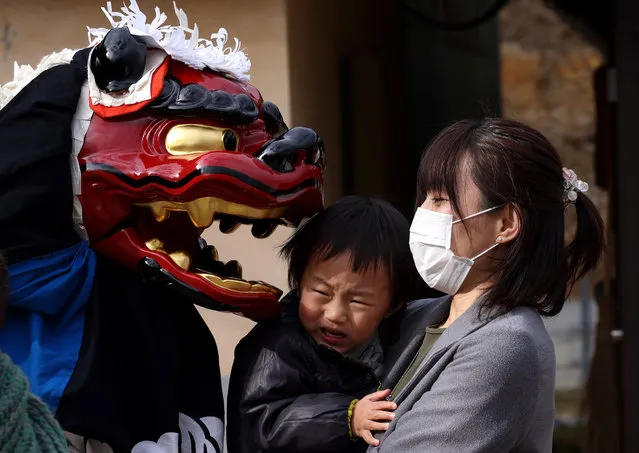
A performer wearing a lion mask performs the Ise Daikagura lion dance at the remote village of Yamanawa on February 08, 2021 in Ryuo, Japan. Ise Daikagura is a group of traditional Lion Dance performers who pray in front of farmers houses and businesses for good grain harvests and disease-free lives. Performers play sacred music using drums and flutes with two lion mask dancers. A lion mask is considered a symbol of God, who enters the house and performs in front of the Shinto God, a statue placed inside the house, mostly in the kitchen. These prayers are called “Kamodo Barai”. After the prayers, they are gifted with money, rice, sake and Japanese sweets from the householders. A group can travel for more than one hundred days to thousands of households and businesses throughout rural-villages in western Japan, and pray to those who are unable to visit the country’s most sacred shrine, the Grand Ise Shrine in Mie Prefecture. The group started its performance in the Edo era between 1603 to 1868 according to Japanese history. The Japanese government designated it as an important folk cultural national property in 1981. (Photo by Buddhika Weerasinghe/Getty Images)

A performer wearing a lion mask performs the Ise Daikagura lion dance at the remote village of Yamanawa on February 08, 2021 in Ryuo, Japan. Ise Daikagura is a group of traditional Lion Dance performers who pray in front of farmers houses and businesses for good grain harvests and disease-free lives. (Photo by Buddhika Weerasinghe/Getty Images)
Details
18 Feb 2021 09:27:00
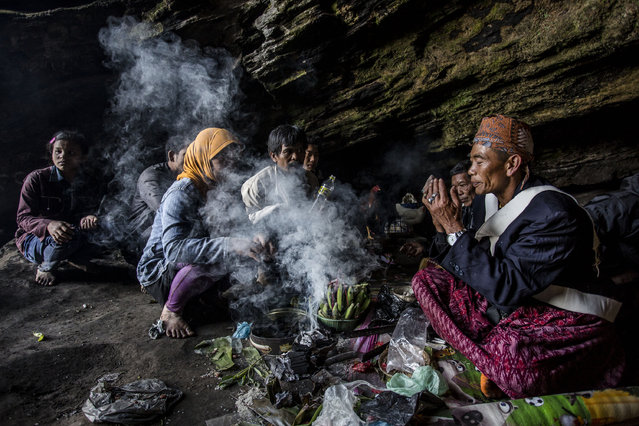
A Tenggerese shaman praying for worshippers at Widodaren cave during the Tenggerese Hindu Yadnya Kasada festival on July 31, 2015 in Probolinggo, East Java, Indonesia. The festival is the main festival of the Tenggerese people and lasts about a month. On the fourteenth day, the Tenggerese make the journey to Mount Bromo to make offerings of rice, fruits, vegetables, flowers and livestock to the mountain gods by throwing them into the volcano's caldera. (Photo by Ulet Ifansasti/Getty Images)

A Tenggerese shaman praying for worshippers at Widodaren cave during the Tenggerese Hindu Yadnya Kasada festival on July 31, 2015 in Probolinggo, East Java, Indonesia. The festival is the main festival of the Tenggerese people and lasts about a month. On the fourteenth day, the Tenggerese make the journey to Mount Bromo to make offerings of rice, fruits, vegetables, flowers and livestock to the mountain gods by throwing them into the volcano's caldera. The origin of the festival lies in the 15th century when a princess named Roro Anteng started the principality of Tengger with her husband Joko Seger, and the childless couple asked the mountain Gods for help in bearing children. The legend says the Gods granted them 24 children but on the provision that the 25th must be tossed into the volcano in sacrifice. The 25th child, Kesuma, was finally sacrificed in this way after initial refusal, and the tradition of throwing sacrifices into the caldera to appease the mountain Gods continues today. (Photo by Ulet Ifansasti/Getty Images)
Details
01 Aug 2015 12:07:00
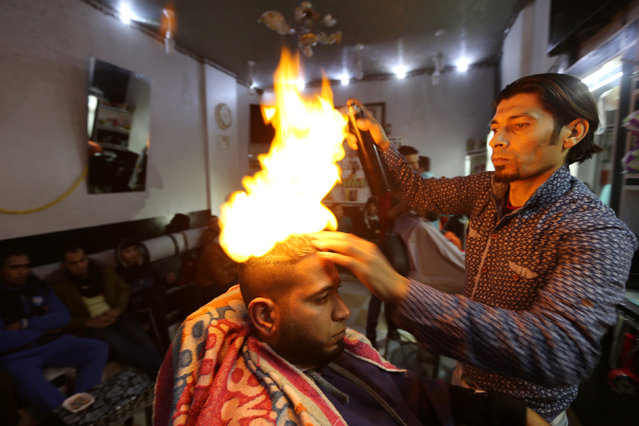
Palestinian barber Ramadan Odwan styles and straightens the hair of a customer with fire at his salon in Rafah, in the southern Gaza Strip February 2, 2017. In Ramadan Odwan's barbershop in Gaza, hair isn't just blow-dried, it's blowtorch-dried. “People have gone crazy about it, many people are curious to go through the experience and they are not afraid”, he told Reuters. “People here love adventures”. Odwan, 37, is not the first stylist in the world to use flame to straighten hair, but his craft is unique in the Gaza Strip. In his salon in the southern Gaza town of Rafah, Odwan applied what he described as a protective liquid coating to a customer's hair – he declined to disclose its contents – before aiming for the head and pressing the button on a small blowtorch. “I control how long I apply fire, I keep it on and off for 10 seconds or 15 seconds. It is completely safe and I have not encountered any accident since I started it two months ago”, Odwan added. Odwan charges 20 shekels ($5.20) for a haircut and fire-straightening. A barber for the past 18 years, he said part of the reason he uses the technique is to show that Palestinian barbers are as “professional as those out there around the world”. (Photo by Ibraheem Abu Mustafa/Reuters)

Palestinian barber Ramadan Odwan styles and straightens the hair of a customer with fire at his salon in Rafah, in the southern Gaza Strip February 2, 2017. In Ramadan Odwan's barbershop in Gaza, hair isn't just blow-dried, it's blowtorch-dried. “People have gone crazy about it, many people are curious to go through the experience and they are not afraid”, he told Reuters. “People here love adventures”. (Photo by Ibraheem Abu Mustafa/Reuters)
Details
11 Feb 2017 00:05:00
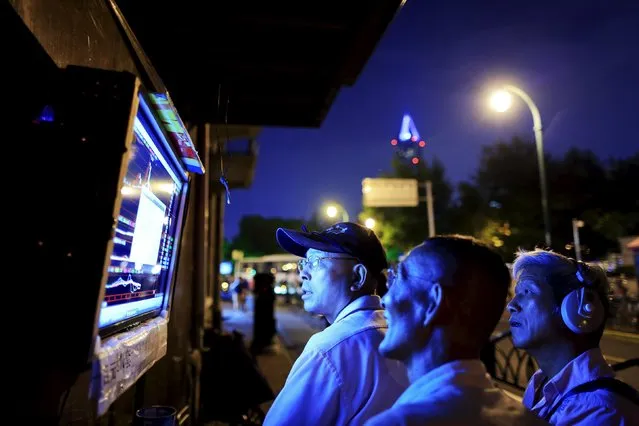
Shen Yuxi (L), introduces analysis software to investors at a “street stock salon” in central Shanghai, China, September 5, 2015. Shen carries a TV screen on his electronic bike to the "salon" every weekends where he sets it up on the wall outside a brokerage house. Shen's been selling analysis software at "the salon" for more than 10 years. (Photo by Aly Song/Reuters)

Some are in it just for the money, others to help buy a meal. Then there are those who trade for fun or to spend time among friends. Millions of investors – pensioners, security guards, high-school students – dominate China's stock markets, conducting about 80 percent of all trades. Retirees gather in brokerage houses dotted around China also to enjoy some company and savour the air conditioning on hot days. Some start as young as 13, trading from home with an eye on future careers in finance. Winning isn't guaranteed. This year, among the most turbulent in China's financial history, its stock markets more than doubled in the six months to May, only to crash amid concerns that growth in the country, which makes everything from cars to steel, is slowing faster than previously thought. (Photo by Aly Song/Reuters)
Details
13 Oct 2015 08:00:00
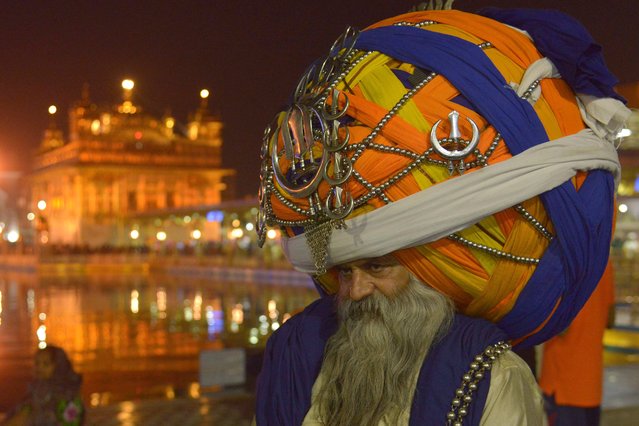
An Indian Sikh Nihang (a traditional Sikh religious warrior) Baba 'Avtar' Singh wears an oversized giant traditional turban as he pay respects at the Golden temple in Amritsar on November 10, 2015 on the eve of the Indian festival of Diwali, the festival of lights. (Photo by Narinder Nanu/AFP Photo)

An Indian Sikh Nihang (a traditional Sikh religious warrior) Baba 'Avtar' Singh wears an oversized giant traditional turban as he pay respects at the Golden temple in Amritsar on November 10, 2015 on the eve of the Indian festival of Diwali, the festival of lights. There will be no spectacular show of light and fireworks this Diwali at the Golden Temple as the Shiromani Gurdwara Parbandhak Committee (SGPC) has decided not to celebrate the festival in the wake of series of incidents of alleged desecration of the Guru Granth Sahib (Sikh holy book). (Photo by Narinder Nanu/AFP Photo)
Details
22 Nov 2015 08:05:00
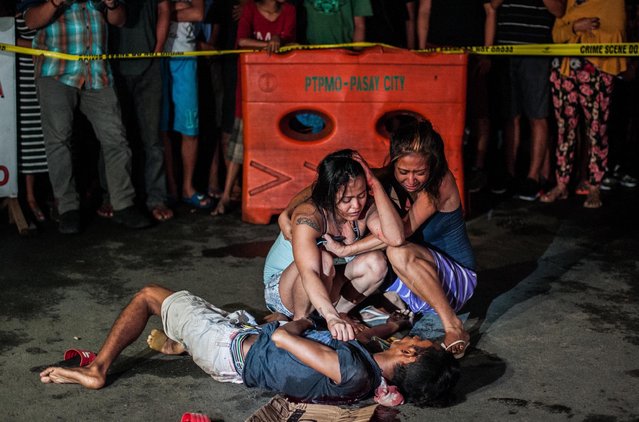
Two women cry in grief after armed assailants in a motorcycle shot their loved one in a main thoroughfare on July 23, 2016 in Manila, Philippines. The victim was an alleged drug peddler a claim disputed by his wife and maintained her husband is nothing more than a pedicab driver plying his trade when he was shot in front of her. Philippine President Rodrigo Duterte declared a war on crime and drugs after winning the presidential elections on May 9, 2016. President Duterte has recently been living up to his nickname, 'The Punisher', as Philippine police have been conducting night time drug raids on almost a daily basis. With reports of at least 300 drug related deaths since the start of July, Human rights groups and the Catholic church have objected to the use of brutal force by the Police. (Photo by Dondi Tawatao/Getty Images)

Two women cry in grief after armed assailants in a motorcycle shot their loved one in a main thoroughfare on July 23, 2016 in Manila, Philippines. The victim was an alleged drug peddler a claim disputed by his wife and maintained her husband is nothing more than a pedicab driver plying his trade when he was shot in front of her. Philippine President Rodrigo Duterte declared a war on crime and drugs after winning the presidential elections on May 9, 2016. President Duterte has recently been living up to his nickname, “The Punisher”, as Philippine police have been conducting night time drug raids on almost a daily basis. (Photo by Dondi Tawatao/Getty Images)
Details
15 Oct 2016 10:56:00