Loading...
Done
Boeing B-29 (#10) from the 24th Bomb Squadron, 6th Bomb Group after an emergency landing at Iwo Jima on April 24,1945. (Photo by U.S. Air Force)

Boeing B-29 (#10) from the 24th Bomb Squadron, 6th Bomb Group after an emergency landing at Iwo Jima on April 24,1945. (Photo by U.S. Air Force)
Details
28 Nov 2013 10:36:00
A model Cindy Bruna presents a creation on a giant catwalk installed on a barge on the Seine River during a public event organized by French cosmetics group L'Oreal as part of Paris Fashion Week, France, September 30, 2018. (Photo by Stephane Mahe/Reuters)

A model Cindy Bruna presents a creation on a giant catwalk installed on a barge on the Seine River during a public event organized by French cosmetics group L'Oreal as part of Paris Fashion Week, France, September 30, 2018. (Photo by Stephane Mahe/Reuters)
Details
02 Oct 2018 00:05:00
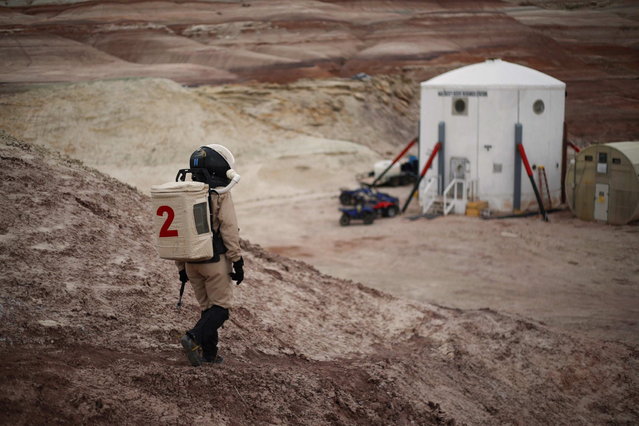
Csilla Orgel, a geologist of Crew 125 EuroMoonMars B mission, makes her way back to the Mars Desert Research Station (MDRS) in the Utah desert March 3, 2013. (Photo by Jim Urquhart/Reuters)

NASA says it could be another 20 years before humans touch down on Mars, but in a sense, the Mars Society has been exploring the red planet for more than a decade – in Utah. Photo: Csilla Orgel, a geologist of Crew 125 EuroMoonMars B mission, makes her way back to the Mars Desert Research Station (MDRS) in the Utah desert March 3, 2013. The MDRS aims to investigate the feasibility of a human exploration of Mars and uses the Utah desert's Mars-like terrain to simulate working conditions on the red planet. Scientists, students and enthusiasts work together developing field tactics and studying the terrain. All outdoor exploration is done wearing simulated spacesuits and carrying air supply packs and crews live together in a small communication base with limited amounts of electricity, food, oxygen and water. Everything needed to survive must be produced, fixed and replaced on site. (Photo by Jim Urquhart/Reuters)
Details
14 Mar 2013 12:11:00
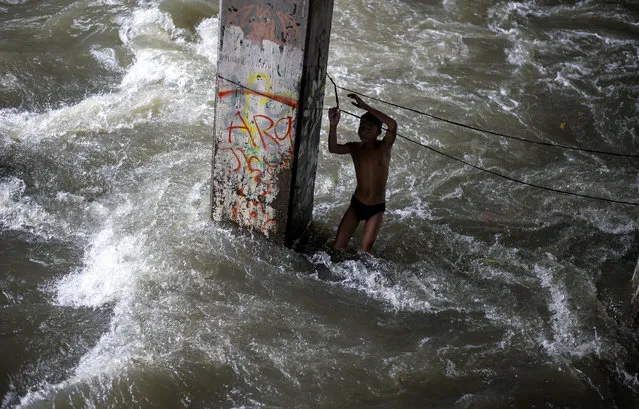
A boy plays in a swollen creek under a bridge in Manila on October 16, 2016. Typhoon Sarika lashed the main Philippine island of Luzon on October 16, flattening homes and toppling trees and power pylons as more than 12,000 people fled to safer ground, officials said. Shanties built beside a river, under a creek are the usual victims of floodings. (Photo by Noel Celis/AFP Photo)

A boy plays in a swollen creek under a bridge in Manila on October 16, 2016. Typhoon Sarika lashed the main Philippine island of Luzon on October 16, flattening homes and toppling trees and power pylons as more than 12,000 people fled to safer ground, officials said. Shanties built beside a river, under a creek are the usual victims of floodings. (Photo by Noel Celis/AFP Photo)
Details
17 Oct 2016 10:00:00
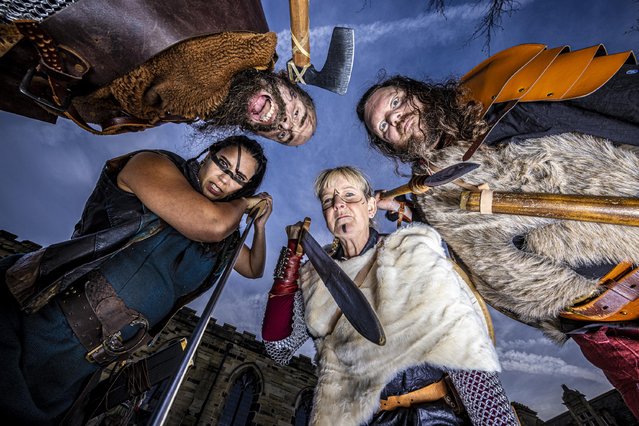
Members of the cast of Beowulf by Proper Job Theatre pose in costume ahead of their Viking procession through the streets of Kirklees, West Yorkshire in the first decade of November 2023, as part of Kirklees Year of Music 2023. (Photo by James Glossop/The Times)

Members of the cast of Beowulf by Proper Job Theatre pose in costume ahead of their Viking procession through the streets of Kirklees, West Yorkshire in the first decade of November 2023, as part of Kirklees Year of Music 2023. (Photo by James Glossop/The Times)
Details
06 Oct 2024 04:02:00
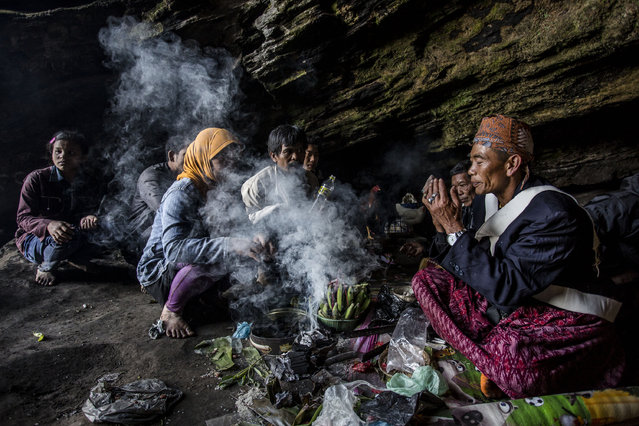
A Tenggerese shaman praying for worshippers at Widodaren cave during the Tenggerese Hindu Yadnya Kasada festival on July 31, 2015 in Probolinggo, East Java, Indonesia. The festival is the main festival of the Tenggerese people and lasts about a month. On the fourteenth day, the Tenggerese make the journey to Mount Bromo to make offerings of rice, fruits, vegetables, flowers and livestock to the mountain gods by throwing them into the volcano's caldera. (Photo by Ulet Ifansasti/Getty Images)

A Tenggerese shaman praying for worshippers at Widodaren cave during the Tenggerese Hindu Yadnya Kasada festival on July 31, 2015 in Probolinggo, East Java, Indonesia. The festival is the main festival of the Tenggerese people and lasts about a month. On the fourteenth day, the Tenggerese make the journey to Mount Bromo to make offerings of rice, fruits, vegetables, flowers and livestock to the mountain gods by throwing them into the volcano's caldera. The origin of the festival lies in the 15th century when a princess named Roro Anteng started the principality of Tengger with her husband Joko Seger, and the childless couple asked the mountain Gods for help in bearing children. The legend says the Gods granted them 24 children but on the provision that the 25th must be tossed into the volcano in sacrifice. The 25th child, Kesuma, was finally sacrificed in this way after initial refusal, and the tradition of throwing sacrifices into the caldera to appease the mountain Gods continues today. (Photo by Ulet Ifansasti/Getty Images)

Details
01 Aug 2015 12:07:00
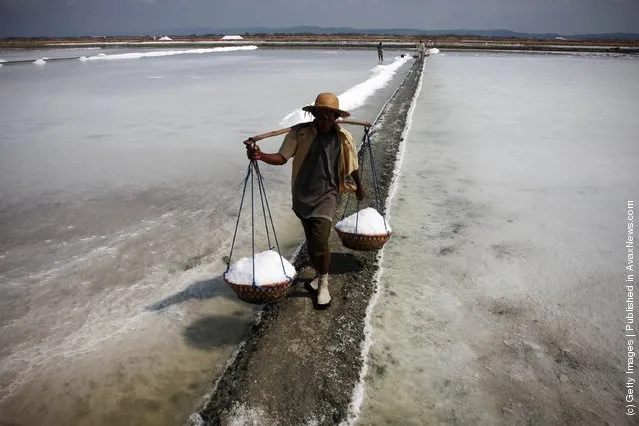
A farmer carries baskets of salt during a harvest in the the salt production process in Sumenep on Madura island, Indonesia

A farmers carries baskets of salt during a harvest in the the salt production process August 13, 2009 in Sumenep on Madura island, Indonesia. (Photo by Ulet Ifansasti/Getty Images)

Details
07 Sep 2011 12:40:00
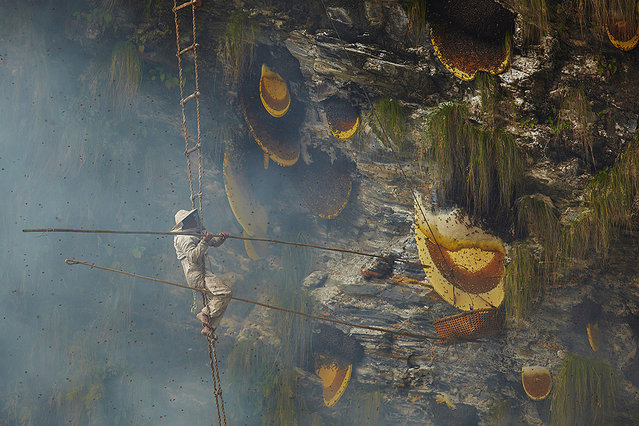
Ancient Traditional Honey Hunters Of Nepal

Andrew Newey, an award-winning UK-based travel photographer, has captured gripping photographs of central Nepalese Gurung tribe members engaged in a dangerous and ancient tradition – honey hunting.
Details
19 Apr 2014 15:12:00