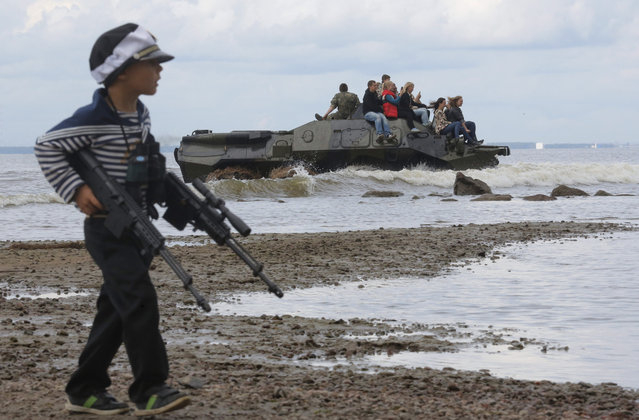
A boy walks with toy guns as people ride an APC during a military show at the Finnish Gulf coast in St.Petersburg, Russia, Saturday, September 5, 2015. (Photo by Dmitry Lovetsky/AP Photo)
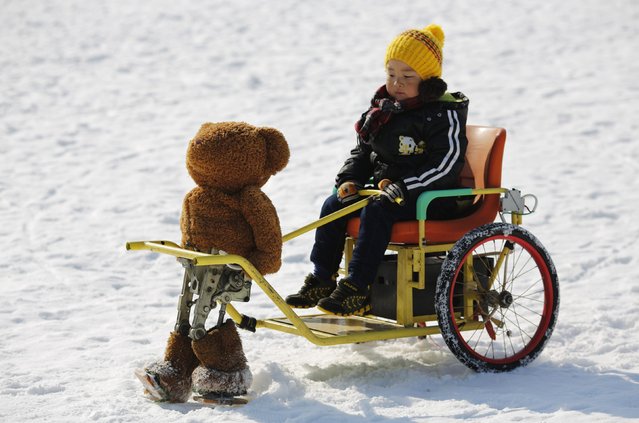
A boy rides on a snow wagon towed by a robot dressed as a Teddy bear, which only moves forward by moving its legs, during the Ice and snow carnival at Taoranting park in Beijing February 9, 2015. (Photo by Kim Kyung-Hoon/Reuters)
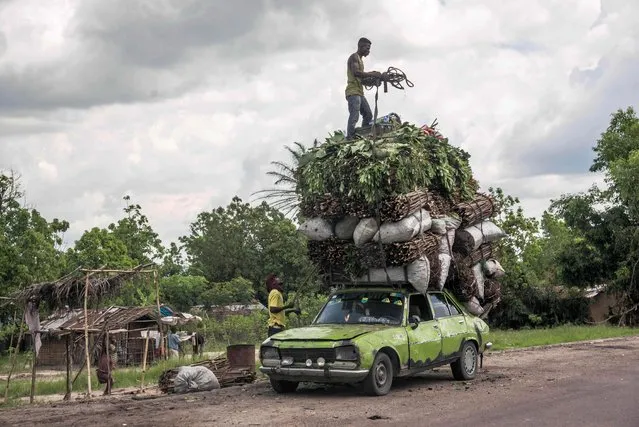
Vegetables, wood and charcoal are loaded onto the roof of a battered Peugeot on November 7, 2018 in Matadi, Democratic Republic of the Congo. From the port of Matadi to the capital Kinshasa, a 350 km road crosses the south-west of the Democratic Republic of Congo. (Photo by Junior D. Kannah/AFP Photo)
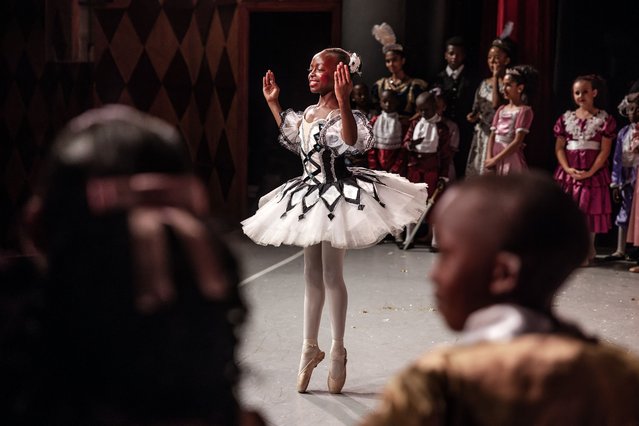
Ava Cheptoo Cheruiyot, 11, a member of the Dance Centre Kenya (DCK), performs on stage during The Nutcracker at the Kenya National Theatre in Nairobi on December 7, 2024. The Nutcracker is a beloved Christmas ballet, first performed in 1892, with music by Pyotr Ilyich Tchaikovsky. Known for its enchanting score and festive themes, it has become a holiday tradition worldwide. (Photo by Luis Tato/AFP Photo)
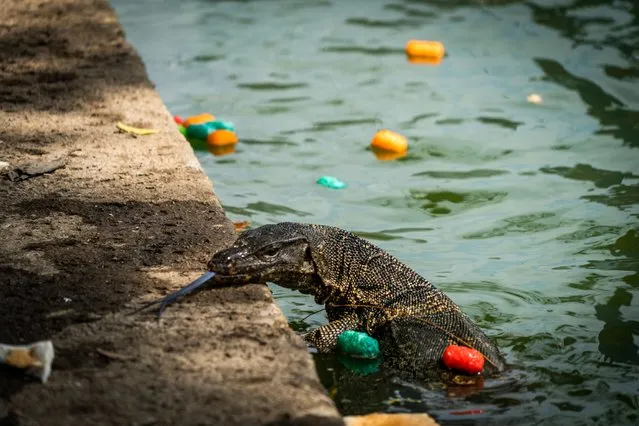
A wild water monitor (Varanus salvator) is seen swimming between colorful popcorn snacks at a Lumphini public park in Bangkok, Thailand on March 27, 2022. (Photo by Matt Hunt/Neato/Rex Features/Shutterstock)
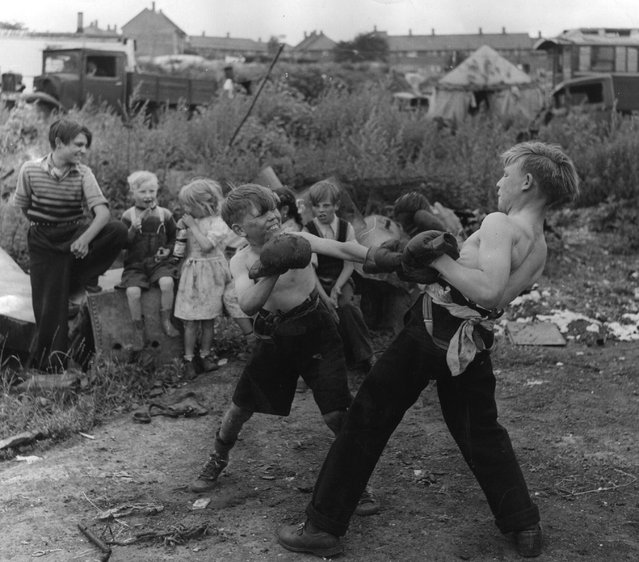
The unromantic gypsies. Children boxing in a gypsy camp in Kent, England on July 1, 1951. Like all boys these gypsy lads like to try their hand at boxing. Encouraged by their friends they fight it out on Corke's Meadow. Few Romanies now live a life of wandering romance. Most are like the three hundred squatters of Corke's Meadow, Kent, which is part of a “gypsy problem” that involves about 100,000 today. Of those about 25,000 can be rightly called gypsies, the rest are Mumpers and Posh-rats and Hobos. Corke's Meadow has both kinds. “Picture Post” cameraman Bert Hardy photographs the Corke's Meadow gypsies in their encampment. (Photo by Hulton-Deutsch Collection/Corbis via Getty Images)