A woman wearing a sweet girl cosplay mask strikes a pose during a flower watching or Hanami event, in the Japanese Garden of Bucharest, Romania, April 13, 2024. (Photo by Andreea Alexandru/AP Photo)
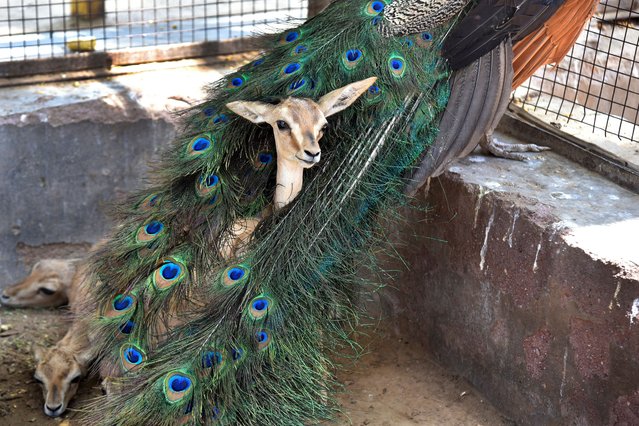
A Chinkara gazelle fawn rests in the plumage of a peacock at an animal rescue center on a hot summer day in Bikaner, Rajasthan, India, Thursday, May 23, 2024. (Photo by Dinesh Gupta/AP Photo)
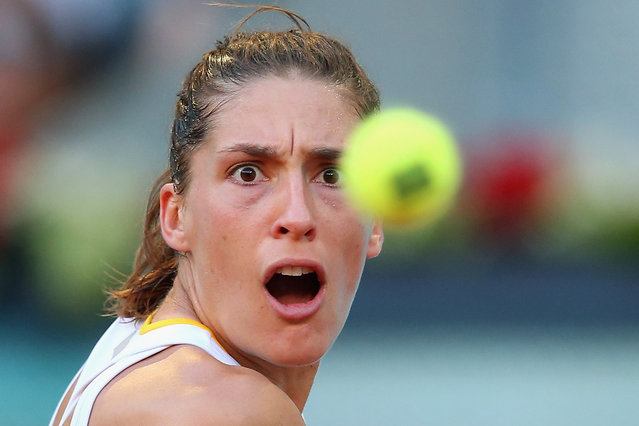
Andrea Petkovic of Germany in action against Sara Errani of Italy during day one of the Mutua Madrid Open tennis tournament at the Caja Magica on May 3, 2014 in Madrid, Spain. (Photo by Julian Finney/Getty Images)
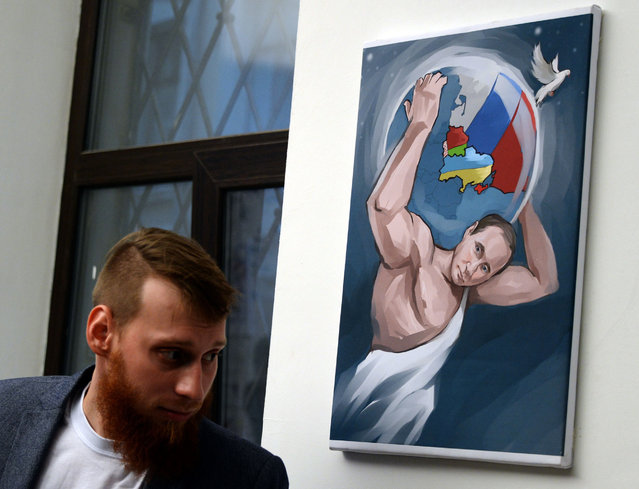
A visitor visit the “12 Labors of Putin” art exhibition on October 6, 2014 marking the 60th birthday of Russia's President Vladimir Putin at the design workshop in Moscow. (Photo by Vasily Maximov/AFP Photo)
This combination of April 15, 2013 and April 2, 2014 photos show a police officer clearing Boylston Street following a bomb blast near the finish line of the 2013 Boston Marathon, and pedestrians crossing at the same corner nearly a year later in Boston. (Photo by Charles Krupa/AP Photo)
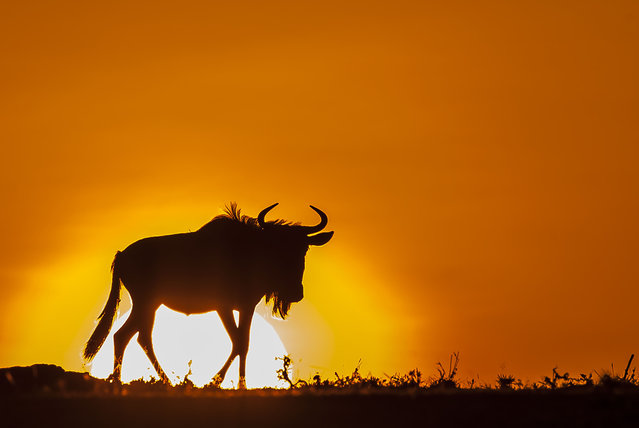
These images show off some of the world's most majestic creatures silhouetted against the beautiful rising and setting sun. The vibrant pictures feature a variety of animals in the wild and were taken by a host of photographers at locations around the world. The striking images all have one thing in common: the photographers' awe-inspiring ability to perfectly capture the silhouettes of earth's beautiful creatures. Here: a blue wildebeest moves through grassland at dawn with the sun in the background in Mara Naboisho Conservancy, Kenya, Africa. (Photo by Renato Granieri/Caters News/Ardea)
An Egyptian security guard screams at people as medics bring in a stretcher to carry the wounded after the attack which killed President Anwar Sadat, October 6, 1981, as he watched a military parade. (Photo by AP Photo)
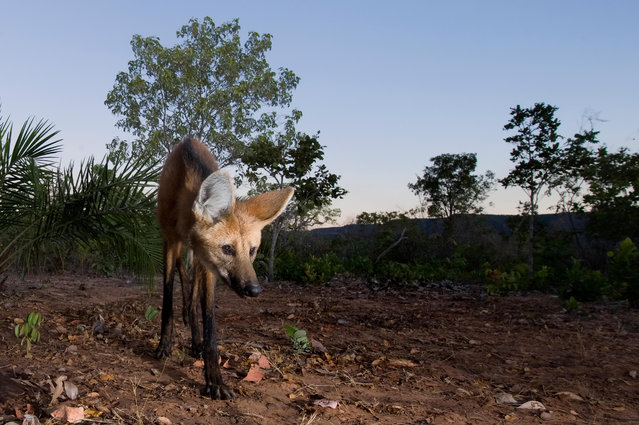
Global wildlife populations will decline by 67% by 2020 unless urgent action is taken to reduce human impact on species and ecosystems, warns the biennial Living Planet Index report from WWF (World Wide Fund for Nature) and ZSL (Zoological Society of London). From elephants to eels, here are some of the wildlife populations most affected by human activity. Here: The maned wolf is among the large mammals in the Brazilian Cerrado that are threatened by the increasing conversion of grasslands into farmland for grazing and growing crops. (Photo by Ben Cranke/Nature Picture Library/Alamy Stock Photo)