AJ Dereume holds Punxsutawney Phil during the Groundhog Day Festivities, at Gobblers Knob in Punxsutawney, Pennsylvania, U.S., February 2, 2023. (Photo by Alan Freed/Reuters)
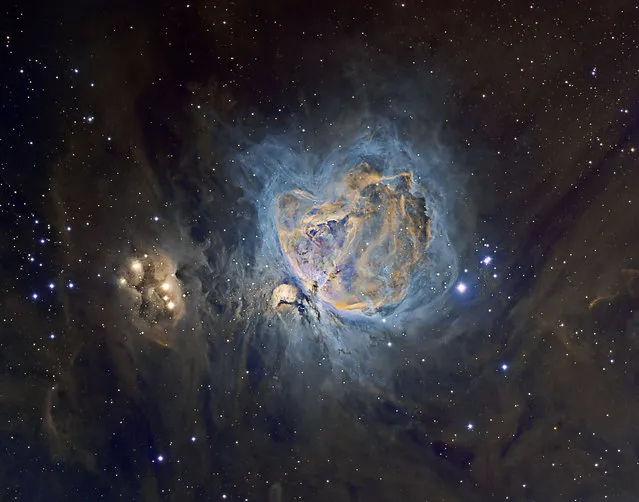
M42 Subtle V1 cropped. One of the most well-known astronomical objects in our universe is the Orion Nebula and this image depicts the wider region of the Orion Molecular Cloud Complex that is its home. This complex also includes another popular target for astrophotographers, the Horsehead Nebula, as well as Barnard’s Loop and the Running Man Nebula, which can be seen to the left of this photograph. (Photo by Patrick Gilliland)
Alexo Carmona, 2, looks at Coco, a two-year-old pony, in downtown Havana, in this March 6, 2015 file photo. Nearly a quarter of a million people follow the Reuters Instagram account – and it's still growing fast. To mark the mid-point of 2015, Reuters has compiled the twenty most-liked pictures so far. This picture was 20th most popular. (Photo by Alexandre Meneghini/Reuters)
Visitors stand next to the artwork “No, 2021” by Italian visual artist Maurizio Cattelan displayed at the gallery Gagosian during the Art Basel fair for Modern and contemporary art, in Basel, on June 17, 2025. The fair will open to the public from June 19 to June 22, 2025, featuring over 290 leading galleries and more than 4,000 artists from five continents. (Photo by Fabrice Coffrini/AFP Photo)
In this photo provided by Greenpeace, clothes are left to dry on a typhoon damaged tree in Surigao City, southern Philippines on Monday December 20, 2021. The governor of a central Philippine province devastated by Typhoon Rai last week pleaded on radio Tuesday for the government to quickly send food and other aid, warning that without outside help, army troops and police forces would have to be deployed to prevent looting amid growing hunger. (Photo by Jilson Tiu/Greenpeace via AP Photo)
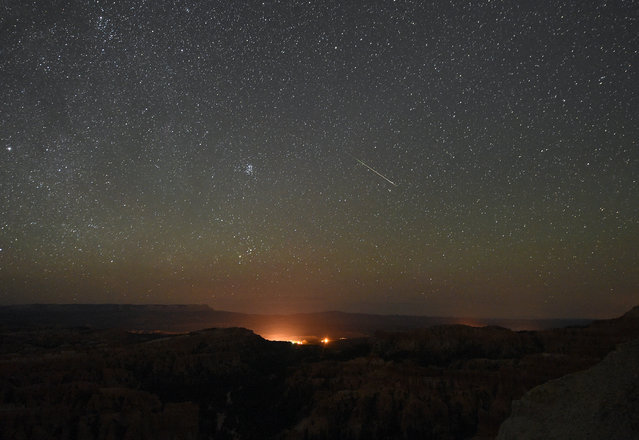
A Perseid meteor streaks across the sky above Inspiration Point early on August 12, 2016 in Bryce Canyon National Park, Utah. The annual display, known as the Perseid shower because the meteors appear to radiate from the constellation Perseus in the northeastern sky, is a result of Earth's orbit passing through debris from the comet Swift-Tuttle. (Photo by Ethan Miller/Getty Images)