A model presents a creation from the Gucci Fall-Winter 2022/2023 collection during Fashion Week in Milan, Italy, February 25, 2022. (Photo by Alessandro Garofalo/Reuters)
A toque macaque is eating flowers in the water at the pilgrimage site in Polonnaruwa, Sri Lanka, on January 13, 2024. The toque macaque (Macaca sinica), a reddish-brown-colored Old World monkey, is endemic to Sri Lanka, where it is known as the rilewa or rilawa. It is named for the whorl of hair at the crown of its head, which resembles a brimless toque cap. (Photo by Thilina Kaluthotage/NurPhoto/Rex Features/Shutterstock)
People in colorful costumes perform acrobatics for drivers waiting at red lights in Nairobi, Kenya on February 20, 2024. (Photo by Gerald Anderson/Anadolu via Getty Images)
A car passes through an area of the boardwalk hit by strong waves in Havana, Cuba, 05 February 2024. The Cuban Institute of Meteorology (Insmet) recorded strong gusts of wind of up to 104 kilometers per hour and strong waves in the west of the island due to a cold front associated with an “extratropical low”. (Photo by Ernesto Mastrascusa/EPA)
A resident reacts as a health worker collects a swab sample to test for the Covid-19 coronavirus in Colombo on July 27, 2021. (Photo by Ishara S. Kodikara/AFP Photo)
Elementary school sumo wrestler Kyuta Kumagai competes in a sumo ring at a regional tournament of Junior Olympic Cup All-Japan Elementary School Sumo Championship in Kawasaki, south of Tokyo, Japan, October 17, 2021. (Photo by Kim Kyung-Hoon/Reuters)
Guests attend the Haute Couture Spring-Summer 2024 collection show for Giorgio Armani Prive by designer Giorgio Armani in Paris, France, on January 23, 2024. (Photo by Benoit Tessier/Reuters)
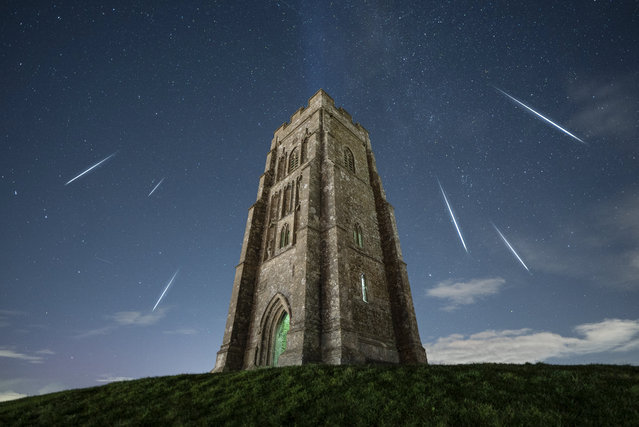
An amazing photo shows a rare meteor shower captured from Glastonbury Tor, UK. Astrophotographer Josh Dury took the photo when the skies cleared for 30 minutes in the early hours of the morning on January 4, 2024. Josh said the Quadrantids meteor shower is an active shower where up to 100 meteors can be seen per hour, although it only peaks for a few hours during January. He said that meteor showers are produced by debris left over from comets – but what produces the meteors during the Quadrantids meteor shower is unknown. (Photo by Josh Dury/South West News Service)