Loading...
Done
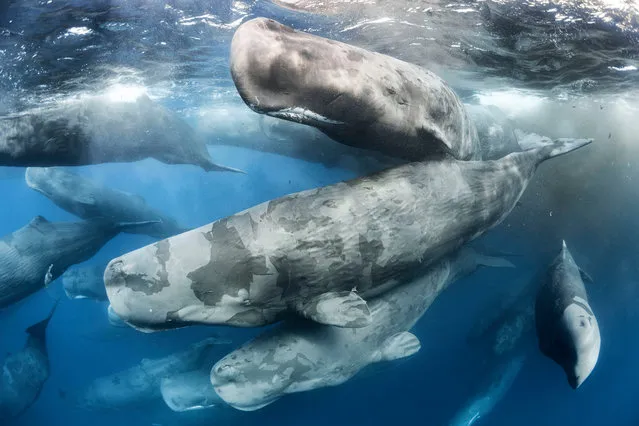
This shot, which was announced the winner by the on December 2, 2022 came top in the People and Nature category of the British Ecological Society’s Capturing Ecology photography competition. (Photo by British Ecological Society)

This shot, which was announced the winner by the on December 2, 2022 came top in the People and Nature category of the British Ecological Society’s Capturing Ecology photography competition. (Photo by British Ecological Society)
Details
06 Jan 2023 05:06:00
With Haystack Rock in the background, Julie Amschler, of Springfield, Mo., walks along the beach on Thursday, June 13, 2024, in Cannon Beach, Ore. (Photo by Jenny Kane/AP Photo)

With Haystack Rock in the background, Julie Amschler, of Springfield, Mo., walks along the beach on Thursday, June 13, 2024, in Cannon Beach, Ore. (Photo by Jenny Kane/AP Photo)
Details
06 Aug 2024 03:09:00
The cheerleaders for NFL’s Arizona Cardinals warm up fans at a game against the New York Jets in Glendale, Arizona on November 10, 2024. (Photo by Joe Camporeale/Reuters)

The cheerleaders for NFL’s Arizona Cardinals warm up fans at a game against the New York Jets in Glendale, Arizona on November 10, 2024. (Photo by Joe Camporeale/Reuters)
Details
20 Nov 2024 02:45:00
The eruption of Cordon Caulle began on June 4, 2011, located in the Region of Los Rios in Chile. For about 12 months, people and animals became accustomed to living with the daily fall of ash, which also caused problems in the air traffic in South America. The explosions and lightning during first days of the eruption could be seen from hundreds of miles around. This photograph was taken on the second night of eruption from the town of Lago Ranco. (Photo and caption by Francisco Negroni/National Geographic Traveler Photo Contest)

The eruption of Cordon Caulle began on June 4, 2011, located in the Region of Los Rios in Chile. For about 12 months, people and animals became accustomed to living with the daily fall of ash, which also caused problems in the air traffic in South America. The explosions and lightning during first days of the eruption could be seen from hundreds of miles around. This photograph was taken on the second night of eruption from the town of Lago Ranco. (Photo and caption by Francisco Negroni/National Geographic Traveler Photo Contest)

ATTENTION! All pictures are presented in high resolution. To see Hi-Res images – just TWICE click on any picture. In other words, click small picture – opens the BIG picture. Click BIG picture – opens VERY BIG picture.
Details
23 Jun 2013 11:24:00
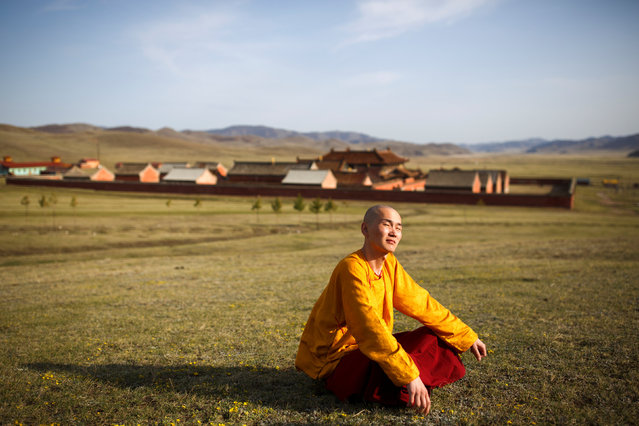
The Tashkurgan Tajik Autonomous County in Xinjiang Province People

“As a photographer, peregrinator and naturalist, I have been searching for the ultimate unworldly world. I've always been drawn to unusual travel destinations. For me, to lose myself in a different culture is a great way to find balance in my life...”. – Li Xinzhao. (Photo by Li Xinzhao)
Details
11 Feb 2013 11:26:00


DUNEDIN, NEW ZEALAND - FEBRUARY 27: Dan Sims of Auckland clears a jump during the National Downhill Mountainbike Championships on Signal Hill, February 27, 2011 in Dunedin, New Zealand. (Photo by Phil Walter/Getty Images)
Details
19 Nov 2011 12:34:00
“This is a shot I have envisioned in my head for a while, and only possible to shoot today with the invention of the GoPro. Shot at a beach break near my home. The board broke on this wave, but the vision made it worthwhile. Shot with the GoPro Hero 3+ and a Gripstick Pro Mount”. (Photo and caption by Mike Coots)

“This is a shot I have envisioned in my head for a while, and only possible to shoot today with the invention of the GoPro. Shot at a beach break near my home. The board broke on this wave, but the vision made it worthwhile. Shot with the GoPro Hero 3+ and a Gripstick Pro Mount”. (Photo and caption by Mike Coots)
Details
06 Aug 2014 11:07:00
The Aletsch Glacier is pictured at dusk in Fiesch, Switzerland, August 11, 2015. (Photo by Denis Balibouse/Reuters)

The Aletsch Glacier is pictured at dusk in Fiesch, Switzerland, August 11, 2015. One of Europe's biggest glaciers, the Great Aletsch coils 23 km (14 miles) through the Swiss Alps – and yet this mighty river of ice could almost vanish in the lifetimes of people born today because of climate change. The glacier, 900 metres (2,950 feet) thick at one point, has retreated about 3 km (1.9 miles) since 1870 and that pace is quickening. (Photo by Denis Balibouse/Reuters)
Details
18 Oct 2015 08:05:00