Loading...
Done
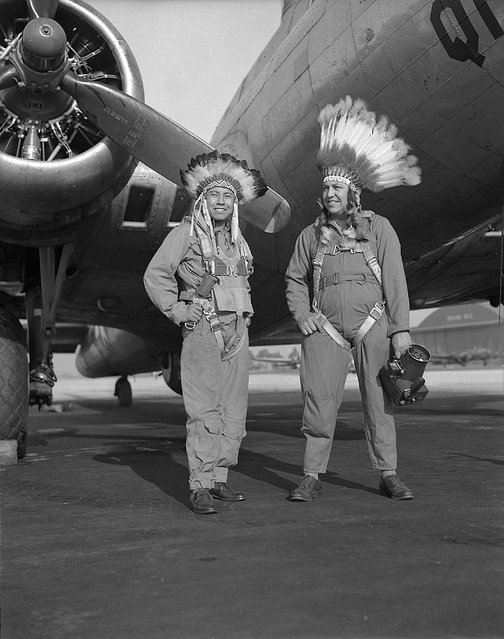
Gus Palmer (Kiowa, at left), side gunner, and Horace Poolaw (Kiowa), aerial photographer, in front of a B-17 Flying Fortress. MacDill Field, Tampa, Florida, ca. 1944. (Photo and caption by 2014 Estate of Horace Poolaw)

Gus Palmer (Kiowa, at left), side gunner, and Horace Poolaw (Kiowa), aerial photographer, in front of a B-17 Flying Fortress. MacDill Field, Tampa, Florida, ca. 1944. (Photo and caption by 2014 Estate of Horace Poolaw)
Details
03 Sep 2014 10:38:00
A logometer used to determine the Titanic's speed is seen among artifacts recovered from the RMS Titanic

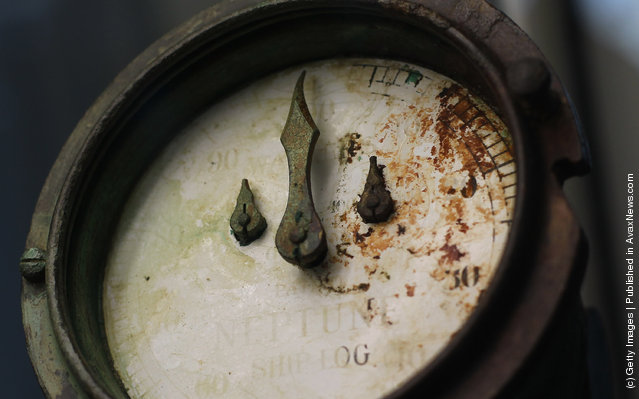
A logometer used to determine the Titanic's speed is seen among artifacts recovered from the RMS Titanic wreck site at a press preview of a Titanic artifact auction at the Intrepid Sea, Air & Space Museum on January 5, 2012 in New York City. On April 11, 2012, the 100th anniversary of the maiden voyage of the Titanic, Guernsey's will auction the complete collection of more than 5,000 artifacts recovered from the Titanic wreck site. (Photo by Mario Tama/Getty Images)
Details
06 Jan 2012 13:28:00
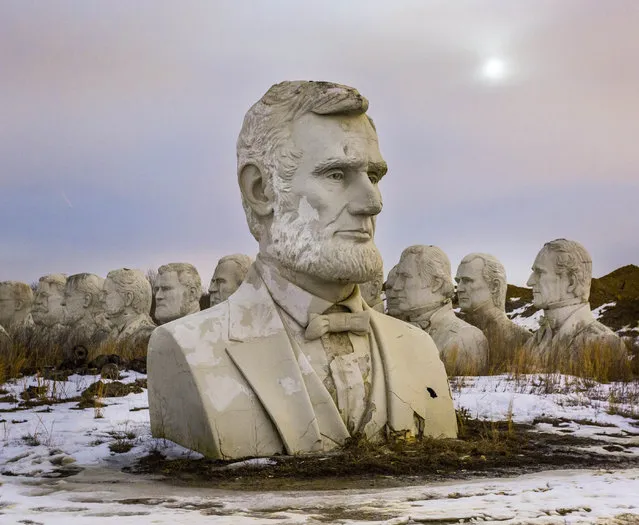
Abraham Lincoln in front of presidential busts. (Photo by David Ogden/Caters News)

In a remote location in rural America, a photographer has discovered a rather unique gathering: row after row of presidential busts. Like a zombie graveyard, the field contains 43 gigantic sculptures, ranging from Dick Nixon and FDR to JFK and Honest Abe. The likenesses weigh between 11,000 and 20,000 pounds, with some standing as tall as 20 feet. Almost all the busts are cracked, crumbling and worn by the elements, adding to their eerie appearance but not preventing the presidents from being recognizable at first glance. Here: Abraham Lincoln in front of presidential busts. (Photo by David Ogden/Caters News)

Details
21 Feb 2016 11:37:00
Winner. “I took this picture of a woman in traditional clothing in Cartagena, Colombia”. PAUL GOLDSTEIN, JUDGE: “The blaze of colour from every angle, the boldness of the picture, taken from behind, which gives it so much more allure and frankly a superb get up. Did I mention the colours? Oh, and that looks suspiciously like a Nokia”. (Photo by Stanislav Shmelev/The Guardian)

Winner. “I took this picture of a woman in traditional clothing in Cartagena, Colombia”. PAUL GOLDSTEIN, JUDGE: “The blaze of colour from every angle, the boldness of the picture, taken from behind, which gives it so much more allure and frankly a superb get up. Did I mention the colours? Oh, and that looks suspiciously like a Nokia”. (Photo by Stanislav Shmelev/The Guardian)
Details
30 Mar 2017 11:05:00
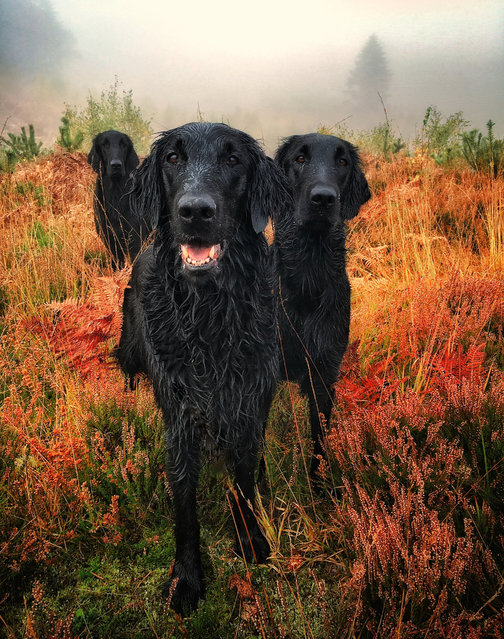
First place, Portrait. Three flat-coated retrievers – Crew, Darcie and Pagan – by Carol Durrant from the UK. (Photo by Carol Durrant/Dog Photographer of the Year 2018)

First place, Portrait. Three flat-coated retrievers – Crew, Darcie and Pagan – by Carol Durrant from the UK. (Photo by Carol Durrant/Dog Photographer of the Year 2018)
Details
20 Jul 2018 00:01:00
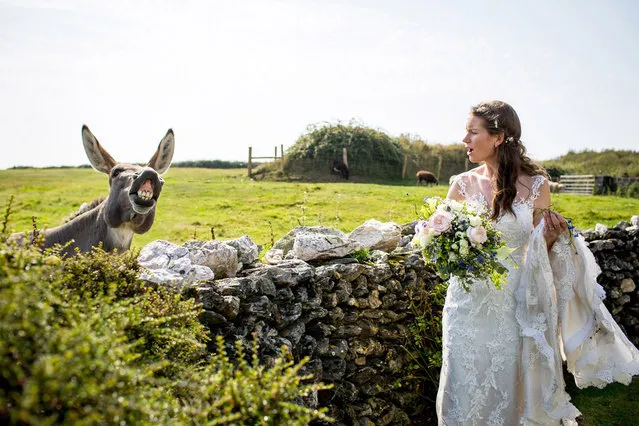
A donkey photobombs a bride on her wedding day. (Photo by Caters News Agency)

Its your big day, youve spent months planning every last detail of your wedding and youre just about to capture the moment perfectly on camera whenyoure upstaged by a grinning donkey. At least thats what happened to these poor couples who were dramatically photobombed by a whole host of camera-hogging animals on their special day.The hilarious snaps show a series of irate brides being upstaged by everything from a cat to a camel and a dog to a donkey. Here: A donkey photobombs a bride on her wedding day. (Photo by Caters News Agency)
Details
27 Nov 2017 08:58:00
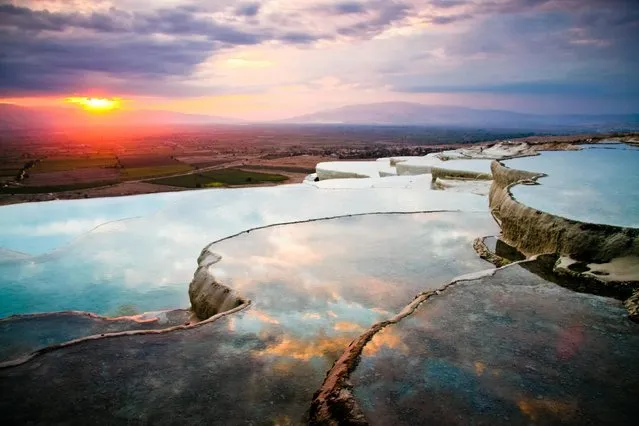
Pamukkale, Turkey, is home to these terrace pools, formed by the build-up of carbonate mineral from the warm water flowing from the thermal springs above. (Photo by Image Courtesy of Jennifer Hayes/Getty Images)

Pamukkale, Turkey, is home to these terrace pools, formed by the build-up of carbonate mineral from the warm water flowing from the thermal springs above. (Photo by Image Courtesy of Jennifer Hayes/Getty Images)
Details
17 Jul 2017 07:59:00
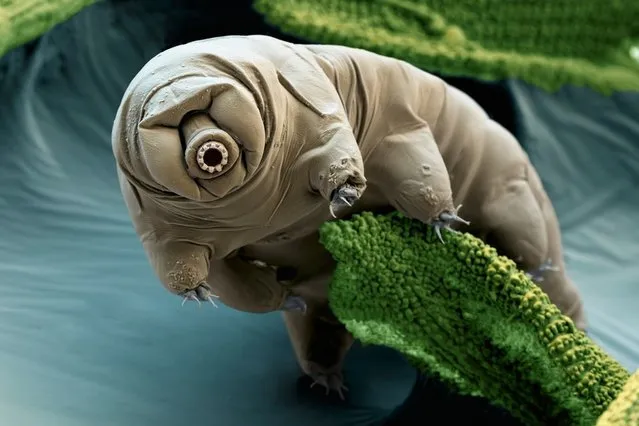
Tardigrades (commonly known as waterbears or moss piglets). (Photo by SPL/East News)

“Tardigrades (commonly known as waterbears or moss piglets) are small, water-dwelling, segmented animals with eight legs. Tardigrades were first discovered in 1773 by Johann August Ephraim Goeze, who called them kleiner Wasserbär, meaning “little water bear” in German. The name Tardigrada means “slow walker” and was given by Lazzaro Spallanzani in 1777. The name water bear comes from the way they walk, reminiscent of a bear's gait. The biggest adults may reach a body length of 1.5 millimetres (0.059 in), the smallest below 0.1 mm. Freshly hatched tardigrades may be smaller than 0.05 mm”. – Wikipedia. Photo: Tardigrades. (Photo by SPL/East News)
Details
26 Sep 2012 09:55:00