Loading...
Done
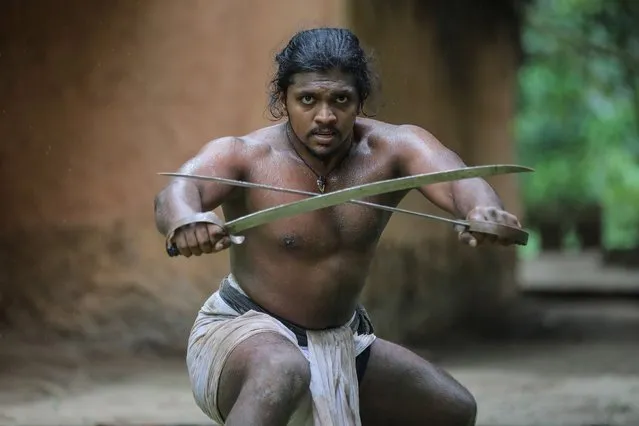
A student of the Sri Lankan ancient martial art “Angampora” performs during a practice session at the angam maduwa or fighting field, in Korathota, a suburb of Colombo, Sri Lanka, 07 September 2022. Sri Lanka's ancient martial art, Angampora, is thought to be thousands of years old. Anga translates to “body parts” and Angampora is a fighting art that uses body parts. Martial arts practitioners in Angampora were mostly in the king's service, and they were tasked with protecting the king and his kingdom. Angampora was practiced in secret for most centuries because the British, who colonized Sri Lanka, banned it in 1818 after seeing it as a threat. (Photo by Chamila Karunarathne/EPA/EFE)

A student of the Sri Lankan ancient martial art “Angampora” performs during a practice session at the angam maduwa or fighting field, in Korathota, a suburb of Colombo, Sri Lanka, 07 September 2022. Sri Lanka's ancient martial art, Angampora, is thought to be thousands of years old. Anga translates to “body parts” and Angampora is a fighting art that uses body parts. Martial arts practitioners in Angampora were mostly in the king's service, and they were tasked with protecting the king and his kingdom. Angampora was practiced in secret for most centuries because the British, who colonized Sri Lanka, banned it in 1818 after seeing it as a threat. (Photo by Chamila Karunarathne/EPA/EFE)
Details
14 Oct 2022 04:47:00


Defined according to wikipedia it is “a recent and informal geologic chronological term that serves to mark the evidence and extent of human activities that have had a significant global impact on the Earth’s ecosystems. The term was coined by ecologist Eugene Stoermer but has been widely popularized by the Nobel Prize-winning atmospheric chemist Paul Crutzen.”

The images here where created by Felix Pharand-Deschenes depicting how various human influences, from road and rail, to internet cables and airlines create significant patterns covering the Earth. What can we learn from these patterns in how they are influencing the environment
Details
19 Aug 2012 10:40:00
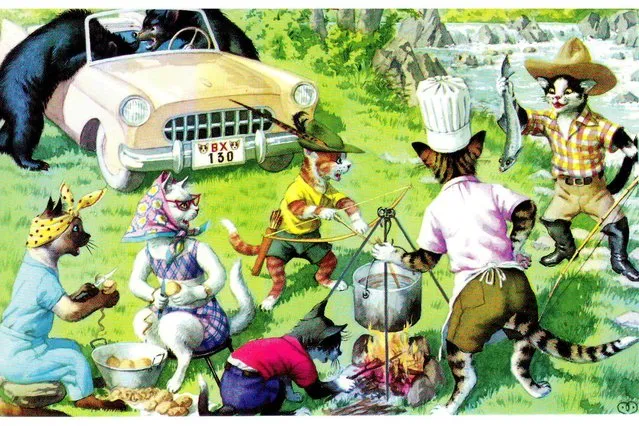
Dressed Cats By  Alfred Mainzer

From the 1940s through the 1960s, the Alfred Mainzer Company of Long Island City, NY published a series of linen and photochrome humorous cat postcards illustrated by Eugen Hartung (or Hurtong) (1897–1973), sometimes referred to as “Mainzer Cats”. These postcards normally illustrate settings that are filled with action, often with a minor disaster just about to occur. While the dressed cats were by far the most popular and most plentiful cards, Hartung also painted other dressed animals – primarily mice, dogs, and hedgehogs.
Details
31 Jan 2014 13:57:00
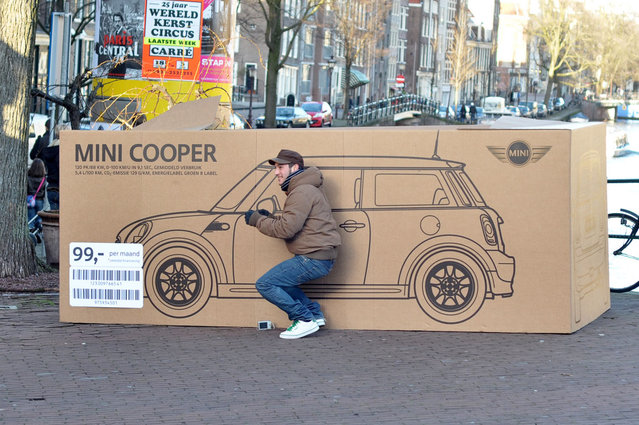
Mini Cooper Boxes In Amsterdam

Mini Amsterdam has launched a promotion campaign for their brand new creation Mini Copper. The idea is that Mini Copper is so small that it could fit in a box. Thus, as part of the promotion campaign, huge cardboard boxes were left in various popular placed of Amsterdam, making it look as if someone has bought a Mini Copper and thrown out the cardboard box it came in. Of course it is simply a commercial; however, it clearly illustrates just how small the Mini Copper really is. This is a perfect vehicle to handle narrow streets and lack of parking space. Truly, this vehicle could be parked just about anywhere! (Photo by JWT)
Details
21 Oct 2014 11:56:00
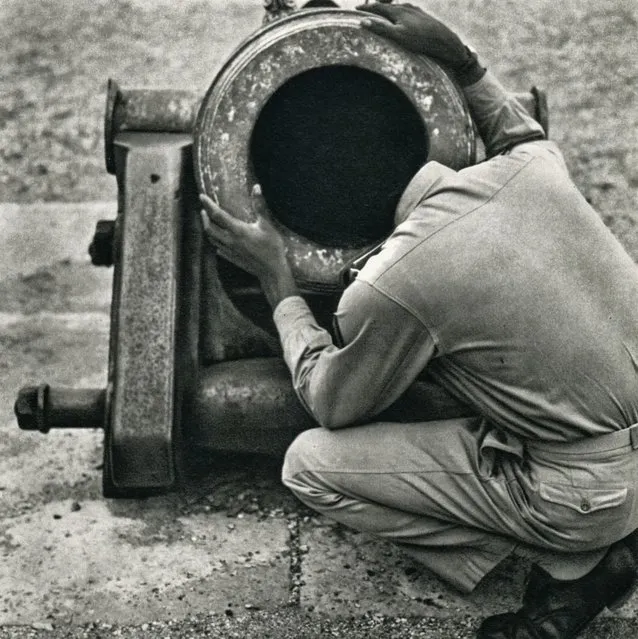
Humour Photography By Rene Maltete

René Maltête was a French photographer and poet. His pictures were based on the element of surprise and incongruity, often having a humorous and even philosophical side to them. At the start of his career, he often had to resort to manual labor as an addition to his to his profession in order to pay the bills. However, René's talent of seeing and being able to capture in time humorous moment of mundane, day-to-day life payed off in the end. Over the years, his works were published in a number of magazines in addition to numerous exhibitions that were held worldwide to popularize his work. (Photo by René Maltête)
Details
23 Oct 2014 11:34:00


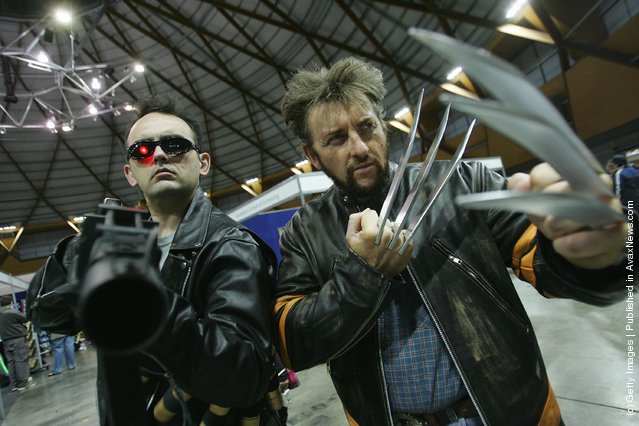
“Supanova Pop Culture Expo (Supanova) is a fan convention focusing on science fiction and fantasy film and TV, comic books, anime, gaming and collectables. It is held annually in the Australian cities of Sydney, Brisbane, Perth and Melbourne”. – Wikipedia

Photo: Terminator and Wolverine pose for photos during the National Cosplay Championships as part of the Supanova Pop Culture Expo at the Dome at Olympic Park on June 19, 2010 in Sydney, Australia. Cosplayers and comic book and sci-fi fans from across the state gathered to meet like-minded folk and attend guest panels with the stars of some of the popular television shows and publications of the genre. (Photo by Sergio Dionisio/Getty Images)
Details
08 Apr 2011 14:06:00


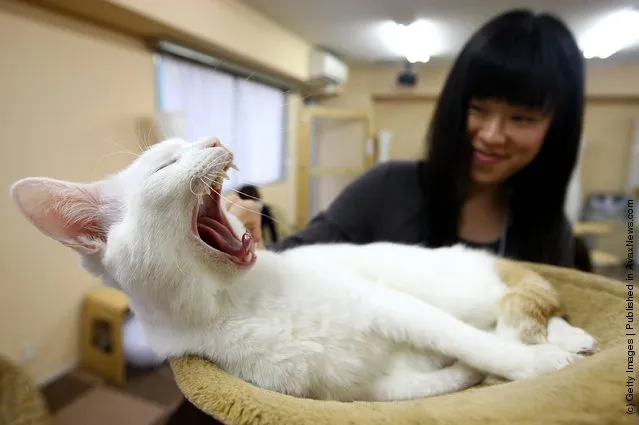
A cat yawns at Nekorobi cat cafe on January 20, 2009 in Tokyo, Japan. Cat cafes, where people can spend time with their favorite cat for about 10 US dollars an hour, are now getting more popular with people living in urban areas. The regular customers are mainly in their 20's to 30's and seaking healing by cats, or people who cannot afford to have pets full time. Some visiters come to the cat cafe three times a week. (Photo by Junko Kimura/Getty Images)
Details
05 Jun 2011 11:00:00
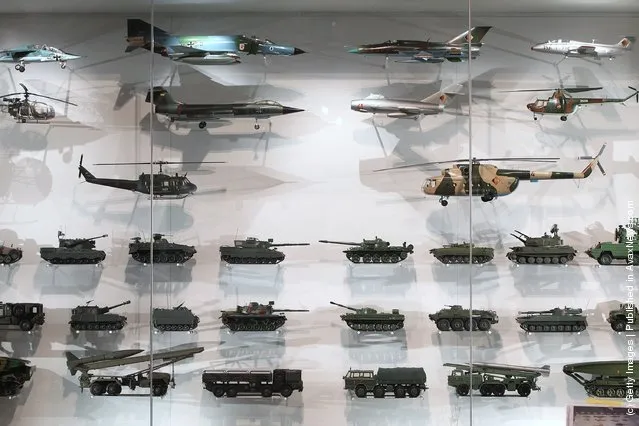
Models of Cold War-era Allied (L) and Soviet Bloc weaponry

Models of Cold War-era Allied (L) and Soviet Bloc weaponry face one another at the new Bundeswehr Military History Museum (Militaerhistorisches Museum der Bundeswehr, or MHM) on October 11, 2011 in Dresden, Germany. The museum, redesigned by star architect Daniel Libeskind, traces Germany military history from 1300 to the present, including during the Nazi period and the Cold War, and also examines the influence of the military on popular culture. (Photo by Sean Gallup/Getty Images)
Details
12 Oct 2011 11:55:00