Loading...
Done
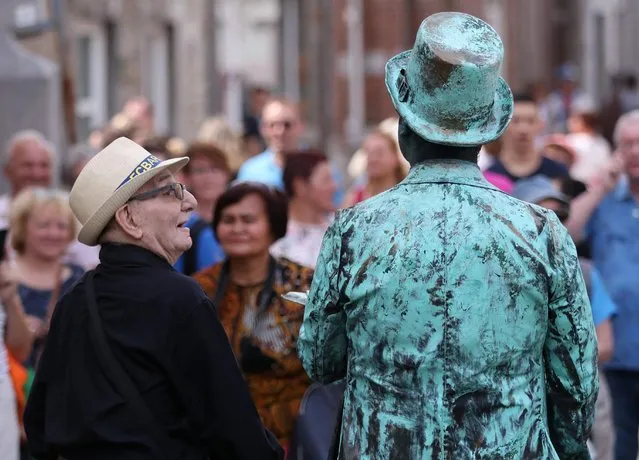
An artist takes part in the festival “Statues en Marche” in Marche-en-Famenne, Belgium, July 20, 2019. (Photo by Yves Herman/Reuters)

An artist takes part in the festival “Statues en Marche” in Marche-en-Famenne, Belgium, July 20, 2019. Living statues are a common sight in many city centers, but it is rare to see such a diverse range of this peculiar form of street art for which performers must keep still for painfully long periods of time to create the desired illusion. (Photo by Yves Herman/Reuters)
Details
24 Jul 2019 00:01:00
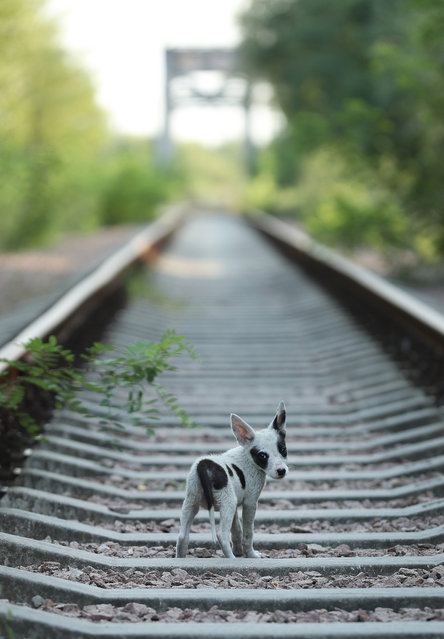
A stray puppy walks along abandoned train tracks near the Chernobyl nuclear power plant on August 19, 2017 near Chornobyl, Ukraine. (Photo by Sean Gallup/Getty Images)

A stray puppy walks along abandoned train tracks near the Chernobyl nuclear power plant on August 19, 2017 near Chornobyl, Ukraine. An estimated 900 stray dogs live in the exclusion zone, many of them likely the descendants of dogs left behind following the mass evacuation of residents in the aftermath of the 1986 nuclear disaster at Chernobyl. (Photo by Sean Gallup/Getty Images)
Details
24 Aug 2017 09:28:00
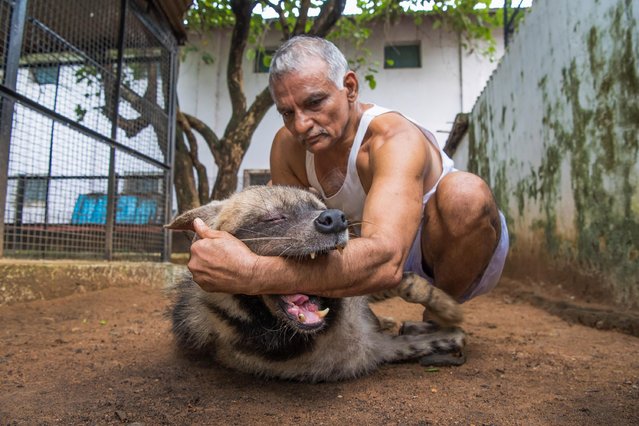
Prakash Amte is seen playing with a Hyena from his orphanage on September 19, 2017 in Maharashtra, India. (Photo by Haziq Qadri/Barcroft Media)

A couple have taken their love of animals to the extreme – by opening up their home to over 100 rescued animals. Dr Prakash Amte and his wife, Dr. Mandakini Amte have dedicated their lives to helping both the animals – and people – of Hemalkasa, Maharashtra in India. Here: Prakash Amte is seen playing with a Hyena from his orphanage on September 19, 2017 in Maharashtra, India. (Photo by Haziq Qadri/Barcroft Media)
Details
20 Oct 2017 06:38:00
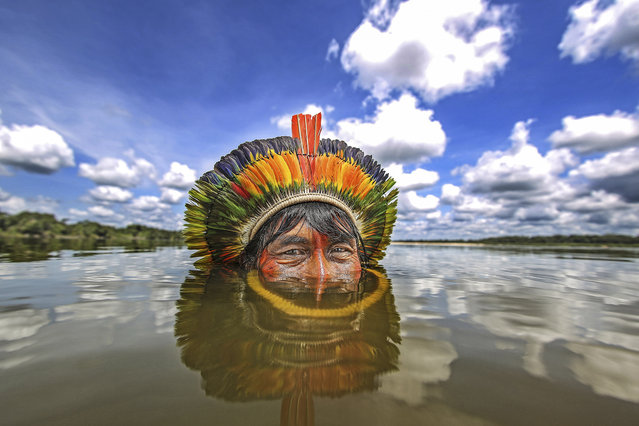
Bej indian in the Xingu river, state of Mato Grosso, Brazil on December 20, 2015 .(Photo by Ricardo Stuckert/Caters News Agency)

These images offer a rare glimpse of life within remote Brazilian tribes. Award winning photographer Ricardo, 47, said: “The pictures show the traditional way of life of these people who live in harmony with nature. The photos provide an overview of the contemporary situation of the indigenous people in Brazil”. Here: Bej indian in the Xingu river, state of Mato Grosso, Brazil on December 20, 2015 .(Photo by Ricardo Stuckert/Caters News Agency)
Details
12 Dec 2017 06:46:00
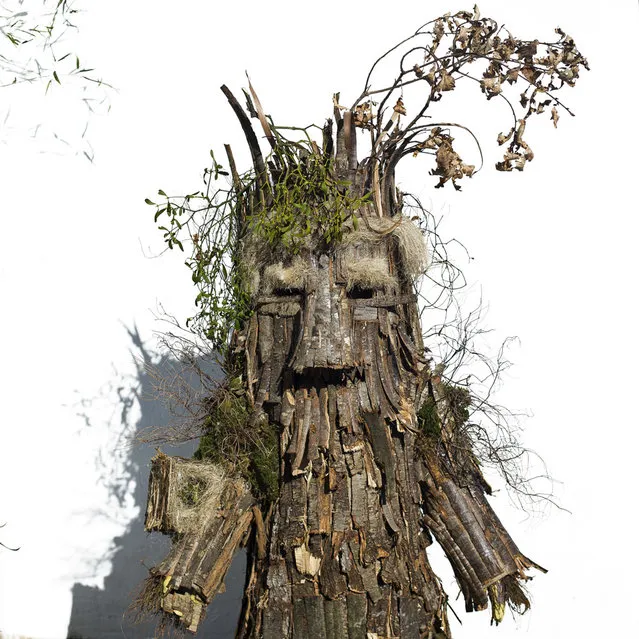
A man dressed as a  “Trapajon”, representing entities of nature, poses for a picture after taking part in the Vijanera Festival in Silio, northern Spain, Sunday, Jan. 6, 2013. The Vijanera masquerade, of pre-Roman origin, is the first carnival of the year in Europe symbolizing the triumph of good over evil and involving the participation of crowds of residents wearing different masks, animal skins and brightly colored clothing with its own complex function and symbolism and becoming the living example of the survival of archaic cults to nature. (Photo by Daniel Ochoa de Olza/AP Photo)

A man dressed as a “Trapajon”, representing entities of nature, poses for a picture after taking part in the Vijanera Festival in Silio, northern Spain, Sunday, Jan. 6, 2013. The Vijanera masquerade, of pre-Roman origin, is the first carnival of the year in Europe symbolizing the triumph of good over evil and involving the participation of crowds of residents wearing different masks, animal skins and brightly colored clothing with its own complex function and symbolism and becoming the living example of the survival of archaic cults to nature. (Photo by Daniel Ochoa de Olza/AP Photo)
Details
19 Jan 2013 13:01:00
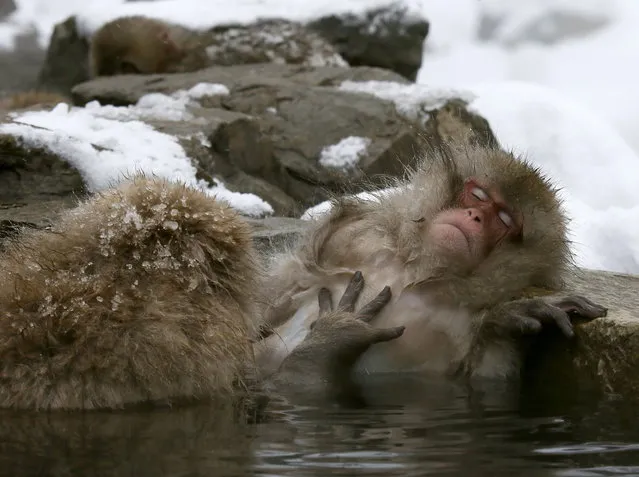
Japanese Macaque monkeys soak in the warmth of mountain hotsprings at Jigokudani Monkey Park, in Yamanouchi, central Japan, 19 January 2014. The Japanese Macaques (Macaca fuscata), also referred to as Snow Monkeys, live freely in this area that is covered by snow one third of the year. (Photo by Kimimasa Mayama/EPA)

Japanese Macaque monkeys soak in the warmth of mountain hotsprings at Jigokudani Monkey Park, in Yamanouchi, central Japan, 19 January 2014. The Japanese Macaques (Macaca fuscata), also referred to as Snow Monkeys, live freely in this area that is covered by snow one third of the year. Jigokudani is the only known place in the world where monkeys bathe in natural hot springs. As a habit, they come down from the mountains where they spend the night and bath during the day. (Photo by Kimimasa Mayama/EPA)
Details
21 Jan 2014 11:36:00
In this February 5, 2014 photo, Divaldo Aguiar, who plays the part of Pachencho, is carried in a mock coffin during the Burial of Pachencho celebration, through a cemetery in Santiago de Las Vegas, Cuba. Cuban villagers stage a mock funeral and burial of Pachencho, with a living man playing the part of Pachencho, in a boozy festival that has become an annual tradition in this small town near Havana, held each February 5 for the last 30 years. (Photo by Enric Marti/AP Photo)

In this February 5, 2014 photo, Divaldo Aguiar, who plays the part of Pachencho, is carried in a mock coffin during the Burial of Pachencho celebration, through a cemetery in Santiago de Las Vegas, Cuba. Cuban villagers stage a mock funeral and burial of Pachencho, with a living man playing the part of Pachencho, in a boozy festival that has become an annual tradition in this small town near Havana, held each February 5 for the last 30 years. (Photo by Enric Marti/AP Photo)
Details
10 Feb 2014 09:24:00
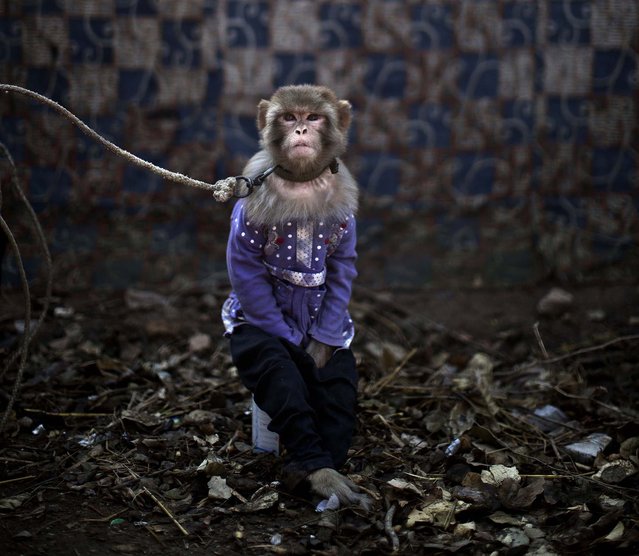
In this Tuesday, February 11, 2014, photo, a trained monkey, that makes a living for her Pakistani owner by performing to a crowd in public and private places, sits held by a leash, in Rawalpindi, Pakistan. For Pakistanis who raise and train the monkeys they are an important source of income in an impoverished country, and they form a strong bond with the animals. The monkeys are usually captured in the wild when they are babies and then trained. A trained monkey can fetch 20,000 to 30,000 rupees ($190 to $285). (Photo by Muhammed Muheisen/Associated Press)

In this Tuesday, February 11, 2014, photo, a trained monkey, that makes a living for her Pakistani owner by performing to a crowd in public and private places, sits held by a leash, in Rawalpindi, Pakistan. For Pakistanis who raise and train the monkeys they are an important source of income in an impoverished country, and they form a strong bond with the animals. The monkeys are usually captured in the wild when they are babies and then trained. A trained monkey can fetch 20,000 to 30,000 rupees ($190 to $285). (Photo by Muhammed Muheisen/Associated Press)
Details
23 Feb 2014 09:50:00