Loading...
Done
Viking re-enactors from the Gullinkambi group pose for pictures as part of the Jorvik Viking Festival on February 21, 2025. 100s of Viking re-enactors will march through the streets of York tomorrow. (Photo by James Glossop/The Times & Sunday Times)

Viking re-enactors from the Gullinkambi group pose for pictures as part of the Jorvik Viking Festival on February 21, 2025. 100s of Viking re-enactors will march through the streets of York tomorrow. (Photo by James Glossop/The Times & Sunday Times)
Details
02 Mar 2025 04:23:00
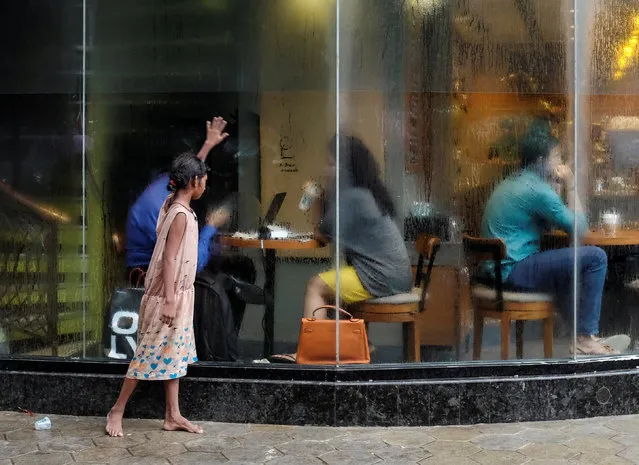
A homeless girl asks for alms outside a coffee shop in Mumbai, India, June 24, 2016. (Photo by Danish Siddiqui/Reuters)

A homeless girl asks for alms outside a coffee shop in Mumbai, India, June 24, 2016. (Photo by Danish Siddiqui/Reuters)
Details
30 Jun 2016 11:46:00
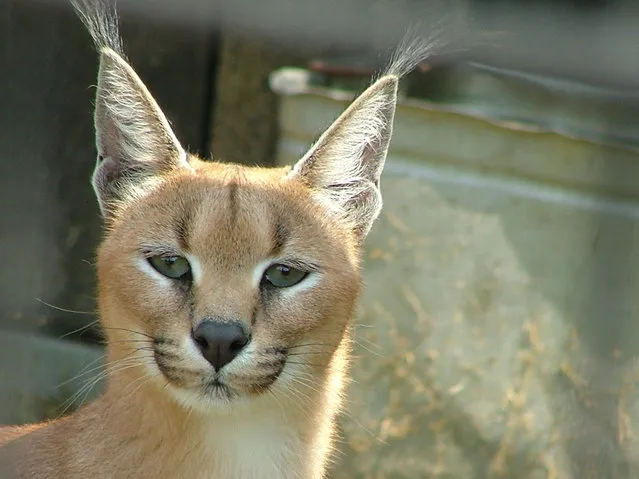
Сaracal - Desert Lynx

The caracal also known as the desert lynx, is a wild cat that is widely distributed across Africa, central Asia and southwest Asia into India. In 2002 the IUCN listed the caracal as Least Concern as it is widespread and relatively common. The felid is considered threatened in north Africa, and rare in the central Asian republics and India.
Details
20 Aug 2013 11:28:00
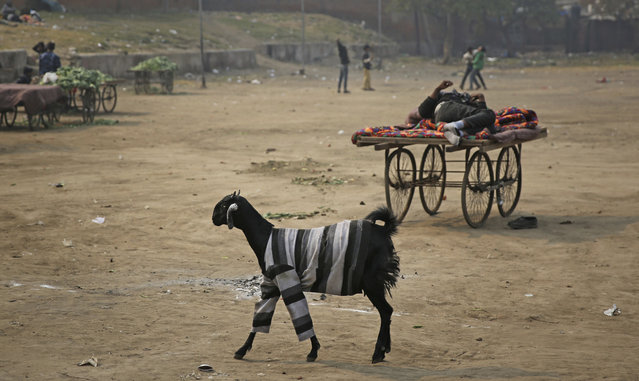
A goat wearing a sweater walks in a field in New Delhi, India, Thursday, January 17, 2019. (Photo by Altaf Qadri/AP Photo)

A goat wearing a sweater walks in a field in New Delhi, India, Thursday, January 17, 2019. (Photo by Altaf Qadri/AP Photo)
Details
20 Jan 2019 00:03:00
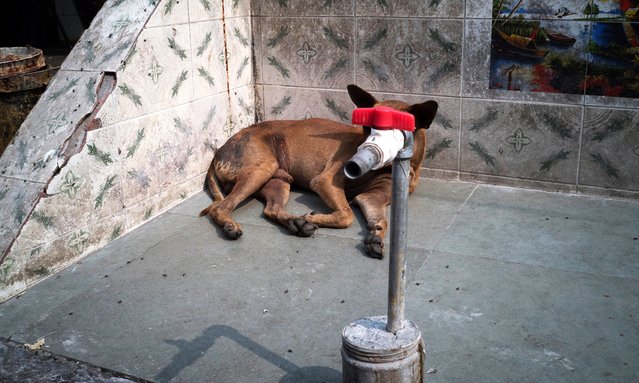
“Unexpected humour”. The Dog and the Faucet, in Kolkata, India on January 2017. (Photo by Pau Buscató/The Guardian)

“Unexpected humour”. The Dog and the Faucet, in Kolkata, India on January 2017. (Photo by Pau Buscató/The Guardian)
Details
13 Oct 2024 03:11:00
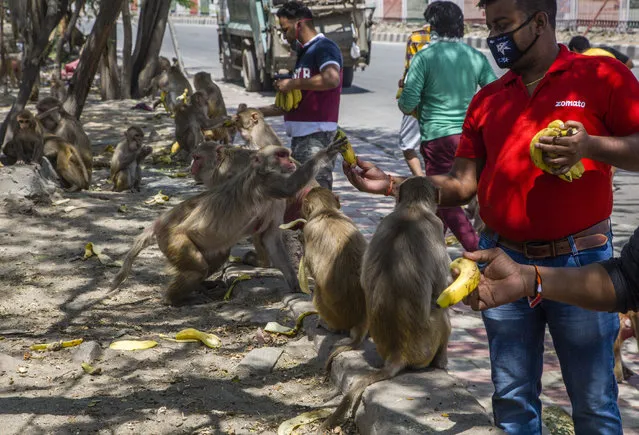
Men give bananas to monkeys gathered on the side of the road as India remains under an unprecedented lockdown over the highly contagious coronavirus (COVID-19) on April 08, 2020 in New Delhi, India. Wild animals, including monkeys, are roaming human settlements in India as people are staying indoors due to the 21-day lockdown. With India's 1.3 billion population and tens of millions of cars off the roads, wildlife is moving towards areas inhabited by humans. Wild animals in many countries have been seen roaming streets. A study says some 60 percent of the new diseases found around the globe every year are zoonotic, meaning they originate in animals and are passed on to humans. COVID-19 is a zoonotic disease that is suspected to have come from the wet markets of Wuhan, China. (Photo by Yawar Nazir/Getty Images)

Men give bananas to monkeys gathered on the side of the road as India remains under an unprecedented lockdown over the highly contagious coronavirus (COVID-19) on April 08, 2020 in New Delhi, India. Wild animals, including monkeys, are roaming human settlements in India as people are staying indoors due to the 21-day lockdown. (Photo by Yawar Nazir/Getty Images)
Details
12 Apr 2020 00:05:00
People cheer as the ball drops at midnight in Times Square on January 1, 2015 in New York City. An estimated one million people from around the world are expected to pack Times Square to ring in 2015. (Photo by Andrew Theodorakis/Getty Images)

People cheer as the ball drops at midnight in Times Square on January 1, 2015 in New York City. An estimated one million people from around the world are expected to pack Times Square to ring in 2015. (Photo by Andrew Theodorakis/Getty Images)
Details
01 Jan 2015 13:47:00
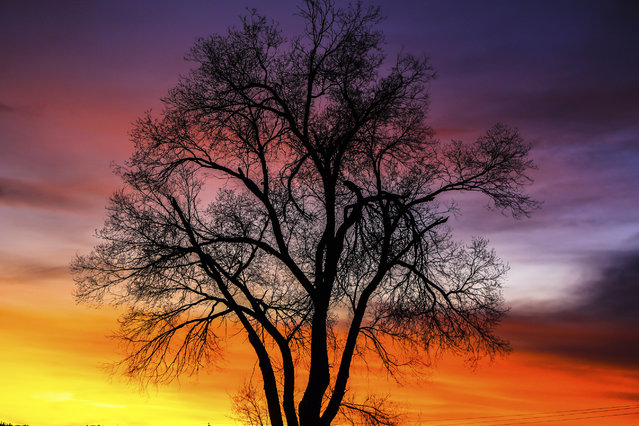
This photo shows sunset in Eagle, Colo., Sunday, November 3, 2019. Daylight saving time ended, making sunset around 5 p.m. this time of year in Colorado. (Photo by Chris Dillmann/Vail Daily via AP Photo)

This photo shows sunset in Eagle, Colo., Sunday, November 3, 2019. Daylight saving time ended, making sunset around 5 p.m. this time of year in Colorado. (Photo by Chris Dillmann/Vail Daily via AP Photo)
Details
22 Nov 2019 00:03:00