Loading...
Done


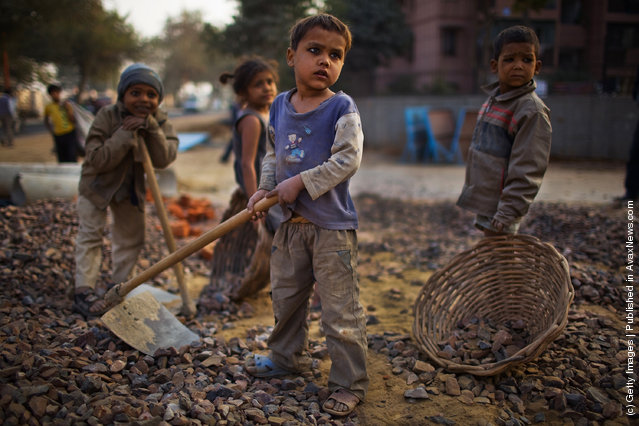
Indian children work nearby to their parents at a construction project in front of the Jawaharlal Nehru Stadium on January 30, 2010 in New Delhi, India. The children accompany their parents to the work site, where if they are prepared to work, they will receive money for bread an milk and be provided with dinner by the contractor. The sheer scale of the project has drawn an enormous population of migrant workers from all over India.
Details
20 May 2011 07:00:00
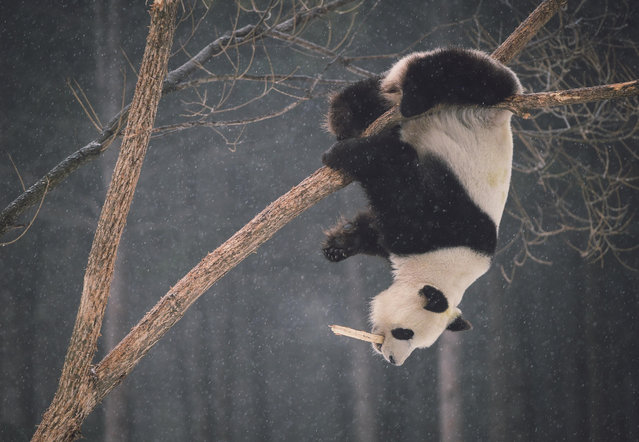
Giant panda Meng Meng plays on a tree at a Siberian tiger-breeding base in Changchun, China on December 10, 2015. (Photo by Xu Chang/Xinhua Press/Corbis)

Giant panda Meng Meng plays on a tree at a Siberian tiger-breeding base in Changchun, China on December 10, 2015. (Photo by Xu Chang/Xinhua Press/Corbis)
Details
16 Dec 2015 08:01:00
A man is silhouetted as he stands on a walkway in the sky lobby at the Chancellery, the seat of German Chancellor Angela Merkel (not pictured) in Berlin, May 7, 2014. (Photo by Thomas Peter/Reuters)

A man is silhouetted as he stands on a walkway in the sky lobby at the Chancellery, the seat of German Chancellor Angela Merkel (not pictured) in Berlin, May 7, 2014. (Photo by Thomas Peter/Reuters)
Details
15 May 2014 07:21:00
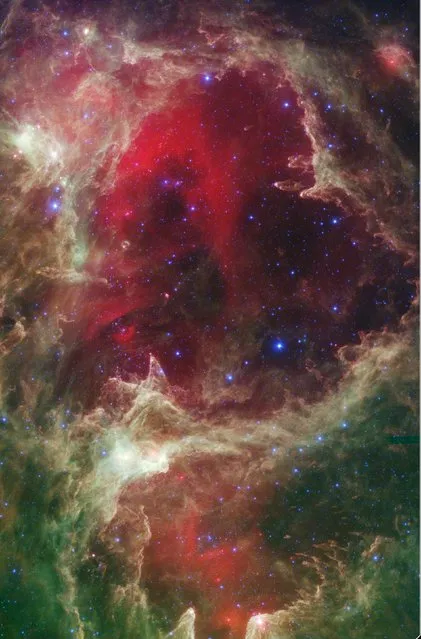
An infrared portrait from NASA's Spitzer Space Telescope which shows generations of stars is seen in this undated NASA handout image released February 14, 2013. In this wispy star-forming region, called W5, the oldest stars can be seen as blue dots in the centers of the two hollow cavities (other blue dots are background and foreground stars not associated with the region). Red shows heated dust that pervades the region's cavities, while green highlights dense clouds. (Photo by NASA/Reuters/JPL-Caltech/Harvard-Smithsonian/Handout)

An infrared portrait from NASA's Spitzer Space Telescope which shows generations of stars is seen in this undated NASA handout image released February 14, 2013. In this wispy star-forming region, called W5, the oldest stars can be seen as blue dots in the centers of the two hollow cavities (other blue dots are background and foreground stars not associated with the region). Red shows heated dust that pervades the region's cavities, while green highlights dense clouds. (Photo by NASA/Reuters/JPL-Caltech/Harvard-Smithsonian/Handout)
Details
03 Mar 2013 08:44:00
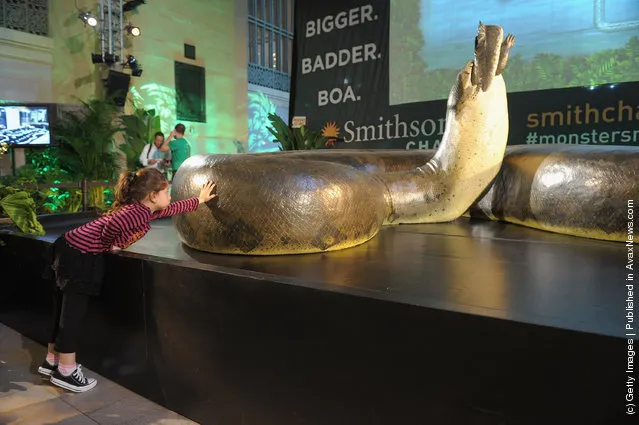
Attendees view a replica of the prehistoric Titanoboa, the largest snake to ever live, on display at Grand Central Terminal in New York City

“Titanoboa is a genus of snake that lived approximately 58–60 million years ago, during the Paleocene epoch, a 10-million-year period immediately following the dinosaur extinction event. The only known species is the Titanoboa cerrejonensis, the largest snake ever discovered, which supplanted the previous record holder, Gigantophis”. – Wikipedia

Photo: Leah Del Rio views a replica of the prehistoric Titanoboa, the largest snake to ever live, on display at Grand Central Terminal on March 23, 2012 in New York City. (Photo by Michael Loccisano/Getty Images)
Details
24 Mar 2012 10:14:00
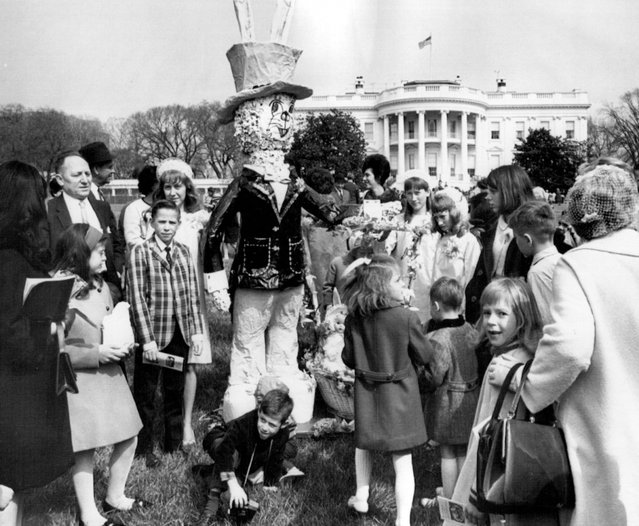
March 28, 1967 Egg Roll; A large bunny attracted the attention of children and their parents during the annual Easter egg roll Monday on the south lawn of the White House. The bunny was made by Fred Johansen, Silver Spring, Md. (Photo by Minneapolis Star Tribune)

March 28, 1967. Egg Roll; A large bunny attracted the attention of children and their parents during the annual Easter egg roll Monday on the south lawn of the White House. The bunny was made by Fred Johansen, Silver Spring, Md. Nearly 17,000 youngsters and adults took part in the egg rolling. The President and Mrs. John-son were not at the festivities because they were in Camp David, Md. The tradition of egg rolling was begun in 1878 during the administration of Rutherford B. Hayes. (Photo by Minneapolis Star Tribune)
Details
05 Apr 2015 10:51:00
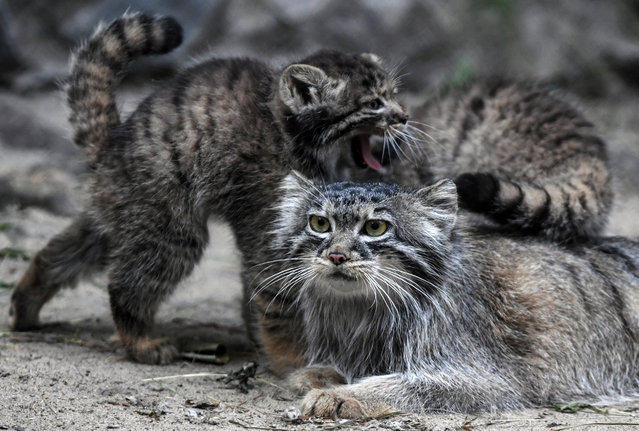
Pallas' s cat kittens with theit mother in an enclosure at the Novosibirsk Zoo, Novosibirsk, Russia on July 11, 2018. Pallas' s cat, also known as manul, is a small wild cat native to montane steppes of the Central Asia and listed as an endangered species. (Photo by Kirill Kukhmar/TASS)

Pallas' s cat kittens with theit mother in an enclosure at the Novosibirsk Zoo, Novosibirsk, Russia on July 11, 2018. Pallas' s cat, also known as manul, is a small wild cat native to montane steppes of the Central Asia and listed as an endangered species. (Photo by Kirill Kukhmar/TASS)
Details
15 Jul 2018 00:03:00
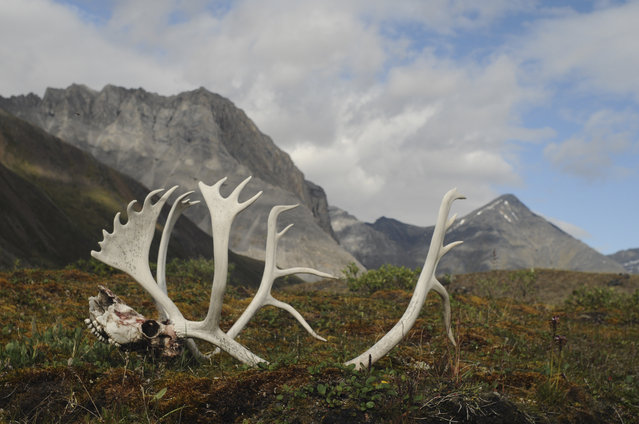
In this August 1, 2014 photo provided by the National Park Service are male caribou antlers in the Oolah Valley, likely the result of a grizzly kill as he migrated south for the winter at the Arctic National Park and Preserve in Alaska. The nation's northernmost national park says its new management plan will have to consider the effects of a new industrial road to the mining district of Ambler, the first road that would be constructed within its Maryland-sized boundaries. (Photo by Cadence Cook/AP Photo/National Park Service)

In this August 1, 2014 photo provided by the National Park Service are male caribou antlers in the Oolah Valley, likely the result of a grizzly kill as he migrated south for the winter at the Arctic National Park and Preserve in Alaska. The nation's northernmost national park says its new management plan will have to consider the effects of a new industrial road to the mining district of Ambler, the first road that would be constructed within its Maryland-sized boundaries. (Photo by Cadence Cook/AP Photo/National Park Service)
Details
03 Sep 2016 09:54:00