Loading...
Done
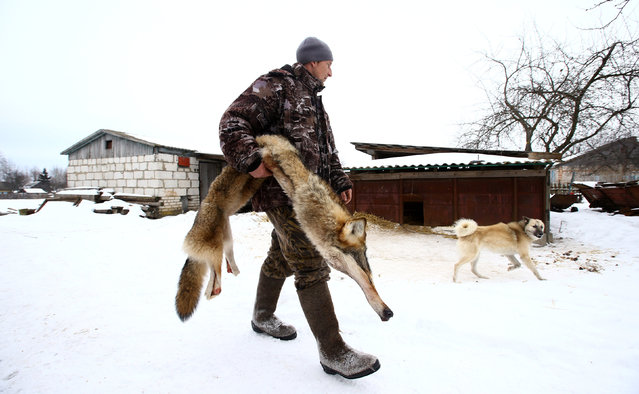
Nikolay Skidan, a hunter, carries the skin of a wolf in the village of Khrapkovo, Belarus February 1, 2017. (Photo by Vasily Fedosenko/Reuters)

Nikolay Skidan, a hunter, carries the skin of a wolf in the village of Khrapkovo, Belarus February 1, 2017. Wolf fur grows thickest in winter, so Belarussian hunter Vladimir Krivenchik only sets his traps once snow is on the ground. He and his wife live on the edge of the Chernobyl exclusion zone – 2,600 square km of land on the Belarus-Ukraine border that was contaminated by a nuclear disaster in 1986. (Photo by Vasily Fedosenko/Reuters)
Details
16 Feb 2017 00:04:00
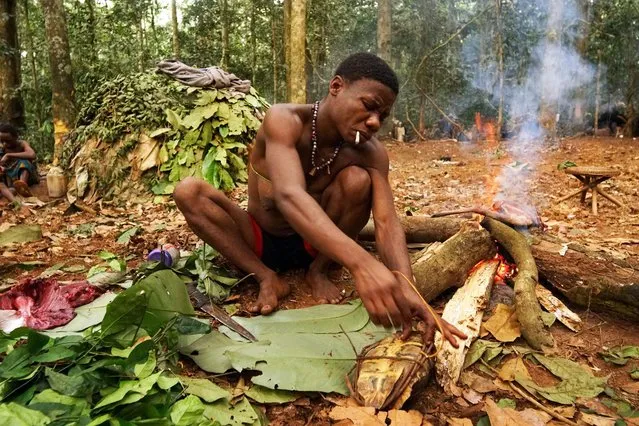
Baka pygmies in their forest home preparing food in, Sangha Forest, Central African Republic, February 2016. (Photo by Susan Schulman/Barcroft Images)

Baka pygmies in their forest home preparing food in, Sangha Forest, Central African Republic, February 2016. Here, in their forest home, traditional life continues in the face of multiplying challenges ranging from poachers, to ill health. Deep in the rainforests of central Africa lives one of the world’s most mysterious tribes. (Photo by Susan Schulman/Barcroft Images)
Details
18 Feb 2017 00:01:00
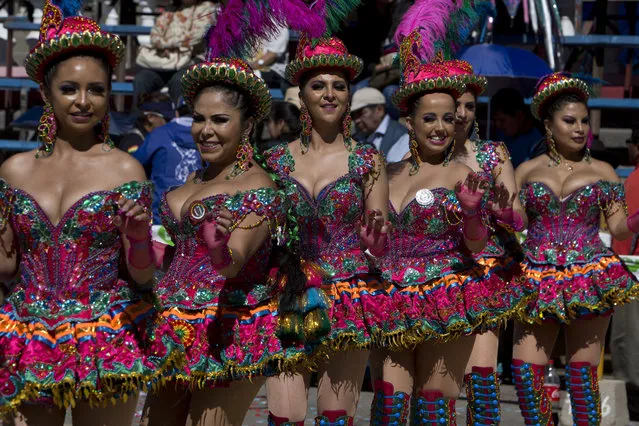
Women perform in the traditional “Morenada” dance during Carnival, in Oruro, Bolivia, Saturday, March 2, 2019. (Photo by Juan Karita/AP Photo)

Women perform in the traditional “Morenada” dance during Carnival, in Oruro, Bolivia, Saturday, March 2, 2019. The unique festival features spectacular folk dances, extravagant costumes, beautiful crafts, lively music, and up to 20 hours of continuous partying with lots of tourists, drawing crowds of up people annually. (Photo by Juan Karita/AP Photo)
Details
06 Mar 2019 00:07:00
Artists called “Le couple en chocolat” take part in the festival “Statues en Marche” in Marche-en-Famenne, Belgium, July 22, 2018. (Photo by Yves Herman/Reuters)

Artists called “Le couple en chocolat” take part in the festival “Statues en Marche” in Marche-en-Famenne, Belgium, July 22, 2018. Living statues are a common sight in many city centres, but it is rare to see such a diverse range of this peculiar form of street art for which performers must keep still for painfully long periods of time to create the desired illusion. (Photo by Yves Herman/Reuters)

Details
25 Jul 2018 00:05:00
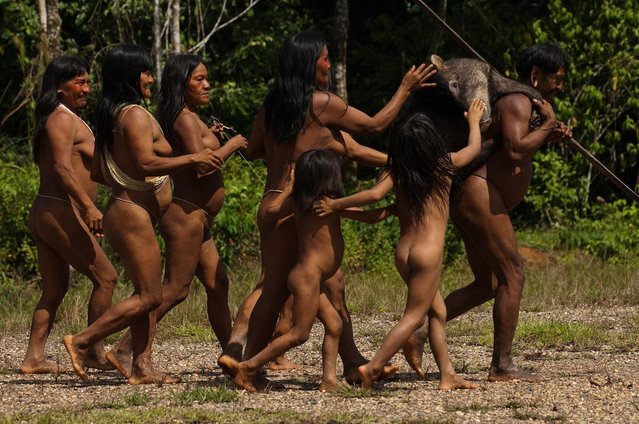
Spectacular images offering insight into the lives of the Huaorani people in the Ecuadorian Amazon have been revealed showing how they use traditional methods to hunt monkeys for food. The stunning pictures were taken by conservation photographer Pete Oxford from Torquay, Devon in the Ecuadorian Amazon. “The Huaorani Indians are a forest people highly in tune with their environment. Many are now totally acculturated since the 1950s by missionaries”, said Pete. “Today they face radical change to their culture to the proximity of oil exploration within their territory and the Yasuni National Park and Biosphere Reserve, they are vastly changed. Some still live very traditionally and for this shoot, through my Huaorani friend, a direct relative of those photographed he wanted to depict them as close to their original culture as possible. They still largely hunt with blow pipes and spears eating a lot of monkeys and peccaries”. The Huaorani are also known as the Waorani, Waodani or the Waos and are native Amerindians. Their lands are located between the Curaray and Napo rivers and speak the Huaorani language. Pete says that during his visit he was welcomed into the group and hopes that ancient cultures can be saved. Here: The tribe were seen celebrating after a hunter returned to camp with a wild pig. (Photo by Pete Oxford/Mediadrumworld.com)

Spectacular images offering insight into the lives of the Huaorani people in the Ecuadorian Amazon have been revealed showing how they use traditional methods to hunt monkeys for food. The stunning pictures were taken by conservation photographer Pete Oxford from Torquay, Devon in the Ecuadorian Amazon. Here: The tribe were seen celebrating after a hunter returned to camp with a wild pig. (Photo by Pete Oxford/Mediadrumworld.com)
Details
20 Jan 2017 07:58:00
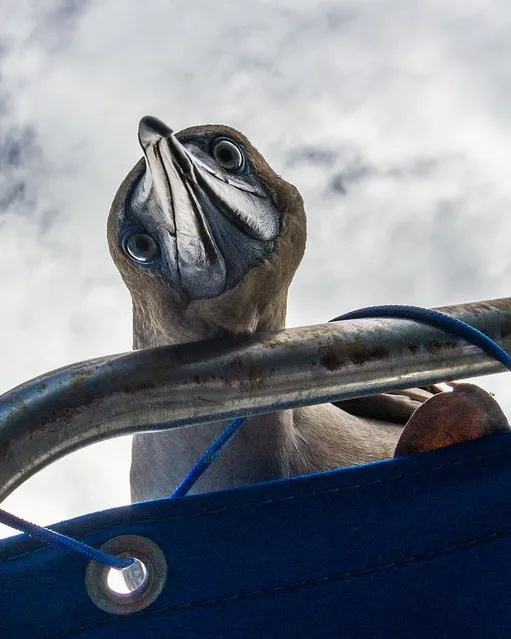
“Close-up. We had a juvenile Red-Footed Booby come visit us on the sun deck. I got some closeups with my ultrawide 11-16mm Tokina”. (Photo by Carl Fredrickson)

Situated in the Pacific Ocean some 620 miles (1,000 km) from the South American continent, these 19 islands and the surrounding marine reserve have been called a unique “living museum and showcase of evolution”. Photo: “Close-up. We had a juvenile Red-Footed Booby come visit us on the sun deck. I got some closeups with my ultrawide 11-16mm Tokina”. (Photo by Carl Fredrickson)
Details
04 Sep 2013 11:49:00
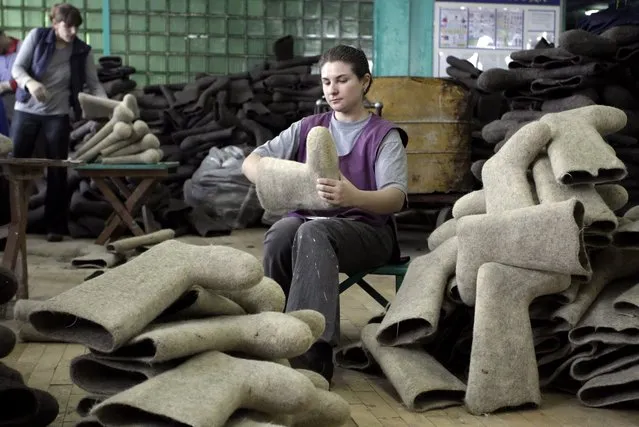
Belarusian workers works at a felt boot factory in Smilovichi, some 35km from Minsk, Belarus, 16 January 2012. (Photo by Tatyana Zenkovich/EPA)

The Smilovichi Felting Factory in Belarus was founded in 1928, when Smilovichi was a small Jewish settlement of craftsmen. Five of those craftsmen organized a small artel (a cooperative association of craftsmen who all live and work together), which produced warm boots called “valenki” for cold weather. Photo: Belarusian workers works at a felt boot factory in Smilovichi, some 35km from Minsk, Belarus, 16 January 2012. (Photo by Tatyana Zenkovich/EPA)
Details
18 Oct 2013 10:02:00
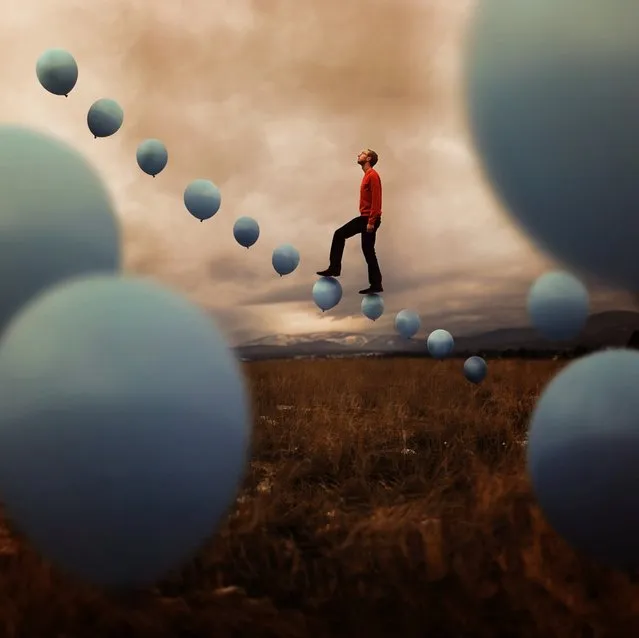
Photographers: Joel Robison Part2

“Hi! I'm Joel, I live in a valley in British Columbia's Rocky Mountains, as close to the forest as I could possibly be! I love to run, bike, jump, eat and create and I hope that you enjoy my work as much as I enjoy creating it!” – Joel Robison. (Photo by: Joel Robison; Source: Flickr)


See Also:Photographers: Joel Robison Part1
Details
01 Nov 2013 10:40:00