Loading...
Done
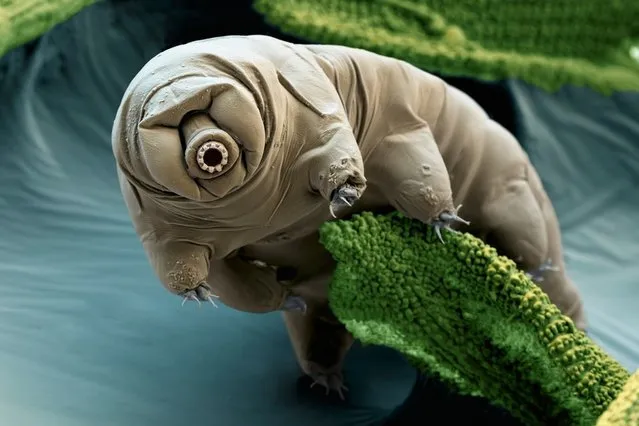
Tardigrades (commonly known as waterbears or moss piglets). (Photo by SPL/East News)

“Tardigrades (commonly known as waterbears or moss piglets) are small, water-dwelling, segmented animals with eight legs. Tardigrades were first discovered in 1773 by Johann August Ephraim Goeze, who called them kleiner Wasserbär, meaning “little water bear” in German. The name Tardigrada means “slow walker” and was given by Lazzaro Spallanzani in 1777. The name water bear comes from the way they walk, reminiscent of a bear's gait. The biggest adults may reach a body length of 1.5 millimetres (0.059 in), the smallest below 0.1 mm. Freshly hatched tardigrades may be smaller than 0.05 mm”. – Wikipedia. Photo: Tardigrades. (Photo by SPL/East News)
Details
26 Sep 2012 09:55:00
Cloud inversion taken at Sunrise in Mam Tor, Derbyshire, UK on August 30, 2016. (Photo by David Zdanowicz/REX Shutterstock)

Cloud inversion taken at Sunrise in Mam Tor, Derbyshire, UK on August 30, 2016. (Photo by David Zdanowicz/Rex Features/Shutterstock)
Details
21 Nov 2016 10:47:00
China's Shang Chunsong prepares to compete in the uneven bars event of the women's individual all-around final artistic gymnastics competition at the Namdong Gymnasium Club during the 17th Asian Games in Incheon, in this September 23, 2014 file photo. (Photo by Kim Hong-Ji/Reuters)

China's Shang Chunsong prepares to compete in the uneven bars event of the women's individual all-around final artistic gymnastics competition at the Namdong Gymnasium Club during the 17th Asian Games in Incheon, in this September 23, 2014 file photo. (Photo by Kim Hong-Ji/Reuters)
Details
04 Dec 2014 12:28:00
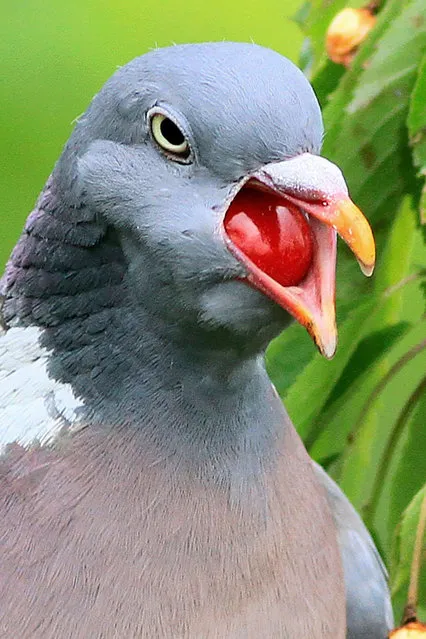
A pigeon eating cherries in Bydgoszcz, Poland on September 14, 2018. The pigeon was captured at dinnertime, as he was caught on camera with its mouth full of a cherry. (Photo by Piotr Grny/Caters News Agency)

A pigeon eating cherries in Bydgoszcz, Poland on September 14, 2018. The pigeon was captured at dinnertime, as he was caught on camera with its mouth full of a cherry. (Photo by Piotr Grny/Caters News Agency)
Details
16 Sep 2018 00:03:00
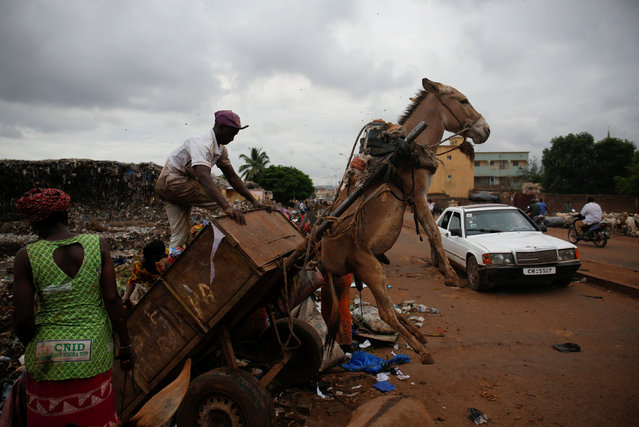
A waste picker unloads garbage at a waste transfer station in Bamako, Mali, August 19, 2018. In the Malian capital of Bamako, donkey carts driven by young men like 19-year-old Arouna Diabate play a vital role battling the fast-growing city's waste problem. Every morning before dawn, Diabate hitches his donkey to a cart and sets off on his rounds, going door-to-door to collect household garbage which he delivers to a local waste transfer station for a monthly salary of around $35. “I won't be picking up trash with a donkey cart for the rest of my life, but for now people appreciate us because we help clean up the homes of Bamako”, Diabate said. (Photo by Luc Gnago/Reuters)

A waste picker unloads garbage at a waste transfer station in Bamako, Mali, August 19, 2018. In the Malian capital of Bamako, donkey carts driven by young men like 19-year-old Arouna Diabate play a vital role battling the fast-growing city's waste problem. Every morning before dawn, Diabate hitches his donkey to a cart and sets off on his rounds, going door-to-door to collect household garbage which he delivers to a local waste transfer station for a monthly salary of around $35. “I won't be picking up trash with a donkey cart for the rest of my life, but for now people appreciate us because we help clean up the homes of Bamako”, Diabate said. (Photo by Luc Gnago/Reuters)
Details
18 Sep 2018 00:01:00
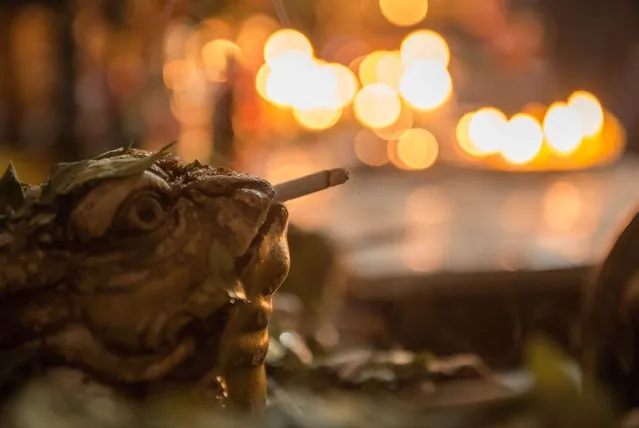
Ceremonial skulls La Paz, Bolivia on November 6, 2020. Toads are in Bolivia symbols of the soil and of luck. They complement the Ñatitas, skulls of deceased people that are believed to have special powers. People ask them for different favours. The tradition is related to All Saints´ Day. (Photo by Radoslaw Czajkowski/Rex Features/Shutterstock)

Ceremonial skulls La Paz, Bolivia on November 6, 2020. Toads are in Bolivia symbols of the soil and of luck. They complement the Ñatitas, skulls of deceased people that are believed to have special powers. People ask them for different favours. The tradition is related to All Saints´ Day. (Photo by Radoslaw Czajkowski/Rex Features/Shutterstock)
Details
21 Feb 2021 08:30:00
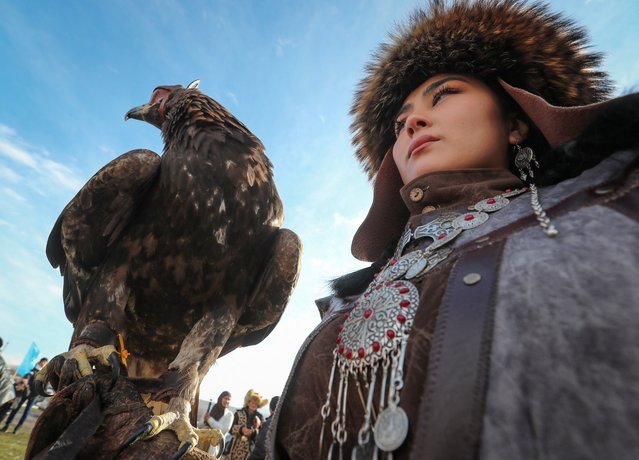
A hunter holds her tamed golden eagle during a traditional hunting contest near the village of Tole Bi in Almaty region, Kazakhstan on November 9, 2024. (Photo by Pavel Mikheyev/Reuters)

A hunter holds her tamed golden eagle during a traditional hunting contest near the village of Tole Bi in Almaty region, Kazakhstan on November 9, 2024. (Photo by Pavel Mikheyev/Reuters)
Details
24 Nov 2024 03:32:00
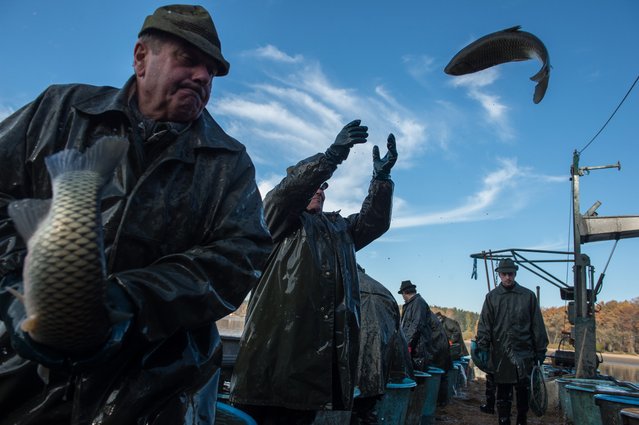
Czech fishermen sort fish during the traditional Carp haul at Lake of Dvoriste near Smrzov village, Czech Republic, 02 November 2015. Carp, the traditional Czech Christmas Eve dinner, is harvested primarly from the region of southern Bohemian lakes. (Photo by Filip Singer/EPA)

Czech fishermen sort fish during the traditional Carp haul at Lake of Dvoriste near Smrzov village, Czech Republic, 02 November 2015. Carp, the traditional Czech Christmas Eve dinner, is harvested primarly from the region of southern Bohemian lakes. (Photo by Filip Singer/EPA)
Details
05 Nov 2015 08:05:00