Loading...
Done
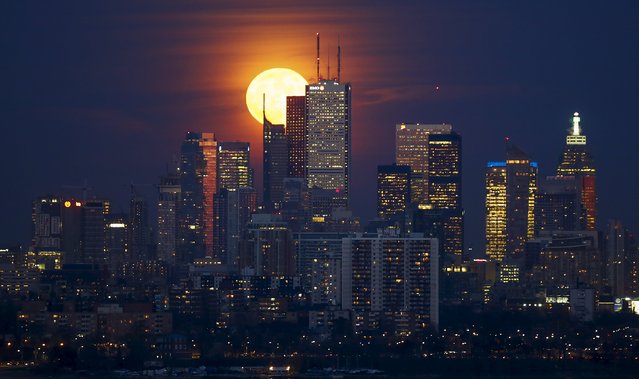
The moon rises behind the skyline and financial district in Toronto, November 25, 2015. (Photo by Mark Blinch/Reuters)

The moon rises behind the skyline and financial district in Toronto, November 25, 2015. (Photo by Mark Blinch/Reuters)
Details
21 Nov 2016 10:23:00
Folk artists perform intangible culture heritage items during a celebration at a park in Chengshan Town to welcome Chinese new year, on Janaury 18, 2022 in Rongcheng, Shandong Province of China. (Photo by Yang Zhili/VCG via Getty Images)

Folk artists perform intangible culture heritage items during a celebration at a park in Chengshan Town to welcome Chinese new year, on Janaury 18, 2022 in Rongcheng, Shandong Province of China. (Photo by Yang Zhili/VCG via Getty Images)
Details
26 Jan 2022 07:50:00
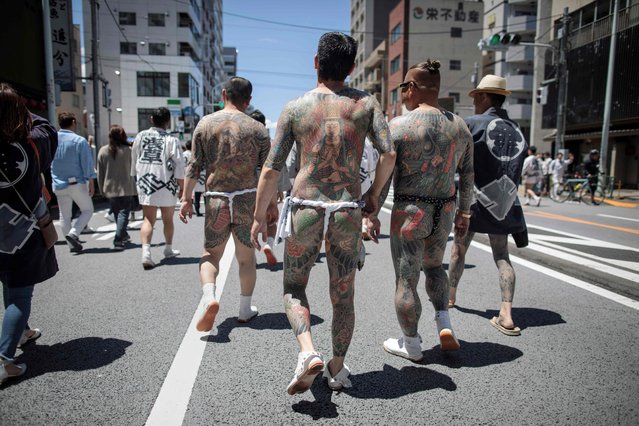
Participants with traditional Japanese tattoos (Irezumi), related to the Yakuza, walk through the Asakusa district during the annual Sanja Matsuri festival in Tokyo on May 20, 2018. Sanja Matsuri festival is a celebration for the three founders of Sensoji Temple in the Asakusa neighbourhood with nearly two million people visiting during the three-day event. (Photo by Behrouz Mehri/AFP Photo)

Participants with traditional Japanese tattoos (Irezumi), related to the Yakuza, walk through the Asakusa district during the annual Sanja Matsuri festival in Tokyo on May 20, 2018. Sanja Matsuri festival is a celebration for the three founders of Sensoji Temple in the Asakusa neighbourhood with nearly two million people visiting during the three-day event. (Photo by Behrouz Mehri/AFP Photo)
Details
17 Jul 2018 00:05:00
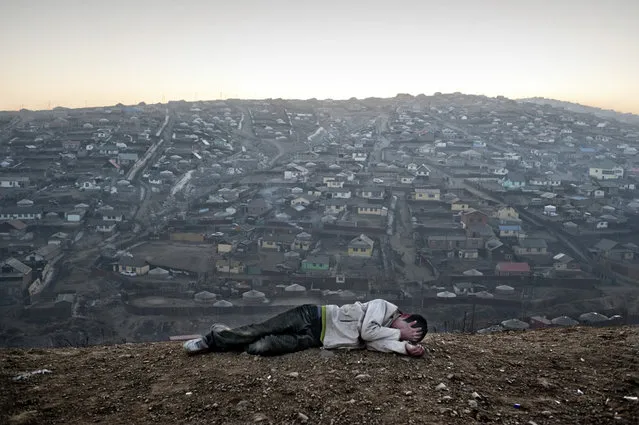
Asia, Mongolia, March 27, 2011. A view of Ulaan Baator over the shoulder of a slumbering drunk. Alcoholism is a huge problem in the city, home to almost half of Mongolia's people. The capital's population has doubled in the past two years, expanding outward in a haphazard sprawl, and many inhabitants live in slums known as the “Gher District”. (Photo by Alessandro Grassani)

“Environmental Migrants: The Last Illusion” by photographer Alessandro Grassani, documents the life of people in Kenya, Mongolia and Bangladesh who migrate to escape environmental stresses to the city of their own countries in hopes for a better life. Here: Asia, Mongolia, March 27, 2011. A view of Ulaan Baator over the shoulder of a slumbering drunk. Alcoholism is a huge problem in the city, home to almost half of Mongolia's people. The capital's population has doubled in the past two years. High levels of unemployment and poverty await herders who abandon rural areas and arrive in the city, illiterate and untrained in any skills necessary for urban jobs. (Photo by Alessandro Grassani)
Details
21 Jul 2015 10:10:00
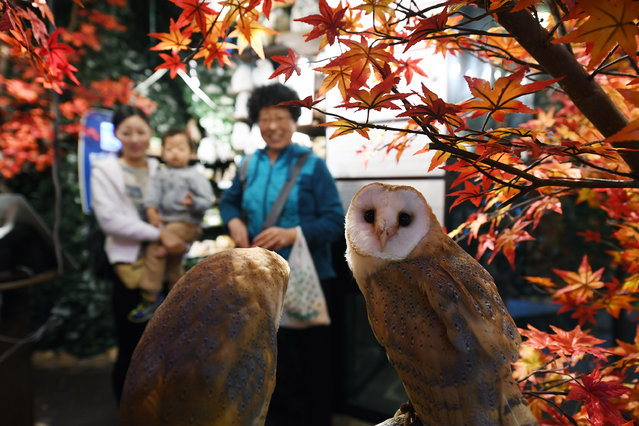
People view live owls at, Owl's Forest which is located on the bottom floor of a building along a bustling street in the Harajuku area on Friday November 04, 2016 in Tokyo, Japan. Visitors can pet owls at the business. It is located next to one of Tokyo's many cat cafes. (Photo by Matt McClain/The Washington Post)

People view live owls at, Owl's Forest which is located on the bottom floor of a building along a bustling street in the Harajuku area on Friday November 04, 2016 in Tokyo, Japan. Visitors can pet owls at the business. It is located next to one of Tokyo's many cat cafes. (Photo by Matt McClain/The Washington Post)
Details
04 Jan 2017 07:52:00
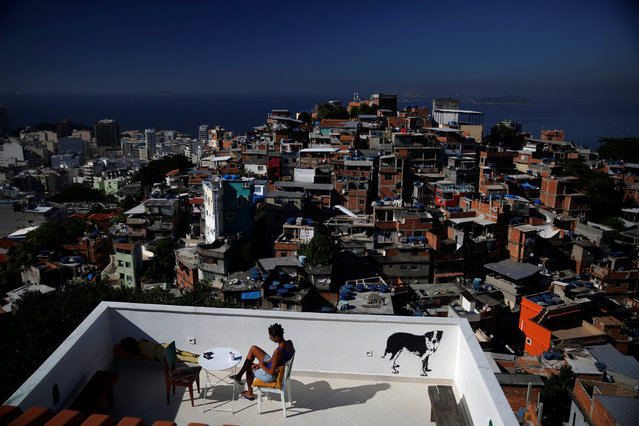
A woman sits on a terrace at Tiki hostel in Cantagalo favela, in Rio de Janeiro, Brazil, April 16, 2016. (Photo by Pilar Olivares/Reuters)

A woman sits on a terrace at Tiki hostel in Cantagalo favela, in Rio de Janeiro, Brazil, April 16, 2016. Hostels in a few of Rio's more than 1,000 slums serve not only as a cheap housing alternative for the more adventurous among the estimated 500,000 foreign tourists expected to arrive for the Olympics in August. The establishments also open up the rich culture of the city's shantytowns for travellers, giving them a glimpse into once “no-go” areas where about one-fifth of Rio's population lives. (Photo by Pilar Olivares/Reuters)
Details
04 May 2016 12:18:00
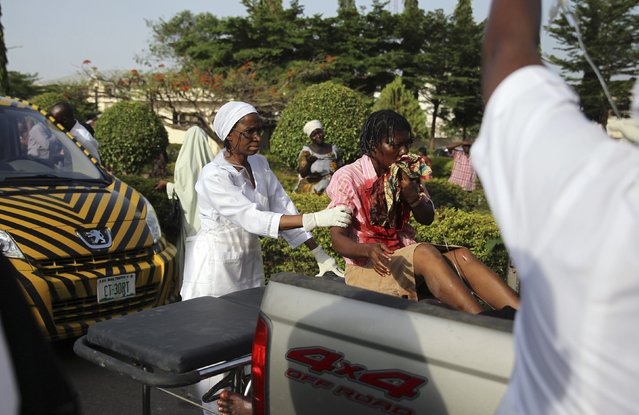
A nurse helps an injured bomb victim sitting at the back of a pickup truck at the Asokoro General Hospital in Abuja, April 14, 2014. A morning rush-hour bomb killed at least 35 people at a Nigerian bus station near the capital on Monday, raising concerns about the spread of an Islamist insurgency after the first such attack on Abuja for two years. (Photo by Afolabi Sotunde/Reuters)

A nurse helps an injured bomb victim sitting at the back of a pickup truck at the Asokoro General Hospital in Abuja, April 14, 2014. A morning rush-hour bomb killed at least 35 people at a Nigerian bus station near the capital on Monday, raising concerns about the spread of an Islamist insurgency after the first such attack on Abuja for two years. Suspicion fell on Boko Haram, though there was no immediate claim of responsibility from the Islamist group mainly active in the northeast. Five hours after the blast, officials had given no death toll. Reuters journalists counted at least 35 bodies. (Photo by Afolabi Sotunde/Reuters)
Details
16 Apr 2014 10:05:00
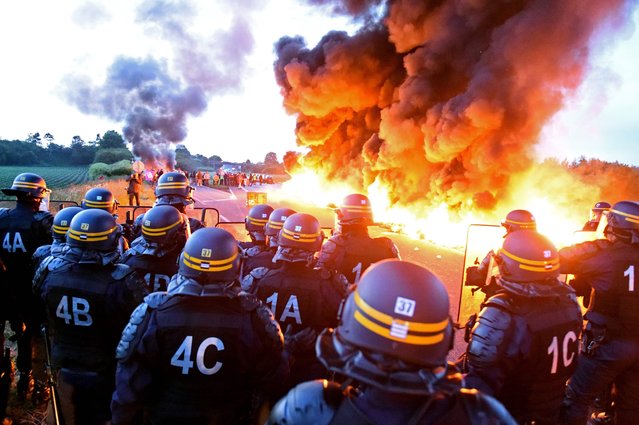
Riot police stand guard behind a fire as refinery workers hold a blockade of the oil depot of Douchy-Les-Mines to protest against the government's proposed labour reforms, on May 25, 2016. Refinery workers stepped up strikes that threaten to paralyse France weeks ahead of the Euro 2016 tournament as the government moved to break their blockades, escalating a three-month tug-of-war over labour reforms. (Photo by François L.O./AFP Photo)

Riot police stand guard behind a fire as refinery workers hold a blockade of the oil depot of Douchy-Les-Mines to protest against the government's proposed labour reforms, on May 25, 2016. Refinery workers stepped up strikes that threaten to paralyse France weeks ahead of the Euro 2016 tournament as the government moved to break their blockades, escalating a three-month tug-of-war over labour reforms. (Photo by François L.O./AFP Photo)
Details
26 May 2016 13:02:00