Dana the dog wears glasses as people watch an annular solar eclipse, in Las Horquetas, Santa Cruz, Argentina, on October 2, 2024. (Photo by Agustin Marcarian/Reuters)
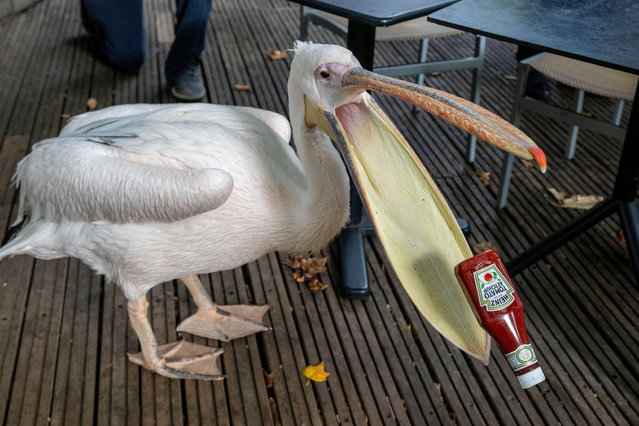
A pelican investigates a fallen ketchup bottle outside a cafe in St James’s Park in London, England on October 9, 2025. The species has lived there for hundreds of years and remain a popular sight for visitors. Introduced in 1664 as a gift from the Russian ambassador, about 40 pelicans have since made the park their home. The bottle was safely retrieved from the pelican. (Photo by Stephen Chung/Alamy Live News)
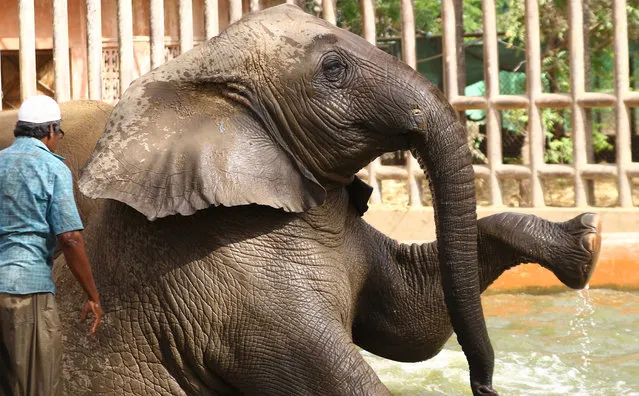
An elephant cools off at a zoo in Karachi, Pakistan, 31 March 2021. Caretakers at Karachi's zoo were working to keep animals cool during a heatwave affecting southern Pakistan. (Photo by Shahzaib Akber/EPA/EFE)
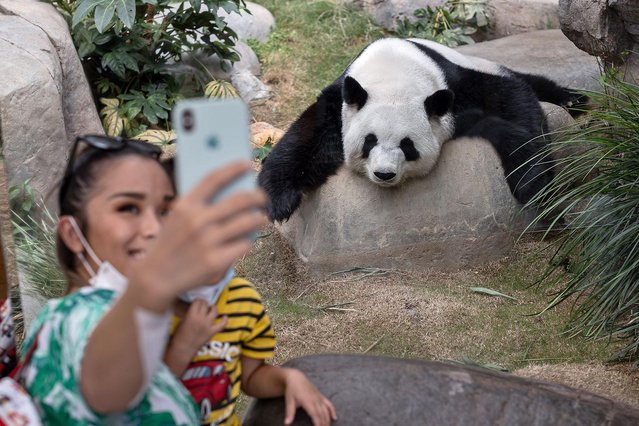
Giant panda Ying Ying rests on a rock in its enclosure while a visitor takes a selfie at Ocean Park in Hong Kong, China, 24 September 2020. An An turned 35 in August. Giant pandas in the wild can live up to 20 years on average, while lifespans of those under human care can reach over 30 years. (Photo by Jerome Favre/EPA/EFE)
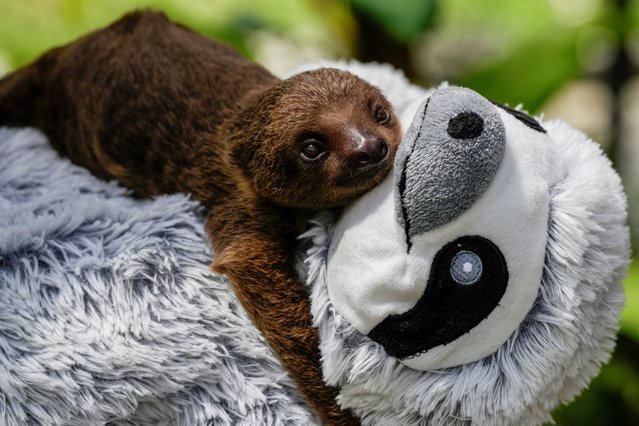
A one-and-a-half-month-old orphaned two-toed sloth clings a sloth plush toy at the Panamerican Conservation Association (APPC) during a conservation activity for International Sloth Day, in Panama City, Panama, on October 19, 2025. (Photo by Enea Lebrun/Reuters)
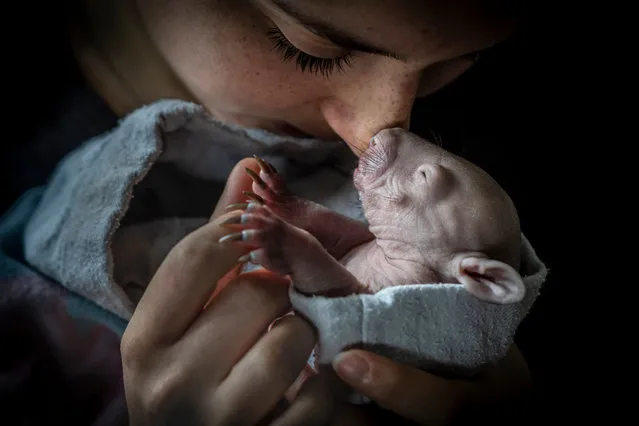
Nose to Nose; Human/Nature winner. “Doug Gimesy was documenting work at the Joey and Bat Sanctuary near Melbourne when he met a wombat (Vombatus ursinus) whose mother had been killed by a car. Gimesy watched as a young veterinary student bottle-fed the orphaned joey, then touched her nose to the joey’s in a tender moment of interspecies bonding”. (Photo by Doug Gimesy/BigPicture)
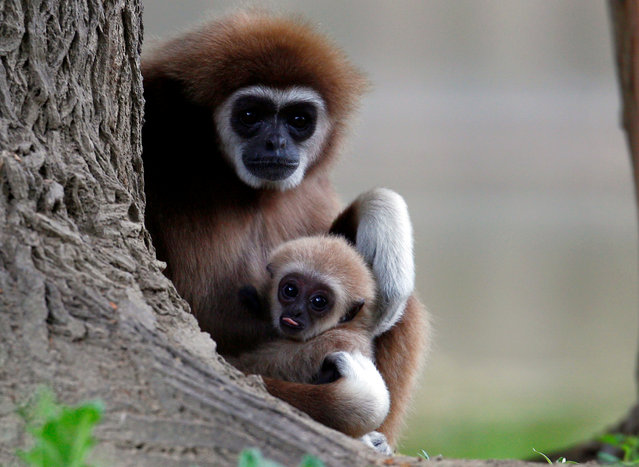
A first white-handed gibbon infant born at the Skopje Zoo is seen with his mother in Skopje, North Macedonia on May 9, 2019. (Photo by Ognen Teofilovski/Reuters)