Loading...
Done
A catholic faithful smeared in burnt oil, takes part in the opening of the ten-day celebration of the Santo Domingo de Guzman festival in Managua, on August 1, 2019. (Photo by Inti Ocon/AFP Photo)

A catholic faithful smeared in burnt oil, takes part in the opening of the ten-day celebration of the Santo Domingo de Guzman festival in Managua, on August 1, 2019. In Central America the black devil, or El Cadejo, is an evil dog-like spirit with glowing red eyes that locals believe eats new born puppies. (Photo by Inti Ocon/AFP Photo)
Details
06 Aug 2019 00:01:00
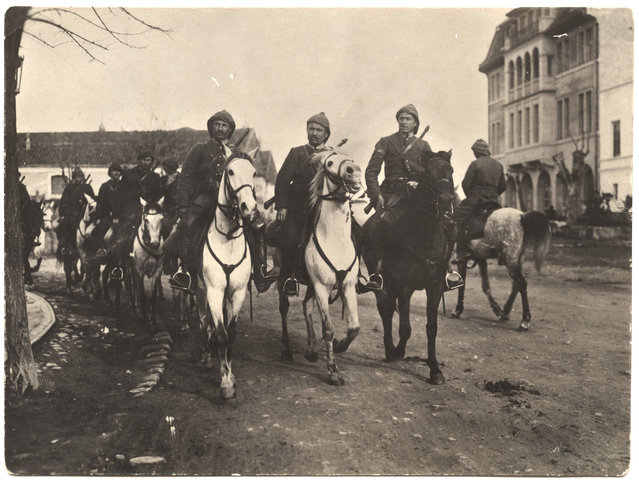
Turkish army, including cavalry, infantry and artillery. (Photo by Dr. P.A. Smithe/National World War I Museum, Kansas City, Mo.)

Dr. P.A. Smithe was sent by the American Red Cross as a doctor and surgeon to work at a hospital in Vienna. He sailed to Europe in December 1915 and returned home in August 1916, according to his daughter, who donated his images to the National World War I Museum. Photo: Turkish army, including cavalry, infantry and artillery. (Photo by Dr. P.A. Smithe/National World War I Museum, Kansas City, Mo.)
Details
29 Jul 2014 11:53:00
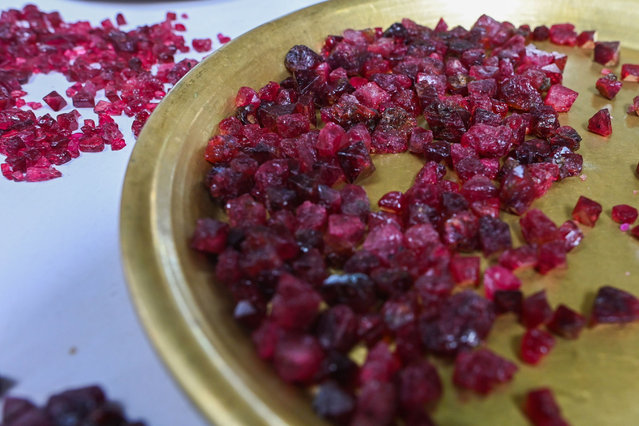
This photo taken on May 17, 2019 shows rough rubies displayed at the gems market in Mogok town, north of Mandalay. (Photo by Ye Aung Thu/AFP Photo)

This photo taken on May 17, 2019 shows rough rubies displayed at the gems market in Mogok town, north of Mandalay. Burrowing deep underground, thousands of informal miners risk their lives to find gleaming red gems as a law change spurs opportunity in Myanmar's “land of rubies”. (Photo by Ye Aung Thu/AFP Photo)
Details
29 May 2019 00:01:00
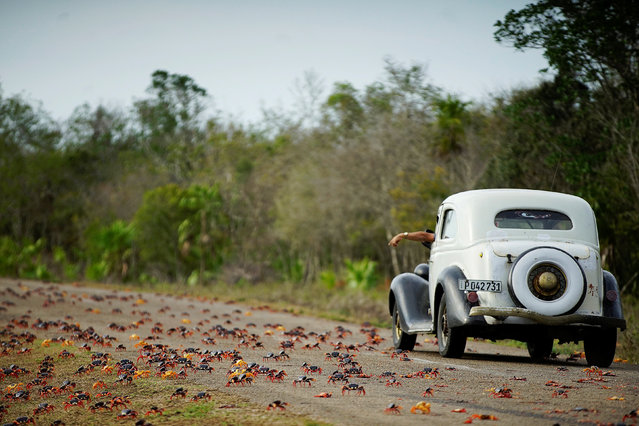
A man driving a vintage car reacts as he passes by crabs crossing a highway on their way to spawn in the sea in Playa Giron, Cuba on April 25, 2017. (Photo by Alexandre Meneghini/Reuters)

A man driving a vintage car reacts as he passes by crabs crossing a highway on their way to spawn in the sea in Playa Giron, Cuba on April 25, 2017. Each year, after the first spring rains, millions of red, yellow and black landcrabs march for days from the surrounding forests to the bay on Cuba's southern coast to spawn in the sea. (Photo by Alexandre Meneghini/Reuters)
Details
26 Apr 2017 08:40:00
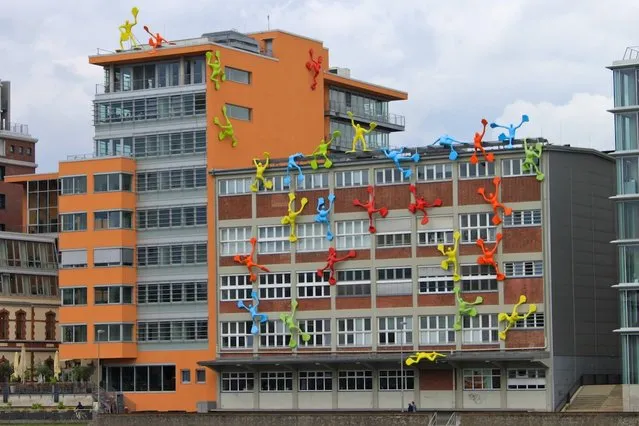
Flossis By Rosalie

Flossis by the artist Rosalie are known far beyond the boundaries of Dьsseldorf, Germany. In this city on the Rhine, the Flossis became famous. Many buildings’ outer walls are decorated with these figures. Flossis by Rosalie come in different variants of small to large and they are popular among young and old. Flossis are made of resin and resist temperatures under -15 degrees. Below that, they should be brought to the warm inside of the building. The currently most sold Flossi, is the “type I” in red, like shown in the following illustration.
Details
12 Jun 2013 12:30:00
“Ohh no :( Raining”. (Photo by Kutub Uddin)

This photo was caught on camera by amateur photographer Kutub Uddin, 27, and was taken in his back garden in Bognor Regis, West Sussex. The red-eyed tree frogs have been Mr Uddin's pets for four months and he often lets them out to roam around his garden. Photo: “Ohh no :( Raining”. (Photo by Kutub Uddin)
Details
30 Jan 2014 08:42:00


“BASE jumping, also sometimes written as B.A.S.E jumping, is an activity that employs an initially packed parachute to jump from fixed objects. “B.A.S.E.” is an acronym that stands for four categories of fixed objects from which one can jump: buildings, antennas, spans (bridges), and earth (cliffs)”. – Wikipedia

Photo: Felix Baumgartner, world-renowned B.A.S.E jumper, is pictured in this undated handout photo. Baumgartner will attempt the first unpowered crossing of the strait between England and France. (Photo by Red Bull via Getty Images)
Details
30 Jul 2011 13:06:00
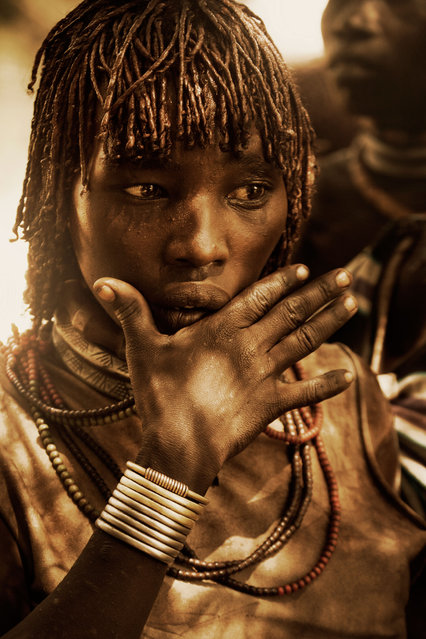
The Hamar people traditionally use red ocher clay to braid the hair of their women. (Photo by Diego Arroyo)

During his time in Ethiopia, New York-based art director and photographer Diego Arroyo spent time with the Hamar, Mursi, Dassanech, and Arbore Tribes. They, along with several others tribes, make up the 200,000 people situated in Africa’s Great Rift Valley. The people of the Omo Valley are still primarily herders and farmers, living an isolated and simple life. While they have yet to be truly touched by globalization, they could soon disappear. Their way of life is being threatened by a massive hydroelectric dam. (Photo by Diego Arroyo)
Details
13 Aug 2014 10:00:00