Loading...
Done
2016 Rio Olympics, Judo, Final, Women, 48 kg Bronze Medal Contests, Carioca Arena 2, Rio de Janeiro, Brazil on August 6, 2016. Otgontsetseg Galbadrakh (KAZ) of Kazakhstan and Dayaris Mestre Alvarez (CUB) of Cuba react. (Photo by Kai Pfaffenbach/Reuters)

2016 Rio Olympics, Judo, Final, Women, 48 kg Bronze Medal Contests, Carioca Arena 2, Rio de Janeiro, Brazil on August 6, 2016. Otgontsetseg Galbadrakh (KAZ) of Kazakhstan and Dayaris Mestre Alvarez (CUB) of Cuba react. (Photo by Kai Pfaffenbach/Reuters)
Details
07 Aug 2016 09:37:00
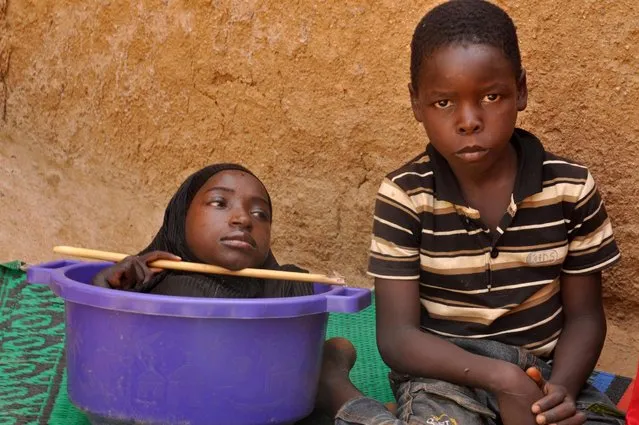
Rahma, 19, pictured with her 10-year old brother Fahad on June 21, 2016 in Kano, Nigeria. A teenage girl born without limbs lives her life in a plastic bowl. Rahma Haruna is a bright, happy girl, despite suffering from a mystery condition that stopped her arms and legs developing properly – leaving her practically limbless and in constant pain. The 19-year- old, from Kano, Nigeria, was born a healthy baby but when she turned six months old her growth came to a sudden halt and she stopped hitting key development milestones. Rahma’s family do their best to provide her with a fulfilling life and transport her around the village in a plastic bowl. Rahma said: “They help me a lot. How do they? They give me anything I need”. Rahma died on 25 December 2016. (Photo by Sani Maikatanga/Barcroft Images)


Rahma, 19 (L), pictured with her 10-year old brother Fahad on June 21, 2016 in Kano, Nigeria. A teenage girl born without limbs lives her life in a plastic bowl. Rahma Haruna is a bright, happy girl, despite suffering from a mystery condition that stopped her arms and legs developing properly – leaving her practically limbless and in constant pain. The 19-year- old, from Kano, Nigeria, was born a healthy baby but when she turned six months old her growth came to a sudden halt and she stopped hitting key development milestones. Rahma’s family do their best to provide her with a fulfilling life and transport her around the village in a plastic bowl. Rahma said: “They help me a lot. How do they? They give me anything I need”. Rahma died on 25 December 2016. (Photo by Sani Maikatanga/Barcroft Images)
Details
30 Dec 2016 10:52:00


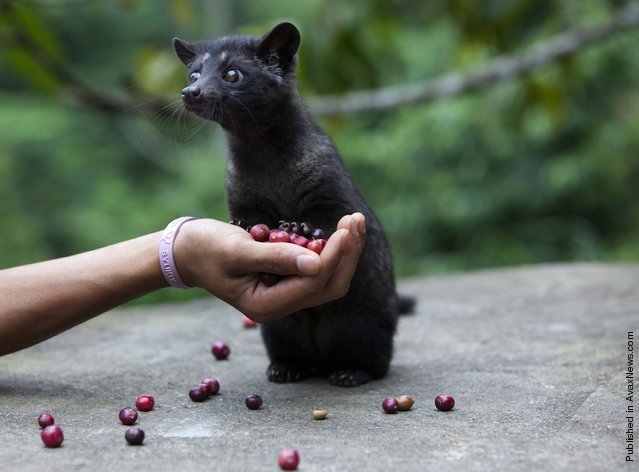
“Kopi luwak (Malay pronunciation), or civet coffee, is one of the world's most expensive and low-production coffee. It is made from the beans of coffee berries which have been eaten by the Asian Palm Civet (Paradoxurus hermaphroditus) and other related civets, then passed through its digestive tract. ...
Details
19 Mar 2011 18:41:00
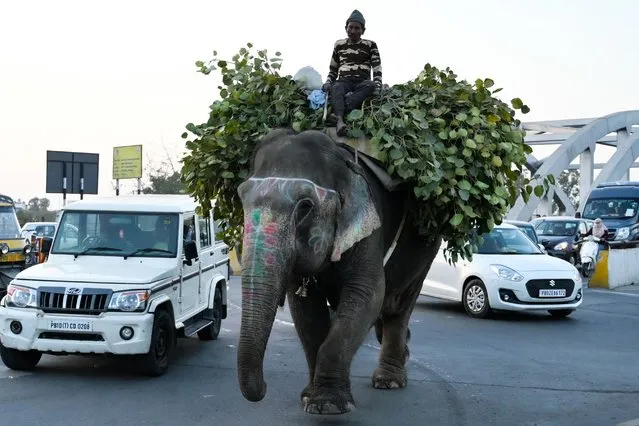
A mahout carrying leaves rides an elephant along a street in Amritsar on February 27, 2024. (Photo by Narinder Nanu/AFP Photo)

A mahout carrying leaves rides an elephant along a street in Amritsar on February 27, 2024. (Photo by Narinder Nanu/AFP Photo)
Details
12 Mar 2024 06:37:00
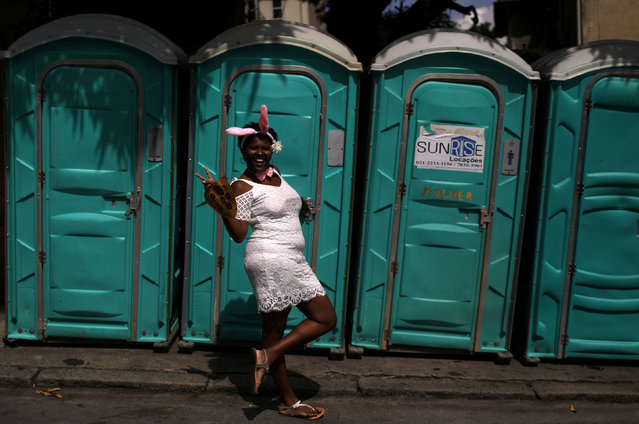
A reveller takes part in an annual block party known as “Ceu na Terra” (Heaven on Earth), during carnival festivities in Rio de Janeiro, Brazil February 3, 2018. (Photo by Pilar Olivares/Reuters)

A reveller takes part in an annual block party known as “Ceu na Terra” (Heaven on Earth), during carnival festivities in Rio de Janeiro, Brazil February 3, 2018. (Photo by Pilar Olivares/Reuters)
Details
07 Feb 2018 07:00:00
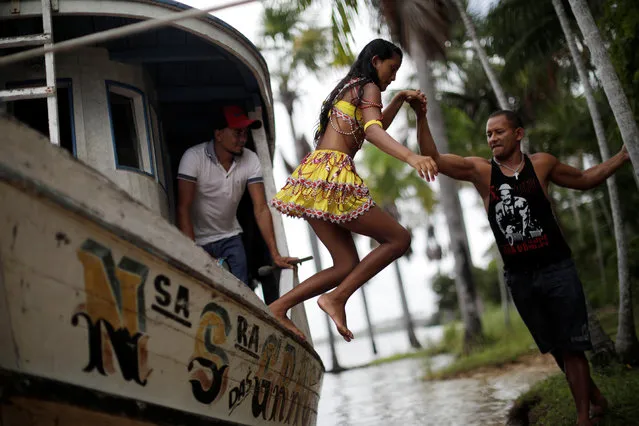
A member of the “Bloco Ultima Hora” group gets off a boat during Carnival of the Waters, where costumed and colorful boats navigate the river Tentem, around the islands near the city of Cameta, Brazil on February 8, 2018. (Photo by Ueslei Marcelino/Reuters)

A member of the “Bloco Ultima Hora” group gets off a boat during Carnival of the Waters, where costumed and colorful boats navigate the river Tentem, around the islands near the city of Cameta, Brazil on February 8, 2018. (Photo by Ueslei Marcelino/Reuters)
Details
14 Feb 2018 00:02:00
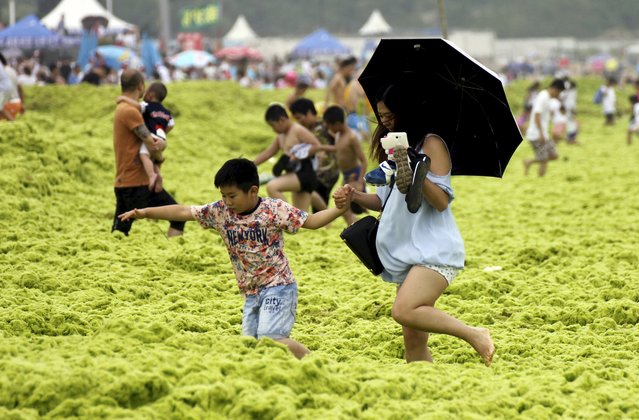
People make their way on an algae-covered beach in Qingdao, Shandong province, China, July 19, 2015. (Photo by Reuters/Stringer)

People make their way on an algae-covered beach in Qingdao, Shandong province, China, July 19, 2015. (Photo by Reuters/Stringer)
Details
20 Jul 2015 10:44:00
Galapagos – Rocking the Cradle: Four major ocean currents converge along the Galapagos archipelago, creating the conditions for an extraordinary diversity of animal life, April 25, 2016. The islands are home to at least 7,000 flora and fauna species, of which 97 percent of the reptiles, 80 percent of the land birds, 50 percent of the insects and 30 percent of the plants are endemic. The local ecosystem is highly sensitive to the changes in temperature, rainfall and ocean currents that characterize the climatic events known as El Niño and La Niña. These changes cause marked fluctuations in weather and food availability. Many scientists expect the frequency of El Niño and La Niña to increase as a result of climate change, making the Galapagos a possible early-warning location for its effects. (Photo by Thomas P. Peschak for National Geographic/World Press Photo)

Galapagos – Rocking the Cradle: Four major ocean currents converge along the Galapagos archipelago, creating the conditions for an extraordinary diversity of animal life, April 25, 2016. The islands are home to at least 7,000 flora and fauna species, of which 97 percent of the reptiles, 80 percent of the land birds, 50 percent of the insects and 30 percent of the plants are endemic. (Photo by Thomas P. Peschak for National Geographic/World Press Photo)
Details
16 Apr 2018 00:01:00