Loading...
Done
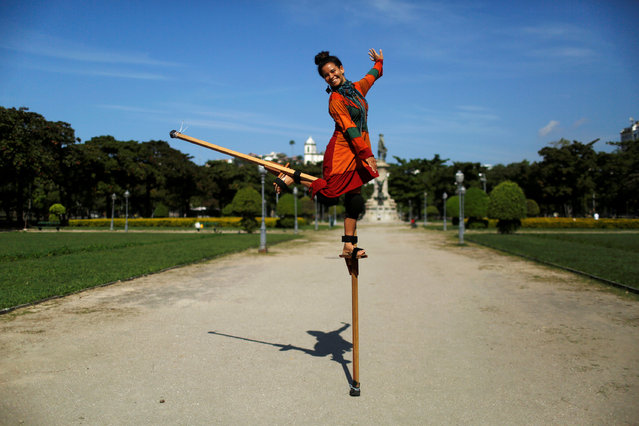
Raquel Poti, a 32-year-old street artist, poses at a park in Rio de Janeiro, Brazil, June 25, 2016. Raquel thinks the Olympics promotes a lifestyle that combines sports, culture and education. She is concerned about the large investment for the event while the population needs improvements in basic services. (Photo by Pilar Olivares/Reuters)

Just a week before Rio de Janeiro hosts South America's first Olympics, city residents expressed mixed feelings about the cost and security of the Games, while holding out hope they will bring joy to a nation facing economic and political crises. The conflicted thoughts mirror a recent survey by the Datafolha polling group showing that half of Brazilians were opposed to holding the Games, while 63 percent think the costs of hosting the event will outweigh benefits. (Photo by Pilar Olivares/Reuters)
Details
03 Aug 2016 11:51:00
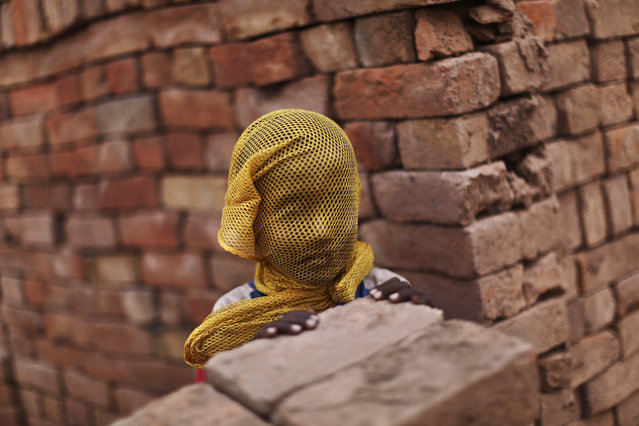
A Pakistani boy who lives near by a brick factory, covers his face with a scarf to avoid a sand storm, on the outskirts of Islamabad, Pakistan, Wednesday, June 6, 2012. (Photo by Muhammed Muheisen/AP Photo)

“Muhammed’s work has received many international awards, among others Breaking News Pulitzer Prize of 2005 for covering war in Iraq, POYI, Picture of the year 2007, of Saudi Arabia of the Annual Muslim pilgrimage, best Multimedia of the Annual Israeli photo contest of 2007, honorable mention Atlanta photojournalism seminar of 2008 and photo of the year of the Annual Israeli photo contest of 2008 with two first prizes and two second prizes in different categories, two prizes in the Atlanta photojournalism seminar of 2009, 6 prizes in the Annual Israeli photo contest of 2009”. – Associated Press
Details
11 Aug 2014 11:22:00
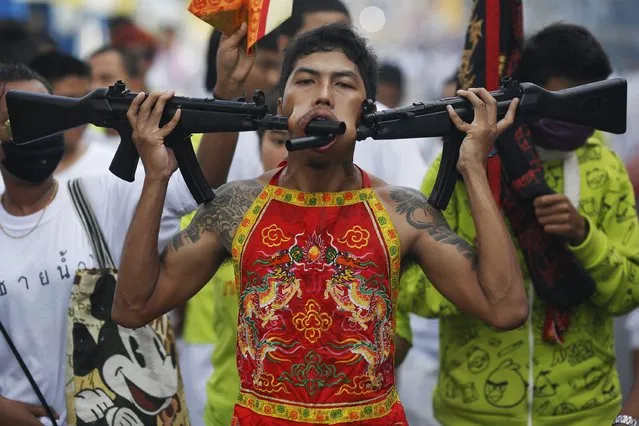
A devotee of the Chinese Bang Neow Shrine, with two plastic guns pierced through his cheeks, takes part in a street procession celebrating the annual vegetarian festival in Phuket September 29, 2014. (Photo by Damir Sagolj/Reuters)

A devotee of the Chinese Bang Neow Shrine, with two plastic guns pierced through his cheeks, takes part in a street procession celebrating the annual vegetarian festival in Phuket September 29, 2014. The festival, featuring face-piercing, spirit mediums and strict vegetarianism celebrates the local Chinese community's belief that abstinence from meat and various stimulants during the ninth lunar month of the Chinese calendar will help them obtain good health and peace of mind. (Photo by Damir Sagolj/Reuters)
Details
29 Sep 2014 10:36:00
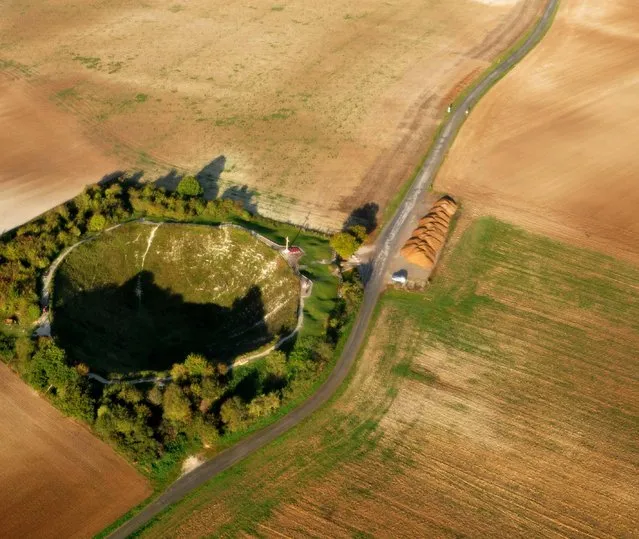
Lochnagar Crater Somme In France

It is amazing how much the humanity can change the face of the earth. Not only can it create huge craters, which look a lot like craters from meteors, they leave a big enough impact that it can be seen from space. Though this crater, caused by a massive explosion on 1 July 1916, looks large, being 90 feet deep and 300 feet across; it is nowhere big enough to be viewed for space. A common misconception is that the Great Wall of China can be seen from space. In reality, however, it is impossible. Not only is it of the same color as the earth near it, it is also not that wide. Deforestation, on the other hand, can be clearly seen from space. Also, at night, all the lights that the large cities produce are also very visible.
Details
17 Nov 2014 12:48:00
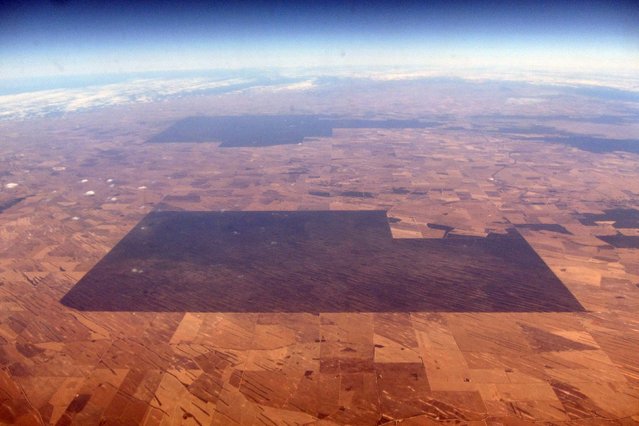
An area of vegetation can be seen amongst drought effected farmland in South Australia, November 12, 2015. (Photo by David Gray/Reuters)

An area of vegetation can be seen amongst drought effected farmland in South Australia, November 12, 2015. A pioneering Australian scheme to improve the management of water in the world's driest inhabited continent is facing its first real test as an intensifying El Nino threatens crops and builds tensions between farmers and environmentalists. An El Nino, a warming of sea-surface temperatures in the Pacific, is already causing drought and other extreme weather, affecting millions of people across parts of the world, and experts warn that the intensifying weather pattern could emerge as one of the strongest on record. (Photo by David Gray/Reuters)
Details
15 Nov 2015 08:01:00
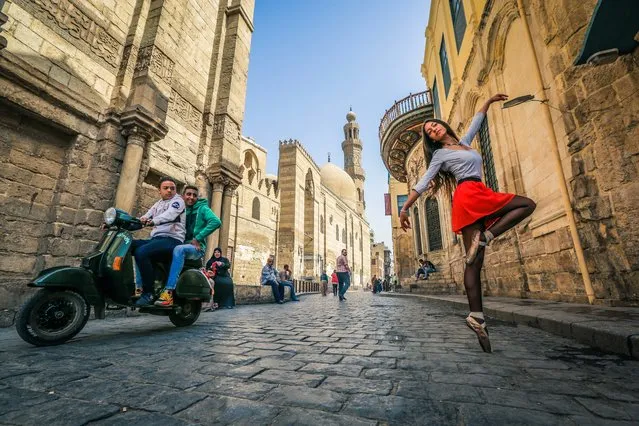
In his series “Ballerinas of Cairo”, photographer Mohamed Taher documents Egyptian dancers making the city streets their stage – pirouetting, leaping and posing their way through their country’s sprawling capital. The photos are, at first glance, stunning snapshots of a city’s vibrant culture in motion. But considering the dangers Egyptian women face for roaming these same streets on a daily basis, their impact is far deeper. Sexual harassment continues to present not just a possibility but a terrifying reality in present-day Egypt. A 2013 United Nations report calculated that 99.3 percent of women in the country have experienced sexual harassment on the streets, a problem that’s sparked initiatives giving women a way to fight back. The violence is rooted in an extreme conservative perspective encouraging women to stay in the home. (Photo by Mohamed Taher/Ballerinas of Cairo)

In his series “Ballerinas of Cairo”, photographer Mohamed Taher documents Egyptian dancers making the city streets their stage – pirouetting, leaping and posing their way through their country’s sprawling capital. The photos are, at first glance, stunning snapshots of a city’s vibrant culture in motion. (Photo by Mohamed Taher/Ballerinas of Cairo)
Details
17 Jan 2017 12:30:00
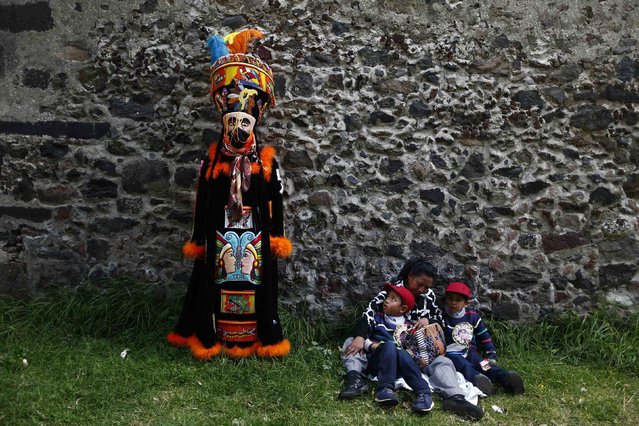
A boy sitting with his family looks up at a traditional Chinelo costumed dancer during a celebration 40 days after the birth of Jesus, in Xochimilco on the outskirts of Mexico City, February 2, 2015. (Photo by Edgard Garrido/Reuters)

A boy sitting with his family looks up at a traditional Chinelo costumed dancer during a celebration 40 days after the birth of Jesus, in Xochimilco on the outskirts of Mexico City, February 2, 2015. The tradition of the Chinelo dates back to colonial times and the outfits and masks, which are supposed to resemble the faces of the Europeans and always sport an uptilted beard, became more elaborate between the 1800s and 1900s to make fun of the upper social classes. (Photo by Edgard Garrido/Reuters)
Details
03 Feb 2015 13:09:00
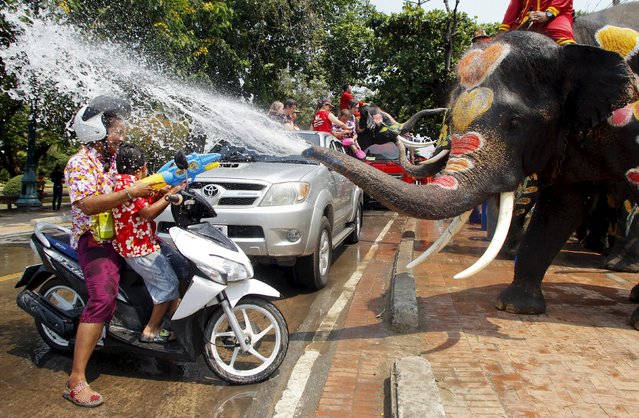
Elephants spray villagers with water in celebration of the Songkran water festival in Thailand's Ayutthaya province, north of Bangkok, April 10, 2015. (Photo by Chaiwat Subprasom/Reuters)

Elephants spray villagers with water in celebration of the Songkran water festival in Thailand's Ayutthaya province, north of Bangkok, April 10, 2015. The annual elephant Songkran is held to promote the tourism industry prior the Songkran Festival which is celebrated with splashing water and putting powder on each others faces as a symbolic sign of cleansing and washing away the sins from the old year. (Photo by Chaiwat Subprasom/Reuters)
Details
11 Apr 2015 10:37:00