Loading...
Done
Silver medalist Vivian Jepkemoi Cheruiyot of Kenya and gold medalist Almaz Ayana (R) of Ethiopia during the medal ceremony for the women's 10000m final of the Rio 2016 Olympic Games Athletics, Track and Field events at the Olympic Stadium in Rio de Janeiro, Brazil, 12 August 2016. (Photo by Sergei Ilnitsky/EPA)

Silver medalist Vivian Jepkemoi Cheruiyot of Kenya and gold medalist Almaz Ayana (R) of Ethiopia during the medal ceremony for the women's 10000m final of the Rio 2016 Olympic Games Athletics, Track and Field events at the Olympic Stadium in Rio de Janeiro, Brazil, 12 August 2016. (Photo by Sergei Ilnitsky/EPA)
Details
13 Aug 2016 11:28:00
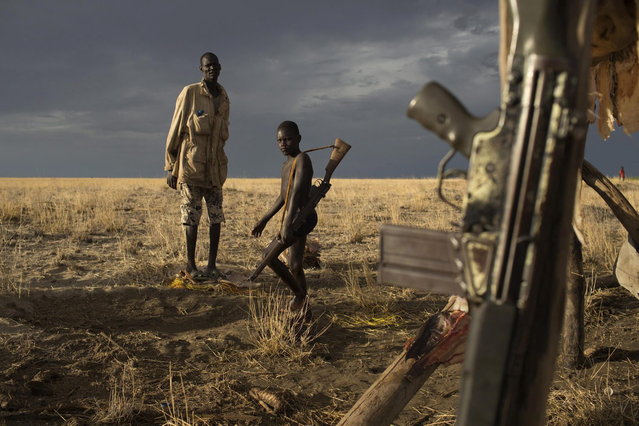
A Turkana man and a boy carrying a gun look on as a G3 battle rifle hangs from a structure used to dry fish at a fishing camp on the shores of Lake Turkana, some kilometres from Todonyang near the Kenya-Ethiopia border in northwestern Kenya October 12, 2013. (Photo by Siegfried Modola/Reuters)

A Turkana man and a boy carrying a gun look on as a G3 battle rifle hangs from a structure used to dry fish at a fishing camp on the shores of Lake Turkana, some kilometres from Todonyang near the Kenya-Ethiopia border in northwestern Kenya October 12, 2013The Turkana are traditionally nomadic pastoralists, but they have seen the pasture that they need to feed their herds suffer from recurring droughts and many have turned to fishing. However, Lake Turkana is overfished, and scarcity of food and pastureland is fuelling long-standing conflict with Ethiopian indigenous Dhaasanac, who have seen grazing grounds squeezed by large-scale government agricultural schemes in southern Ethiopia. The Dhaasanac now venture ever deeper into Kenyan territory in search of fish and grass, clashing with neighbours. Fighting between the communities has a long history, but the conflict has become ever more fatal as automatic weapons from other regional conflicts seep into the area. While the Turkana region is short of basics like grass and ground-water, it contains other resources including oil reserves and massive, newly discovered underground aquifers. (Photo by Siegfried Modola/Reuters)

Details
05 Dec 2013 12:08:00
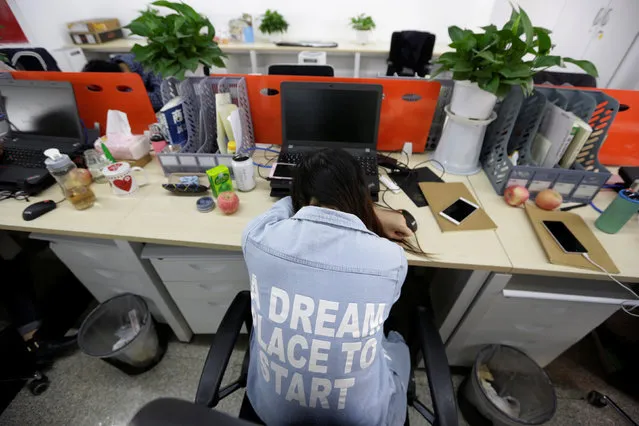
Yang Juan, an employee at Goopal Group, takes a nap in her seat after lunch, in Beijing, China, April 21, 2016. (Photo by Jason Lee/Reuters)

Yang Juan, an employee at Goopal Group, takes a nap in her seat after lunch, in Beijing, China, April 21, 2016. Office workers sleeping on the job is a common sight in China, where a surplus of cheap labour can lead to downtime at work. But in China's technology sector, where business is growing faster than many start-up firms can hire new staff, workers burn the midnight oil to meet deadlines and compete with their rivals. Some companies provide sleeping areas and beds for workers to rest during late nights. (Photo by Jason Lee/Reuters)
Details
12 May 2016 14:53:00
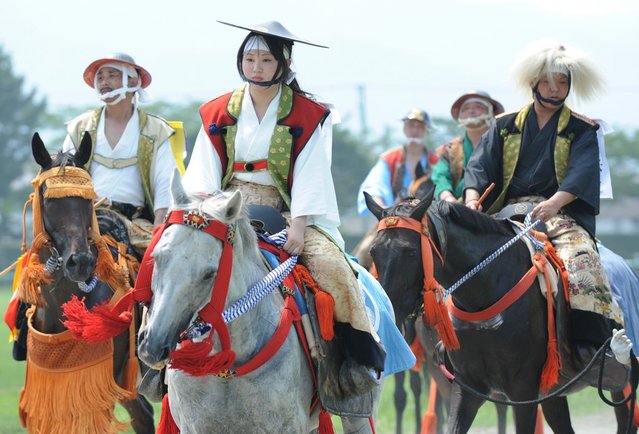
A young woman (C) clad in samurai costume leads other local poeple as she rides her horse during a parade at the annual Soma Nomaoi festival in Minamisoma, Fukushima Prefecture, on July 28, 2012.  The traditional full-scale festival kicked off for the first time after the accident of the Fukushima Dai-ichi Nuclear Power Plant following the massive earthquake and the tsunami on March 11, 2011. (Photo by Toru Yamanaka/AFP Photo)

Soma-Nomaoi is a festival that recreates a battle scene from more than 1,000 years ago. It is annually held for 4 days from July 22 to 25 in Haramachi City, Fukushima Prefecture, in the eastern part of Japan. In this historical event, 600 mounted samurai in traditional Japanese armor, with long swords at their side and ancestral flagstaffs streaming from their backs, ride across open fields. Soma-Nomaoi has been designated an Important Intangible Folk Cultural Property.

Photo: A young woman (C) clad in samurai costume leads other local poeple as she rides her horse during a parade at the annual Soma Nomaoi festival in Minamisoma, Fukushima Prefecture, on July 28, 2012. The traditional full-scale festival kicked off for the first time after the accident of the Fukushima Dai-ichi Nuclear Power Plant following the massive earthquake and the tsunami on March 11, 2011. (Photo by Toru Yamanaka/AFP Photo)
Details
02 Aug 2012 12:59:00
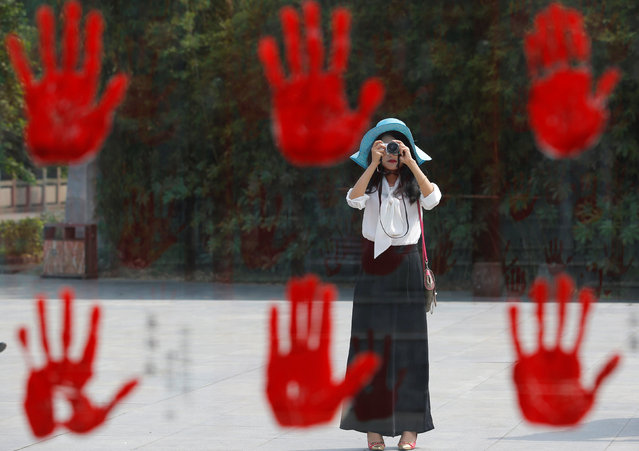
A visitor takes a picture of a display bearing hand prints of war heroes from the War of Resistance against Japan, at Jianchuan Museum Cluster in Anren, Sichuan Province, China, May 13, 2016. (Photo by Kim Kyung-Hoon/Reuters)

A visitor takes a picture of a display bearing hand prints of war heroes from the War of Resistance against Japan, at Jianchuan Museum Cluster in Anren, Sichuan Province, China, May 13, 2016. Tucked away in southwestern China's Sichuan province, a private collector stands virtually alone in exhibiting relics from the 1966-1976 Cultural Revolution. Monday marks the 50th anniversary of the start of the political movement, with no official commemorations planned. Official records whitewash the details of both periods, but admit that Mao made major mistakes. (Photo by Kim Kyung-Hoon/Reuters)
Details
16 May 2016 10:49:00
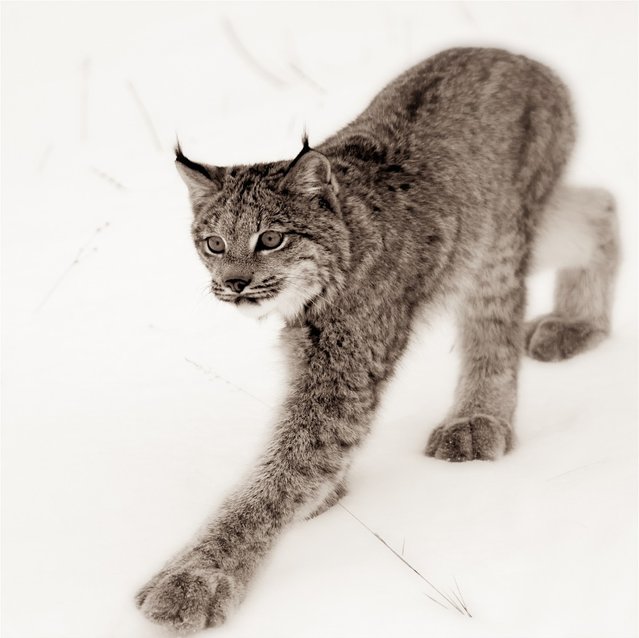
“Keep On Trucking, Mr. Lynx!”. Canadian Lynx Study.

“Keep On Trucking, Mr. Lynx!”. Canadian Lynx Study. (Photo by Josef)


Details
09 Nov 2012 11:39:00


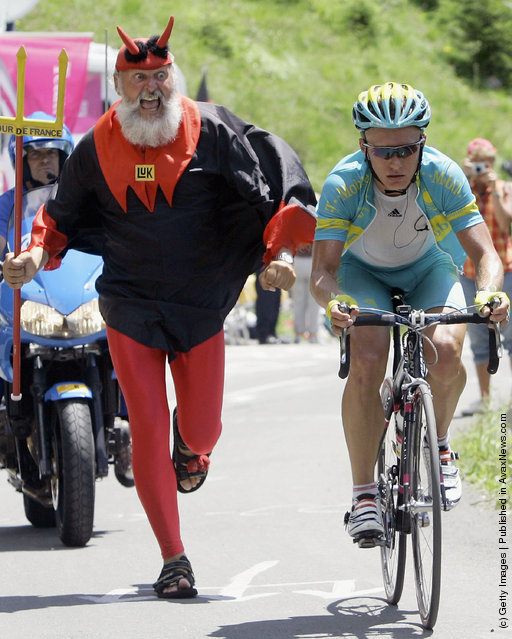
Alexandre Vinokourov of Kazakhstan from the T-Mobile Team is chased by eccentric german inventor Didi Senft dressed as the red devil during the stage 16 of the 92nd Tour de France between Mourenx and Pau on July 19, 2005, France. (Photo by Friedemann Vogel/Bongarts/Getty Images)
Details
25 Mar 2011 14:16:00
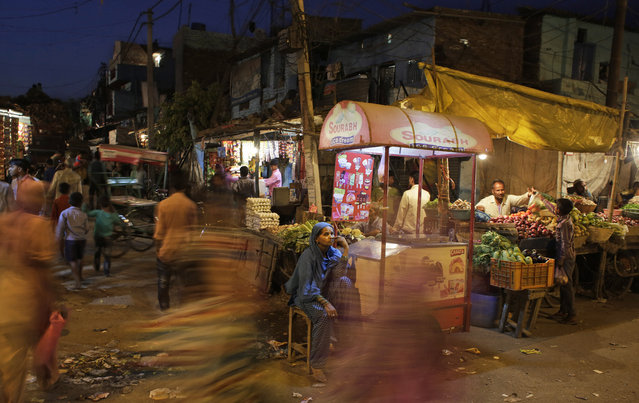
A roadside ice-cream vendor waits for customers at a market in New Delhi, India, April 7, 2016. The Indian economy is characterized by the existence of a vast majority of informal or unorganized labor employment. (Photo by Altaf Qadri/AP Photo)

A roadside ice-cream vendor waits for customers at a market in New Delhi, India, April 7, 2016. The Indian economy is characterized by the existence of a vast majority of informal or unorganized labor employment. (Photo by Altaf Qadri/AP Photo)
Details
10 Apr 2016 10:34:00