A woman photographs a Norwegian spruce Christmas tree from Oslo after it was lit at Trafalgar Square in central London, December 4, 2014. (Photo by Toby Melville/Reuters)
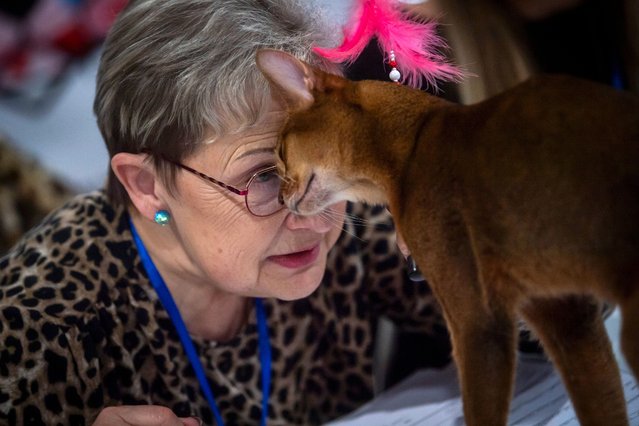
An Abyssinian cat befriends a judge during a two-day international cat exhibition organized by the World Cat Federation (WCF) in Budapest, Hungary, 18 January 2025. (Photo by Zoltán Balogh/EPA/EFE)
Yaroslava Mahuchikh, of Ukraine, competes in the women's high jump competition at the Wanda Diamond League Final 2025 athletics meeting in Zurich, Switzerland, Wednesday, August 27, 2025. (Photo by Til Buergy/Keystone via AP Photo)
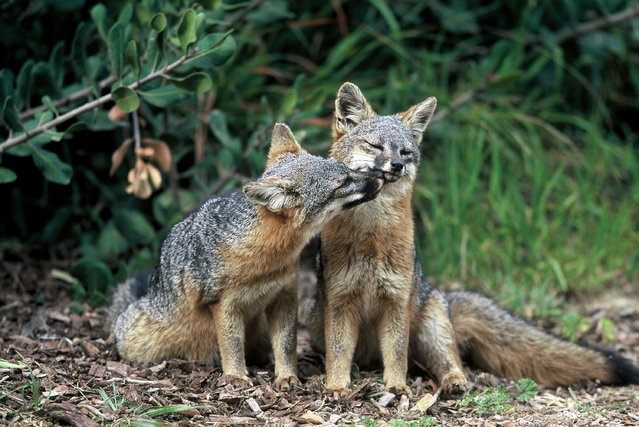
This undated photo provided by the U.S. Fish and Wildlife Service shows two island foxes in Channel Islands National Park, Calif. Three fox subspecies native to California's Channel Islands were removed from the list of endangered species Thursday, August 11, 2016, in what federal officials have called the fastest recovery of any mammal listed under the Endangered Species Act. (Photo by Chuck Graham/U.S. Fish and Wildlife Service via AP Photo)
Miss Nord-Pas-de-Calais Camille Cerf (C) is congratulated by Miss Ile de France 2014 Margaux Savary (L) and Miss Auvergne 2014 Morgane Laporte after Cerf won the Miss France 2015 beauty contest on December 6, 2014 in Orleans. (Photo by Guillaume Souvant/AFP Photo)
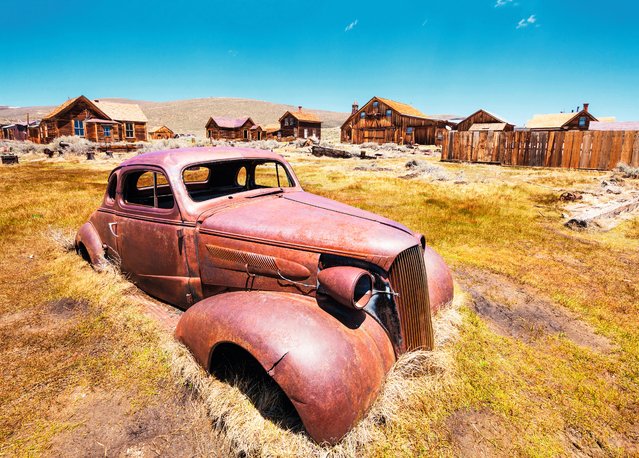
Kieron Connolly’s new book of photographs of more than 100 once-busy and often elegant buildings gives an idea of how the world might look if humankind disappeared. Here: Bodie, Mono County, California. Gold was discovered at Bodie in 1859 (just after the initial California gold rush) and it went from mining camp to boomtown. Its decline began in 1880, when word spread of new boomtowns elsewhere. The Standard Consolidated Mine closed in 1913, and four years later the Bodie Railway was abandoned. By 1940 the population was down to 40. Today, Bodie is maintained in a state of arrested decay as a visitor attraction. (Photo by Alamy Stock Photo)