Loading...
Done
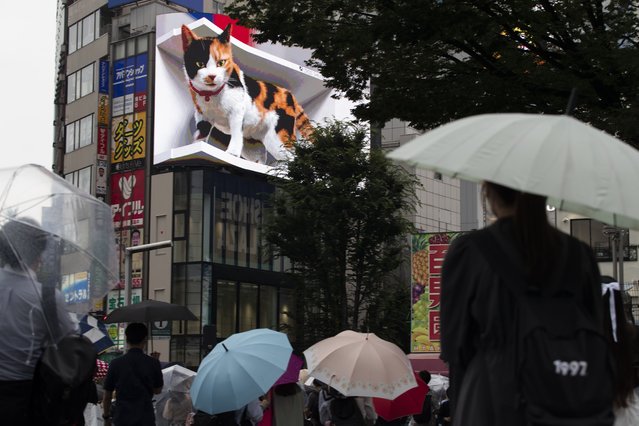
People walk by a 3D video advertisement display of a giant cat that was recently installed in the famed Shinjuku shopping district in Tokyo on Friday, July 9, 2021. (Photo by Hiro Komae/AP Photo)

People walk by a 3D video advertisement display of a giant cat that was recently installed in the famed Shinjuku shopping district in Tokyo on Friday, July 9, 2021. (Photo by Hiro Komae/AP Photo)
Details
21 Jul 2021 09:02:00
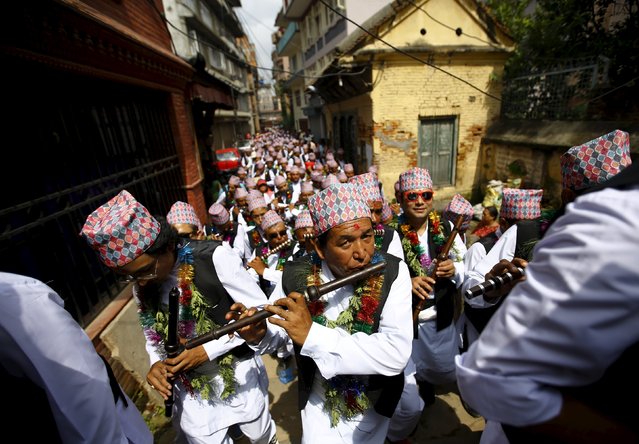
Devotees in traditional attire play flutes as they take part in a parade commemorating the Neku Jatra-Mataya festival, the Festival of Lights, in Lalitpur, Nepal August 31, 2015. Devotees celebrate the Buddhist festival which marks the victory of Sakyamuni Buddha over Mara, by praying for the souls of departed family members and holding parades throughout the city. (Photo by Navesh Chitrakar/Reuters)

Devotees in traditional attire play flutes as they take part in a parade commemorating the Neku Jatra-Mataya festival, the Festival of Lights, in Lalitpur, Nepal August 31, 2015. Devotees celebrate the Buddhist festival which marks the victory of Sakyamuni Buddha over Mara, by praying for the souls of departed family members and holding parades throughout the city. (Photo by Navesh Chitrakar/Reuters)
Details
18 Nov 2015 08:01:00
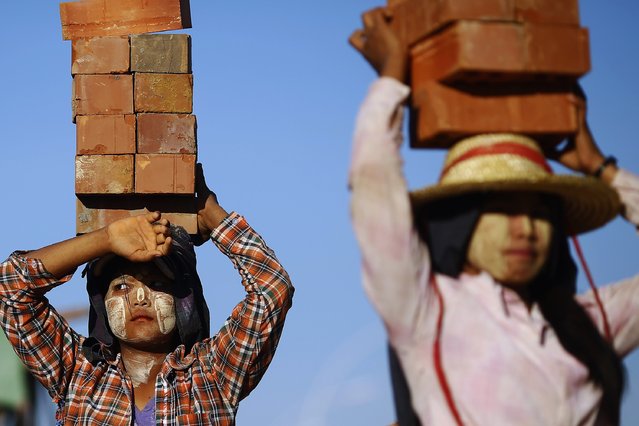
Construction workers carry bricks on their heads near the country's parliament building in Naypyitaw November 11, 2014. Yangon lost its status as Myanmar's capital in 2005, after the former military junta carved a new seat of government from a parched wilderness some 380 km (236 miles) to the north and called it Naypyitaw (“Abode of Kings”). (Photo by Damir Sagolj/Reuters)

Construction workers carry bricks on their heads near the country's parliament building in Naypyitaw November 11, 2014. Yangon lost its status as Myanmar's capital in 2005, after the former military junta carved a new seat of government from a parched wilderness some 380 km (236 miles) to the north and called it Naypyitaw (“Abode of Kings”). (Photo by Damir Sagolj/Reuters)
Details
15 Nov 2014 12:29:00
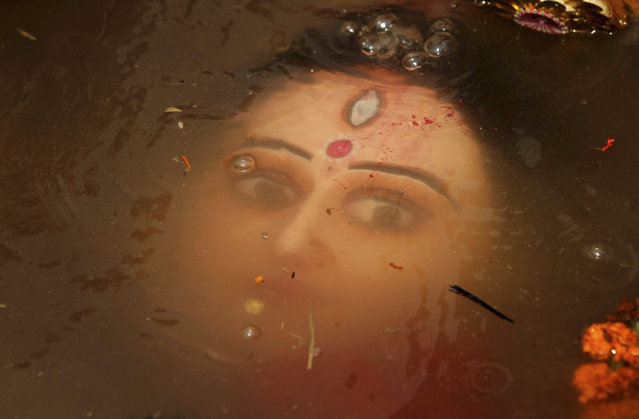
An idol of Hindu goddess Durga floats in water as devotees immerse the same in the River Kuakhai after the Durga Puja festival in Bhubaneswar, India, Saturday, October 24, 2015. The immersion of idols marks the end of the festival that commemorates the slaying of a demon king by lion-riding, 10-armed goddess Durga, marking the triumph of good over evil. (Photo by Biswaranjan Rout/AP Photo)

An idol of Hindu goddess Durga floats in water as devotees immerse the same in the River Kuakhai after the Durga Puja festival in Bhubaneswar, India, Saturday, October 24, 2015. The immersion of idols marks the end of the festival that commemorates the slaying of a demon king by lion-riding, 10-armed goddess Durga, marking the triumph of good over evil. (Photo by Biswaranjan Rout/AP Photo)
Details
26 Oct 2015 08:04:00
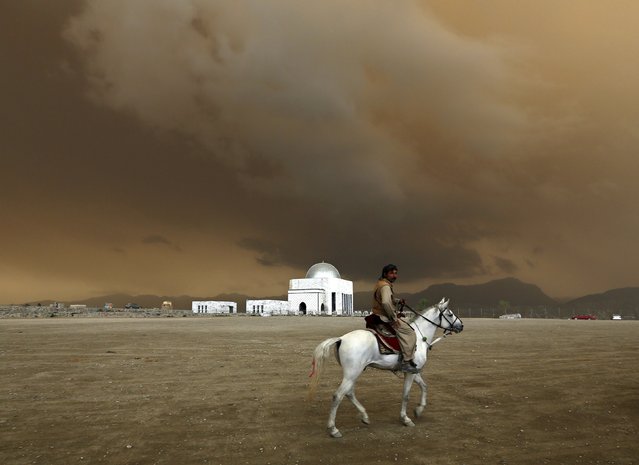
A man rides a horse at a playground on a hill in Kabul April 19, 2015. (Photo by Mohammad Ismail/Reuters)

A man rides a horse at a playground on a hill in Kabul April 19, 2015. (Photo by Mohammad Ismail/Reuters)
Details
21 Apr 2015 10:46:00
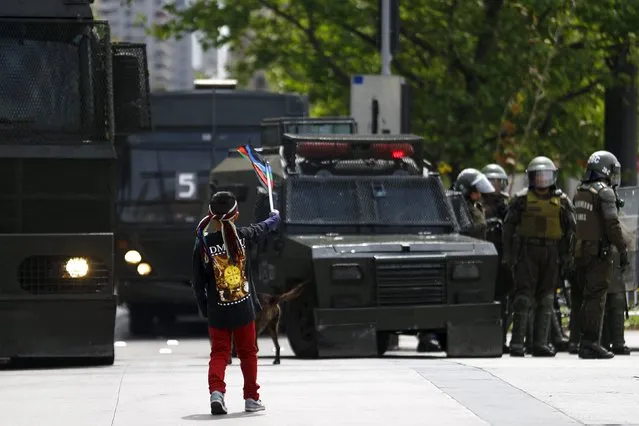
A Mapuche Indian child waves a Mapuche people flag during a protest march by Mapuche Indian activists against Columbus Day in downtown Santiago, Chile, October 12, 2015. (Photo by Ivan Alvarado/Reuters)

A Mapuche Indian child waves a Mapuche people flag during a protest march by Mapuche Indian activists against Columbus Day in downtown Santiago, Chile, October 12, 2015. (Photo by Ivan Alvarado/Reuters)
Details
15 Oct 2015 08:00:00
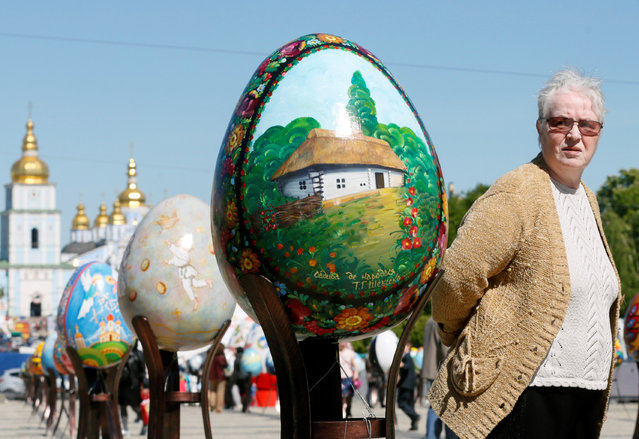
A woman looks at traditional Ukrainian Easter eggs “Pysanka”, installed as part of the upcoming celebrations of Easter, in central Kiev, Ukraine, April 29, 2016. A pysanka is a Ukrainian Easter egg, decorated with traditional Ukrainian folk designs using a wax-resist (batik) method. The word pysanka comes from the verb pysaty, “to write”, as the designs are not painted on, but written with beeswax. Many other eastern European ethnic groups decorate eggs using wax resist for Easter. These include the Belarusians, Bulgarians, Croats, Czechs, Hungarians, Lithuanians, Poles, Romanians, Serbs, Slovaks, Slovenes and Sorbs. (Photo by Valentyn Ogirenko/Reuters)

A woman looks at traditional Ukrainian Easter eggs “Pysanka”, installed as part of the upcoming celebrations of Easter, in central Kiev, Ukraine, April 29, 2016. A pysanka is a Ukrainian Easter egg, decorated with traditional Ukrainian folk designs using a wax-resist (batik) method. The word pysanka comes from the verb pysaty, “to write”, as the designs are not painted on, but written with beeswax. Many other eastern European ethnic groups decorate eggs using wax resist for Easter. These include the Belarusians, Bulgarians, Croats, Czechs, Hungarians, Lithuanians, Poles, Romanians, Serbs, Slovaks, Slovenes and Sorbs. (Photo by Valentyn Ogirenko/Reuters)
Details
30 Apr 2016 09:00:00
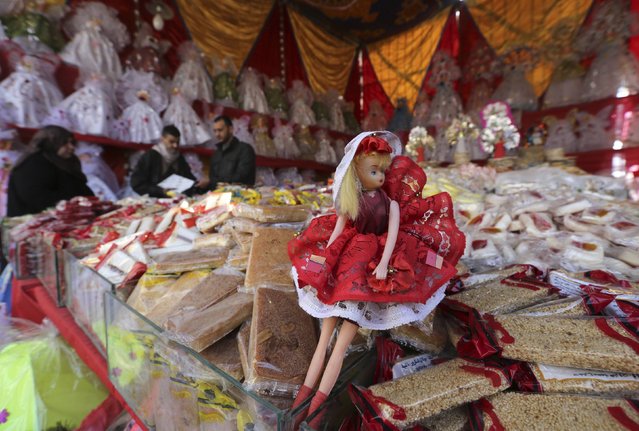
A man sells traditional doll toys and sweets for children to celebrate the birthday of prophet Muhammad, also known as “mawlid al nabi”, which will fall next week, in a makeshift tent in Cairo, December 30, 2014. (Photo by Mohamed Abd El Ghany/Reuters)

A man sells traditional doll toys and sweets for children to celebrate the birthday of prophet Muhammad, also known as “mawlid al nabi”, which will fall next week, in a makeshift tent in Cairo, December 30, 2014. (Photo by Mohamed Abd El Ghany/Reuters)
Details
31 Dec 2014 14:21:00