Loading...
Done
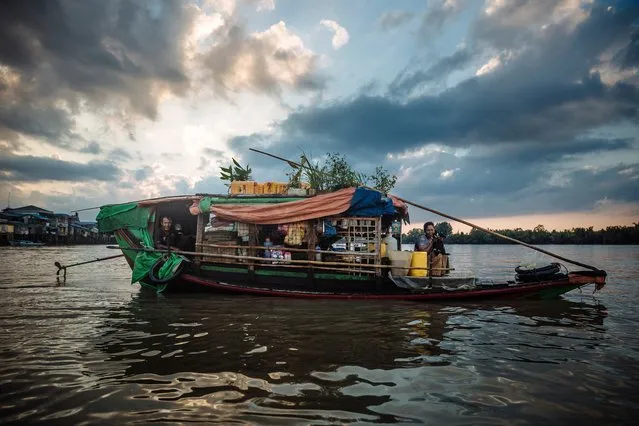
Tin and Naing win live on a small boat which they sail throughout the Delta region in Myanmar. The former gardeners once had a home on land but it was destroyed when a powerful cyclone ravaged the area in 2008. Since then, the couple have not been able to afford to rebuild their home, so they live on the boat from which they sell fish paste to make a living. (Photo by Muse Mohammed/IOM)

The ferocity of crises worldwide is forcing a record number of people to flee their homes, seeking some form of safety within their own country or across international borders. There are 65.3 million displaced people worldwide, including 21.3 million refugees. Most have lost their homes to armed conflict or natural disasters but other factors, such as extreme poverty and climate change, also drive displacement. The International Organisation for Migration commissioned photojournalist Muse Mohammed to document the plight of the displaced. (Photo by Muse Mohammed/IOM)
Details
02 Jan 2017 12:04:00
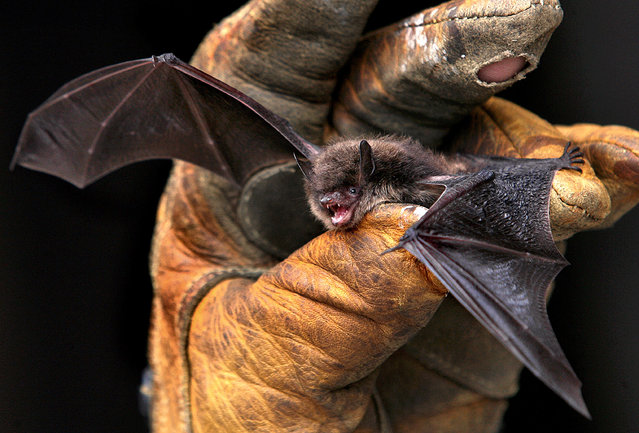
In this September 17, 2010 file photo a little brown bat is photographed in La Crosse Wis. Researchers for the first time found that little brown bats appear to be showing resistance to white-nose syndrome, which has killed millions of bats across North America. (Photo by Peter Thomson/La Crosse Tribune via AP Photo)

In this September 17, 2010 file photo a little brown bat is photographed in La Crosse Wis. Researchers for the first time found that little brown bats appear to be showing resistance to white-nose syndrome, which has killed millions of bats across North America. (Photo by Peter Thomson/La Crosse Tribune via AP Photo)
Details
13 Jan 2017 08:48:00
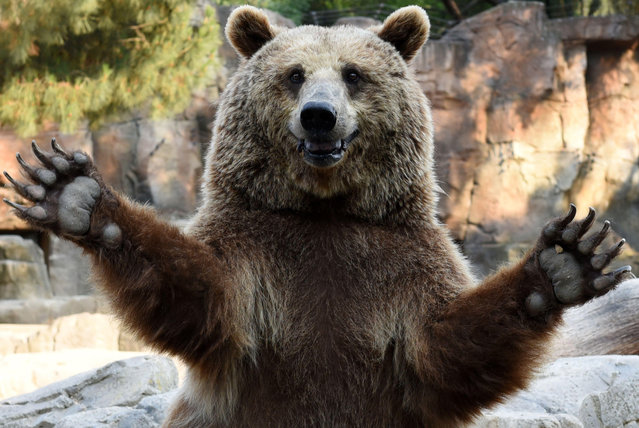
A brown bear waits for food at the zoo in Madrid, Spain on July 30, 2016. (Photo by Jorge Sanz/Pacific Press/SIPA Press/Rex Features/Shutterstock)

A brown bear waits for food at the zoo in Madrid, Spain on July 30, 2016. (Photo by Jorge Sanz/Pacific Press/SIPA Press/Rex Features/Shutterstock)
Details
31 Jul 2016 10:57:00
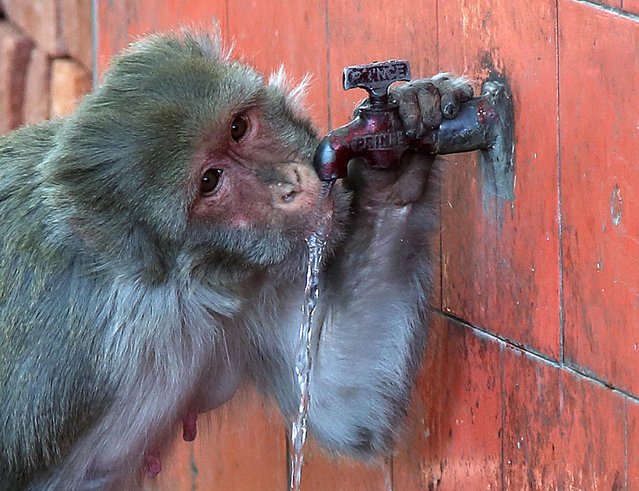
A monkey drinks water from a tap on a hot afternoon in Jammu, the winter capital Kashmir, India, 17 May 2016. Temperatures of around 42 degrees Celsius were forecast in the region. According to the news reports the Indian government decided to divert water by its river interlinking plans from rivers like Brahmaputra and the Ganges towards those rivers facing the drought likesituation . Many Indian states have been affected by drought and have been hit hard by water scarcity. (Photo by Jaipal Singh/EPA)

A monkey drinks water from a tap on a hot afternoon in Jammu, the winter capital Kashmir, India, 17 May 2016. Temperatures of around 42 degrees Celsius were forecast in the region. According to the news reports the Indian government decided to divert water by its river interlinking plans from rivers like Brahmaputra and the Ganges towards those rivers facing the drought likesituation . Many Indian states have been affected by drought and have been hit hard by water scarcity. (Photo by Jaipal Singh/EPA)
Details
22 May 2016 07:00:00
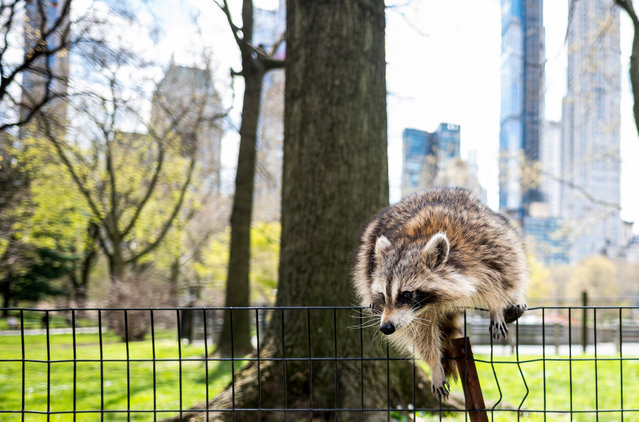
A racoon jumps over a fence in almost deserted Central Park in Manhattan on April 16, 2020 in New York City. Gone are the softball games, horse-drawn carriages and hordes of tourists. In their place, pronounced birdsong, solitary walks and renewed appreciation for Central Park's beauty during New York's coronavirus lockdown. The 843-acre (341-hectare) park – arguably the world's most famous urban green space – normally bustles with human activity as winter turns to spring, but this year due to Covid-19 it's the wildlife that is coming out to play. (Photo by Johannes Eisele/AFP Photo)

A racoon jumps over a fence in almost deserted Central Park in Manhattan on April 16, 2020 in New York City. Gone are the softball games, horse-drawn carriages and hordes of tourists. In their place, pronounced birdsong, solitary walks and renewed appreciation for Central Park's beauty during New York's coronavirus lockdown. The 843-acre (341-hectare) park – arguably the world's most famous urban green space – normally bustles with human activity as winter turns to spring, but this year due to Covid-19 it's the wildlife that is coming out to play. (Photo by Johannes Eisele/AFP Photo)
Details
14 Dec 2025 07:04:00
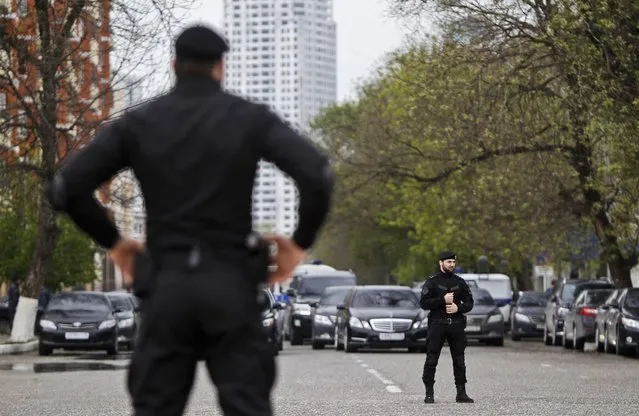
Special forces officers stand guard during a government-organised event marking Chechen language day in the centre of the Chechen capital Grozny April 25, 2013. (Photo by Maxim Shemetov/Reuters)

“What did I know about Chechnya before last week? For someone who grew up in the 1990s the very word Chechnya meant a string of grainy images on TV showing people in battered camouflage outfits, shooting at each other amid destruction and ruin. Fear, wahhabis, Shamil Basayev, terrorism, mountains: these were the words that used to spring to my mind when someone mentioned Chechnya”. – Maxim Shemetov. Photo: Special forces officers stand guard during a government-organised event marking Chechen language day in the centre of the Chechen capital Grozny April 25, 2013. (Photo by Maxim Shemetov/Reuters)
Details
14 May 2013 12:02:00
In this January 6, 2017 photo, transgender inmates get a security check from female officers before entering their cell at Pattaya Remand Prison in Pattaya, Chonburi province, Thailand. (Photo by Sakchai Lalit/AP Photo)

In this January 6, 2017 photo, transgender inmates get a security check from female officers before entering their cell at Pattaya Remand Prison in Pattaya, Chonburi province, Thailand. The prison separates lesbian, gay, bisexual and transgender prisoners from other inmates, a little-known policy despite being in place nationwide since 1993, according to the Department of Corrections. (Photo by Sakchai Lalit/AP Photo)
Details
30 Jan 2017 10:01:00
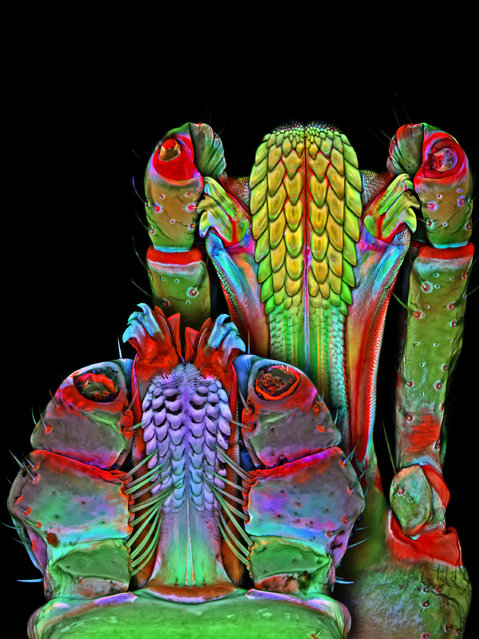
Underside of the Brown dog tick and Lonestar tick mouthparts; Confocal, 100X. Janelia Farm Research Campus, Howard Hughes Medical Institute (HHMI), Ashburn, Virginia, USA. (Photo by Dr. Igor Robert Siwanowicz/Nikon Small World 2014)

Now celebrating its 40th year, Nikon Small World is widely regarded as the leading forum to recognize proficiency and photographic excellence of photography taken under the microscope. To select the winners, competition judges analyzed entries from all over the world covering subjects ranging from chemical compounds to up-close-and-personal looks at biological specimens. The 2014 winners will be revealed on October 30th. In 2014, the competition received over 1,200 entries from more than 79 countries around the world. (Photo by Dr. Igor Robert Siwanowicz/Nikon Small World 2014)
Details
17 Oct 2014 13:10:00